
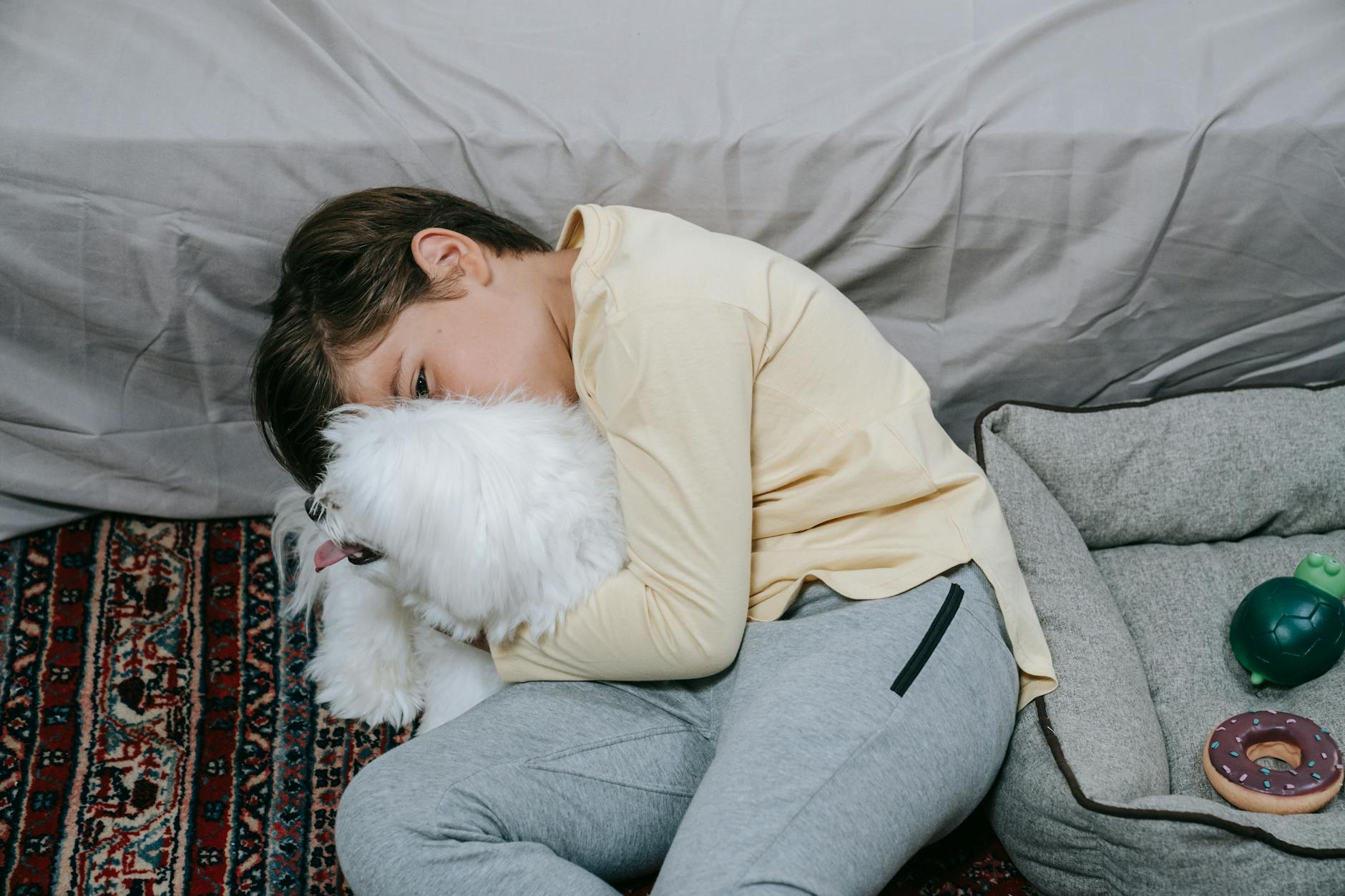
There’s a moment that happens in almost every family with a pet — the kind you don’t really plan for, but that stays with you. It might be watching your toddler giggle uncontrollably as a puppy licks their face. Or noticing your teenager, who barely talks at dinner anymore, spend 20 minutes on the floor telling the cat about their day. Or coming home after the worst day at work and having a dog greet you like you’re the most important person in the world.
Pets change the dynamic of a household in ways that are hard to quantify but impossible to miss. And while getting a pet is a real commitment — one that shouldn’t be taken lightly — the evidence for what they bring to a family is overwhelming.
Pets and Children: A Natural Partnership
Children and pets are a remarkably good combination, and the benefits go well beyond entertainment. Research compiled by the Human Animal Bond Research Institute (HABRI) shows that growing up with a pet has measurable effects on a child’s emotional, social, and even cognitive development.
Kids with pets tend to score higher on measures of empathy and social competence. Caring for an animal teaches them to consider another being’s needs, read nonverbal cues, and practice gentleness and patience — skills that translate directly to how they interact with other people.
There’s also a responsibility component that’s hard to replicate through chores or schoolwork. When a child is responsible for feeding a pet, refreshing their water, or taking them for a walk, they’re developing a sense of accountability that has real consequences. The fish doesn’t get fed if they forget. The dog still needs to go outside even when it’s raining. These small daily obligations build habits and character.
Studies from Australia found that children living with dogs showed notably better emotional regulation and fewer social difficulties. Ten-year-olds with dogs reported higher happiness levels at age twelve compared to their peers without pets.
The Emotional Anchor Effect
Pets have a unique ability to stabilize the emotional climate of a home. They’re consistent. They don’t hold grudges after arguments. They respond to tone and energy, often gravitating toward whoever in the family needs comfort the most at any given moment.
This is particularly valuable during stressful periods — a move, a divorce, a health crisis, or just the regular chaos of family life. The National Institutes of Health has documented that simply petting an animal can lower cortisol levels and increase oxytocin production, which explains why so many people instinctively reach for their pet when they’re feeling overwhelmed.
For children in particular, a pet can serve as a safe emotional outlet. Kids who might not feel comfortable talking to a parent or friend about something that’s bothering them will often talk to their pet. It sounds simple, but the act of verbalizing feelings — even to an animal — has genuine therapeutic value.
Physical Health Benefits You Might Not Expect
The health benefits of pet ownership are surprisingly well-documented. Dog-owning families tend to be more physically active because dogs need daily exercise, and that exercise usually involves the whole family. A morning walk, a trip to the park, or a backyard play session adds up to meaningful physical activity over time.
The American Heart Association has reviewed evidence suggesting that dog ownership is associated with a reduced risk of cardiovascular disease. Dog owners tend to have lower blood pressure, lower cholesterol levels, and healthier triglyceride readings — likely because of the increased activity and reduced stress that comes with having a dog.
There’s also evidence that children who grow up with pets in the home may develop stronger immune systems and be less likely to develop allergies and asthma. The theory is that early exposure to pet dander and the microbes pets carry helps train the immune system during childhood, making it less likely to overreact to harmless substances later in life.
Companionship Across Life Stages
One of the things that makes pets special is their adaptability. They serve different roles for different family members at different times.
For young children, a pet is a playmate and a first friend. For teenagers, a pet is a confidant who doesn’t judge or offer unsolicited advice. For parents, a pet is a stress reliever and a reason to step away from screens and be present. For grandparents, a pet is a companion who keeps loneliness at bay and adds structure to the day.
As families change — kids grow up and leave, couples become empty nesters, life circumstances shift — pets remain a constant source of connection and comfort. Many families find that their pet becomes the thread that ties everyone together, the one topic everyone can talk about and agree on.
Making a Thoughtful Decision
Getting a pet should absolutely be a deliberate, well-considered choice. Different pets fit different families, and matching your lifestyle to the right animal is critical for a successful experience.
Consider your family’s schedule, living space, and activity level. A high-energy border collie needs a very different home than a mellow senior cat. If you have young children, research breeds or species known for patience and gentle temperaments. If allergies are a concern, look into breeds that produce fewer allergens (though no pet is truly hypoallergenic).
Adopting from a shelter is a wonderful option. You’re giving an animal a second chance while adding a companion to your family. Shelter staff can help match you with a pet whose temperament and energy level fit your household, and adoption fees are a fraction of breeder prices.
The Commitment Is Real — And So Is the Reward
Pets need food, veterinary care, exercise, and attention. They sometimes get sick. They occasionally chew things they shouldn’t. They’ll need you on your worst days just as much as your best ones.
But what you get in return is a family that laughs more, worries less, and stays more connected to each other and to the present moment. The evidence, the research, and millions of families around the world all point to the same conclusion: pets make family life richer.
If your family is ready, you won’t regret it.