
Most pet owners are pretty good about meeting their pet’s physical needs — walks, playtime, food, water, a comfortable place to sleep. But mental stimulation is something that often gets overlooked, and it’s just as important for your pet’s overall wellbeing.
A bored pet isn’t just an unhappy pet. Boredom leads to behavioral problems: excessive barking, destructive chewing, scratching furniture, over-grooming, and anxiety. Interactive toys are one of the most effective ways to keep your pet’s mind engaged, and the difference they can make in your pet’s behavior and mood is often dramatic.
Why Mental Stimulation Matters
Your pet’s brain needs exercise just like their body does. Dogs were originally bred to work — herding, hunting, guarding, retrieving — and that drive for mental engagement doesn’t disappear just because they live in an apartment now. Cats are natural predators with deeply wired hunting instincts that don’t get satisfied by a bowl of kibble appearing twice a day.
When these cognitive needs go unmet, pets find their own ways to stay entertained, and those ways usually involve your shoes, your couch, or your blinds.
Research from the Human Animal Bond Research Institute (HABRI) shows that mentally enriched pets display fewer behavioral issues, lower stress levels, and better overall health outcomes. Interactive toys tap into natural problem-solving instincts and provide the kind of challenge that keeps a pet’s mind sharp, especially as they age.
Interactive Toys for Dogs
Puzzle Feeders
Puzzle feeders are designed to make your dog work for their food, which is actually much closer to how canines are wired to eat. In the wild, finding food requires effort — sniffing, digging, problem-solving. A puzzle feeder brings a version of that experience indoors.
Options range from simple treat-dispensing balls that release kibble as they roll, to complex multi-step puzzles with sliding compartments and flip-up covers. For beginners, the simpler designs are best — you want your dog to be challenged, not frustrated.
The added benefit of puzzle feeders is that they slow down fast eaters, which reduces the risk of bloat and improves digestion.
Snuffle Mats
A snuffle mat is a fabric mat with long strips of fleece woven through it, creating pockets and folds where you can hide treats or kibble. Your dog uses their nose to root through the mat and find the food, engaging their most powerful sense in a satisfying way.
Snuffle mats are particularly good for senior dogs who may not be able to handle physically demanding toys but still benefit from mental engagement. They’re also a great option for rainy days when outdoor exercise isn’t happening.
Tug and Fetch Toys With a Twist
Interactive tug toys and fetch toys that bounce unpredictably add a cognitive element to physical play. Your dog has to react and adapt in real time, which keeps both their body and brain engaged. Look for irregularly shaped balls that bounce in unexpected directions — they turn a routine game of fetch into a more stimulating experience.
Interactive Toys for Cats
Puzzle Feeders for Cats
Cats benefit from puzzle feeders just as much as dogs do. Options like treat balls, sliding puzzles, and tower-style feeders that require cats to fish out kibble with their paws engage their natural hunting instincts.
Starting with an easier puzzle is important for cats, since they can become frustrated and lose interest quickly. Once your cat masters one level, you can gradually increase the difficulty.
Wand and Teaser Toys
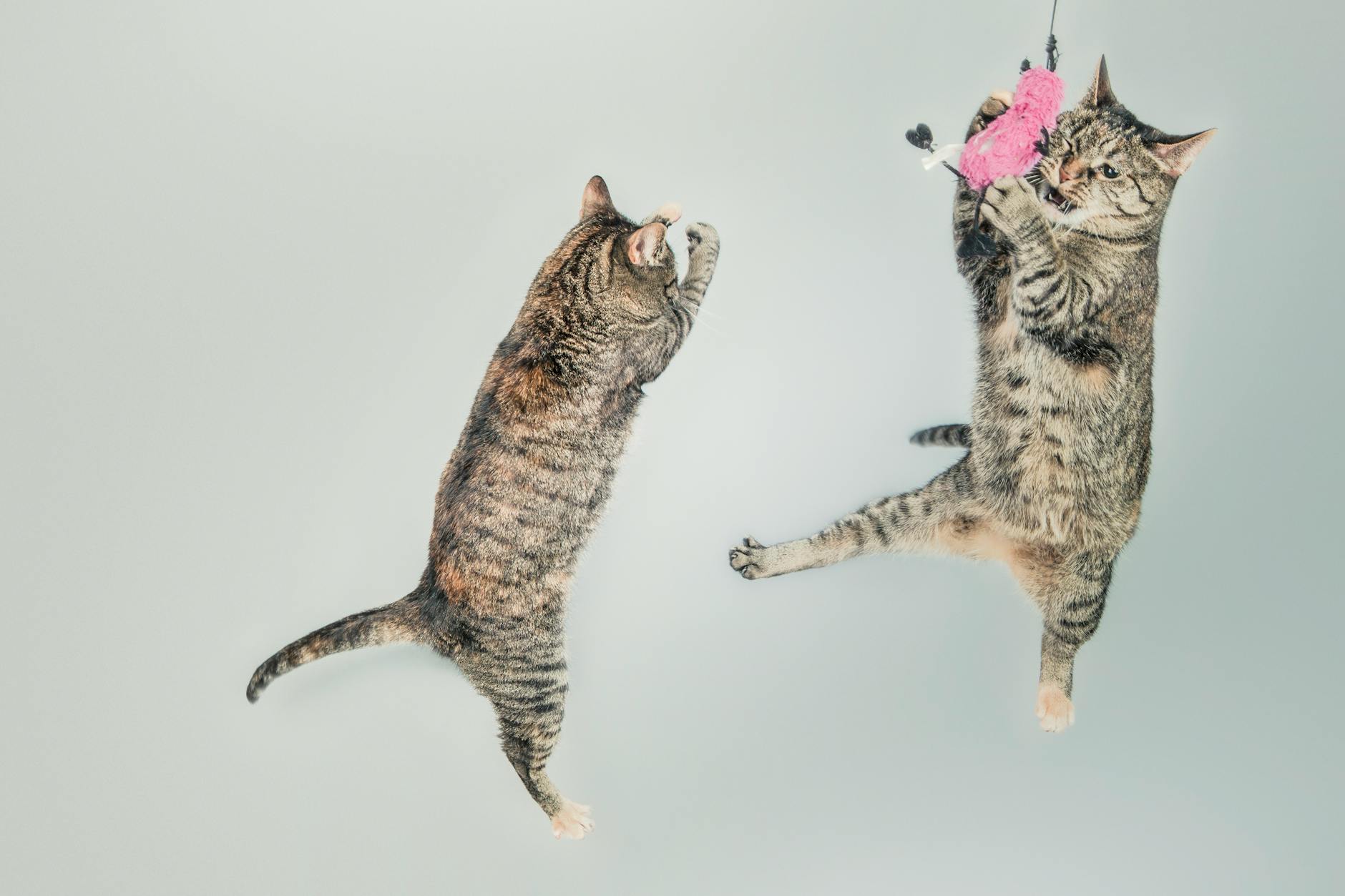
These are the gold standard for interactive cat play. A wand toy with feathers, ribbons, or a small plush attachment at the end mimics the movement of prey — darting, swooping, and pausing. According to the ASPCA, wand toys are one of the most effective tools for bonding with your cat and providing the predatory play they crave.
The key is to vary the movement. Drag the toy along the ground like a mouse, flutter it in the air like a bird, and occasionally let your cat “catch” it to maintain their interest and confidence. Sessions of 10 to 15 minutes, once or twice a day, are usually enough.
Electronic and Automated Toys
For cats who spend time alone during the day, automated toys can fill the gap. Self-rotating balls with LED lights, robotic mice, and track toys with enclosed balls give cats something to stalk and bat without needing a human on the other end. These work best as supplements to, not replacements for, interactive play with their owner.
Choosing the Right Toy
Not every interactive toy works for every pet. Here are a few things to consider:
Match the toy to your pet’s play style. Some dogs are chewers, some are chasers, and some are problem-solvers. Similarly, some cats prefer stalking toys while others like to bat and wrestle. Observe what your pet gravitates toward naturally and choose toys that complement those instincts.
Consider your pet’s size and strength. A puzzle feeder designed for a Chihuahua won’t last five minutes with a Labrador. Make sure the toy is appropriately sized and durable enough for your pet.
Rotate toys regularly. Even the most engaging toy gets boring if it’s always available. Keep three to five toys in rotation, swapping them out every few days. When a “retired” toy comes back, it feels new again.
Supervise initially. Any new toy should be introduced under supervision, especially toys with moving parts, batteries, or small components. Once you’re confident your pet can play safely, you can leave certain toys out for independent play.
Safety Matters
The AKC recommends inspecting interactive toys regularly for signs of wear. Loose parts, exposed batteries, fraying fabric, and splintering plastic can all pose choking or ingestion risks. Replace or retire toys as soon as they show damage.
For cats, avoid leaving string, ribbon, or yarn toys unattended. If swallowed, linear objects like string can cause serious and sometimes life-threatening intestinal complications.
The Payoff
Investing in your pet’s mental health through interactive play isn’t just about keeping them entertained. It strengthens the bond between you and your pet, reduces anxiety and destructive behaviors, and supports cognitive health — especially important for aging animals. A mentally stimulated pet is a happier, calmer, and better-behaved companion.
You don’t need a closet full of expensive gadgets to make a difference. Even one or two well-chosen interactive toys, combined with regular play sessions, can transform your pet’s daily experience.