
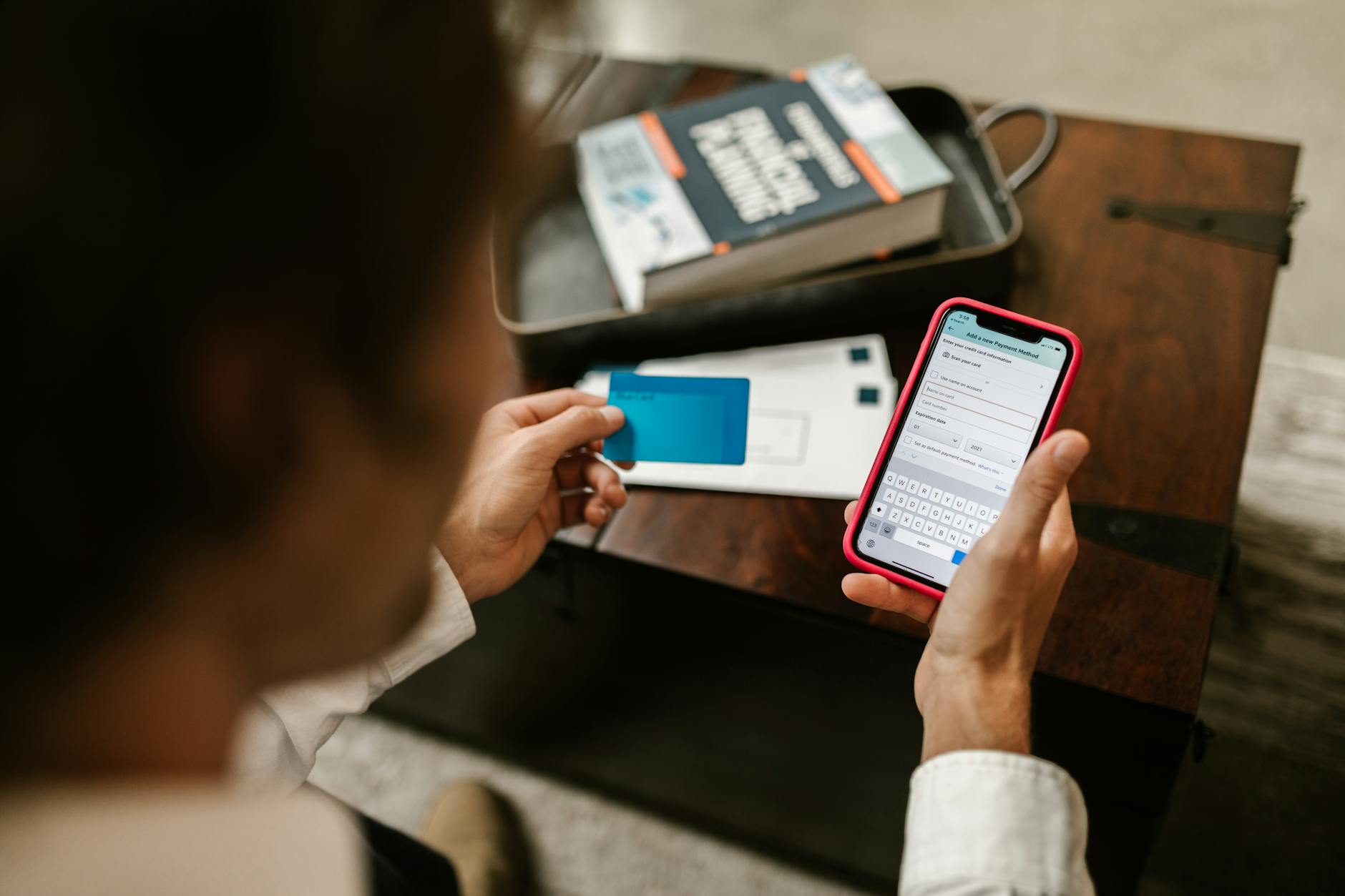
Shopping for a checking account shouldn’t be complicated, yet most banks still make it feel that way. You’ll scroll through their websites seeing claims about “free checking” everywhere, but free from what? And are you actually getting the features that matter to your daily life? In 2026, the best checking accounts have evolved beyond zero monthly fees. Real value comes from features that genuinely save you time, money, and stress.
Let me walk you through what actually matters when choosing a checking account, beyond the marketing noise.
Early Direct Deposit: Get Paid 1-2 Days Faster
Here’s one of those features that sounds small but genuinely improves your financial life. Early direct deposit (also called “next-day direct deposit” or “faster deposits”) gets your paycheck into your account one to two days before your official payday. It seems minor, but imagine having your money available on Wednesday instead of Friday.
For people living paycheck to paycheck, this can be genuinely helpful—especially around unexpected expenses. You’re not waiting through a weekend with no cash, and you’re less likely to overdraft while waiting for that deposit to clear.
Banks like Chime and SoFi have made early direct deposit standard in their free accounts. Some traditional banks still charge for this feature, which is increasingly outdated. If you get regular paychecks, ask your prospective bank explicitly whether they offer early deposits and if it’s free.
ATM Network Access: No More Paying to Access Your Own Money
Free ATM networks matter far more than people realize, especially if you use cash regularly. Some accounts advertise “free ATM access,” but then you realize “free” only applies to their limited network of ATMs. Step outside that network, and you’re paying $2-3 in out-of-network fees.
Quality checking accounts partner with broad ATM networks or offer worldwide fee reimbursement. Ally Bank reimburses out-of-network ATM fees up to a certain amount monthly. Credit unions often participate in shared branching networks giving members access to thousands of locations. Traditional banks offer the comfort of physical branches everywhere, which matters if you deposit checks or handle cash regularly.
Ask yourself: Where do I actually use ATMs? If you travel frequently, worldwide fee reimbursement matters more than access to local branches. If you’re homebased, a strong local ATM network or nearby branch becomes more important.
Mobile Banking and Digital-First Features
This should be table stakes in 2026, but it’s not. The best checking accounts offer genuinely useful mobile apps—not just checking your balance, but actually managing your account from your phone.
What matters in a mobile app: depositing checks by photo, peer-to-peer payment transfers, real-time spending notifications, ability to freeze your card instantly if it’s lost, setting spending limits, and receiving alerts for suspicious activity. These features have moved from “nice to have” to “basically essential.”
Many online banks like Capital One 360 have fully digital experiences where you’ll never need to visit a branch. Traditional banks have slowly caught up here, but their mobile apps often feel clunky compared to digital-first competitors.
Overdraft Policies: How They Protect (or Don’t)
Overdraft fees remain one of the most hated banking fees, and rightfully so. A bank charging $35 for a $12 purchase is predatory. Fortunately, overdraft policies have gotten more consumer-friendly in recent years, partly due to regulatory pressure.
Here’s what to look for: Some banks now offer “overdraft protection” linked to a savings account, which automatically transfers money if you overdraft—often with a small fee or no fee. Others have completely eliminated overdraft fees for debit card purchases. A few still cling to the old system of charging per overdraft event.
When comparing accounts, explicitly ask: What happens if I overdraft? Do you charge a fee? How much? Can I opt out? Some banks let you opt out of overdraft coverage entirely, which prevents you from overdrafting in the first place (your card just declines).
This might seem like a small thing until it happens—then a single overdraft fee of $35 stings. Better accounts treat this problem head-on.
Interest-Bearing Checking: Why You Should Care
Most traditional banks still offer checking accounts that earn 0.01% APY (annual percentage yield), which is essentially nothing. But a growing number of banks offer interest-bearing checking accounts that actually pay meaningful rates.
Some free checking accounts now offer rates around 1.75% APY or higher. For someone maintaining a $5,000 balance, that’s $87.50 per year instead of 50 cents. It’s not enough to retire on, but it’s real money, and importantly, it signals a bank that actually respects its customers’ money.
The catch: These higher-rate checking accounts sometimes have monthly requirements (like minimum balance or direct deposits). Read the fine print. Some require a minimum balance to earn the full rate. Others require an active direct deposit every month. These requirements matter less if you’d meet them anyway, and matter more if they’d be difficult for you.
Integration With Budgeting and Personal Finance Tools
Here’s a modern feature that separates great accounts from average ones: how well your checking account integrates with the tools you already use for budgeting and personal finance.
The best accounts sync seamlessly with popular budgeting apps like YNAB, Mint, or EveryDollar. Some banks have built-in budgeting tools in their apps that actually work and give you useful insights about spending patterns.
If you’re serious about budgeting and tracking expenses, look for accounts that play nicely with your preferred tools. Spending 5 minutes manually entering transactions defeats the purpose of having a budgeting app.
Security and Fraud Protection Features
Beyond basic security, look for checking accounts that offer strong fraud protection. Here’s where it gets important: debit cards linked to checking accounts have weaker fraud protection than credit cards. You want a bank that recognizes this and compensates with superior fraud monitoring and rapid response.
Features to look for: real-time spending alerts, ability to set spending limits per category, instant card freezing, cardless ATM access, and robust dispute resolution processes. Banks like SoFi and Ally have stepped up their security game to compete with fintech challengers.
The Real Cost: Fees Beyond Monthly Charges
“Free checking” often hides a variety of fees that aren’t the monthly fee. Ask about fees for overdrafts, wire transfers, cashier’s checks, excessive transactions, or account closure. Some banks charge $25 for a wire transfer, others charge nothing.
Calculate your realistic fee exposure. If you write a dozen checks per month and need frequent wire transfers, that “free checking” might cost you $50 monthly in fees. A checking account that charges $5 monthly but has no transaction fees might actually be cheaper.
Making Your Choice
The best checking account for you depends entirely on your life. Someone who travels internationally needs different features than someone working from home with stable direct deposits. Someone who still uses paper checks needs different features than someone who’s fully digital.
Start by listing your actual needs, not what marketing tells you matters. Then compare accounts against those needs. In 2026, there are genuinely good checking accounts from online banks, traditional banks, and credit unions. None of them are perfect for everyone, but many are perfect for specific people. Your job is finding the one that’s perfect for you.
Sources
- NerdWallet. “Best Checking Accounts for 2026.” nerdwallet.com
- Consumer Financial Protection Bureau. “Checking Accounts.” consumerfinance.gov
- Federal Reserve Board. “Consumer Banking Resources.” federalreserve.gov
- American Bankers Association. “Checking Account Features and Regulations.” aba.com