
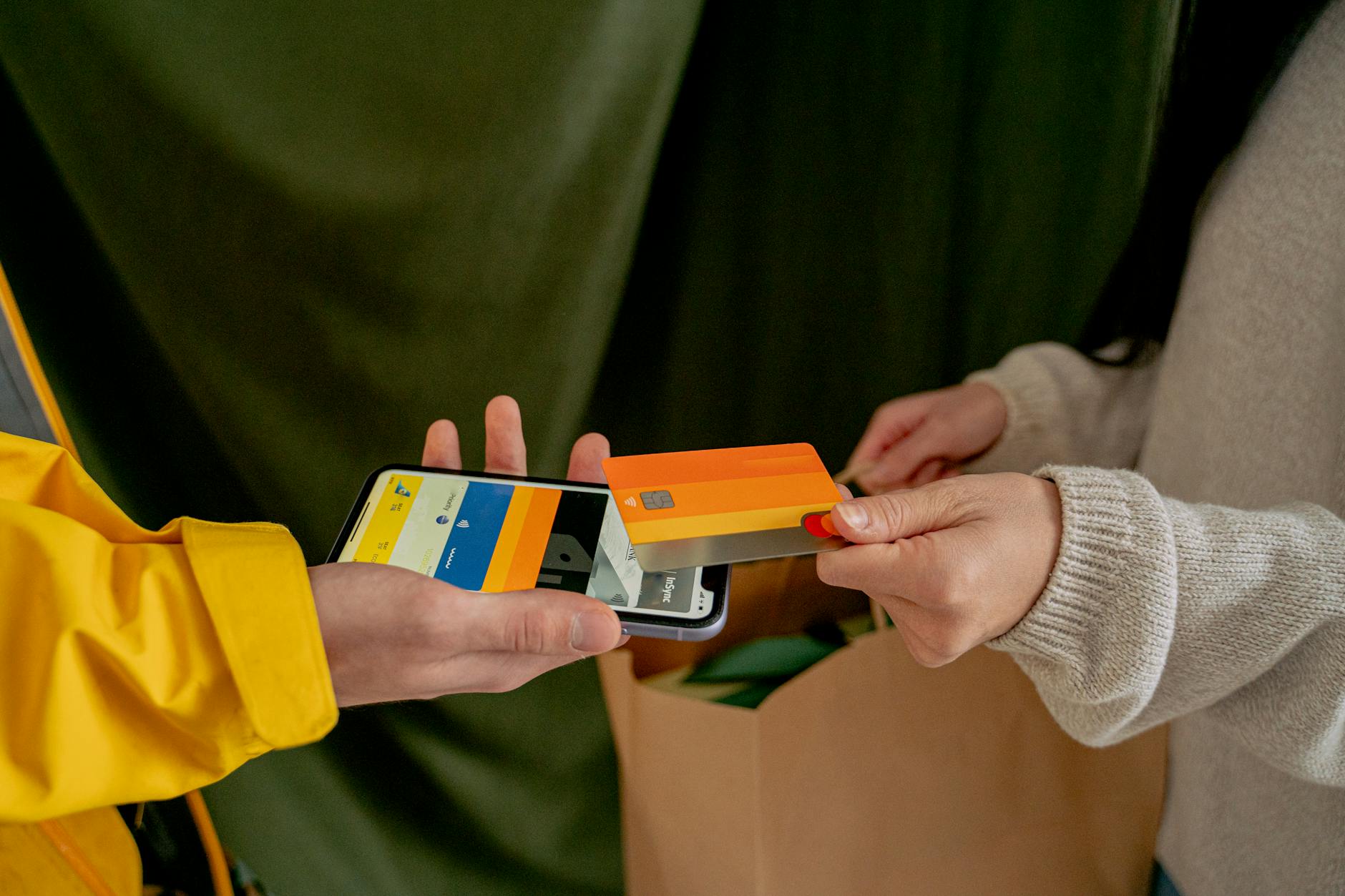
You’ve probably tapped your phone at a checkout counter at least once by now. Maybe you use Apple Pay every time you grab coffee, or you’ve loaded your debit card into Google Wallet for quick payments at the grocery store. Digital wallets have gone from novelty to near-ubiquity in just a few years, with projections suggesting more than 5.3 billion people worldwide will use some form of mobile payment by the end of 2026. But how many of us actually understand what’s happening behind that satisfying little buzz when a payment goes through? And more importantly, should we trust these systems with our money?
Let’s break it down — not with jargon, but with the kind of plain-language explanation that actually helps you make informed decisions about your financial life.
What Happens When You Tap to Pay
When you add a debit or credit card to a digital wallet like Apple Pay, Google Wallet, or Samsung Pay, the app doesn’t just store a copy of your card number on your phone. That would be a security nightmare. Instead, your card issuer generates something called a Device Account Number — a unique string of digits that represents your card but isn’t your actual card number. This token, as it’s known in the industry, gets stored in a secure, tamper-resistant chip inside your phone, separate from the rest of the device’s memory.
When you hold your phone near a payment terminal and authenticate with your fingerprint, face, or PIN, your device transmits that token along with a one-time-use security code. The merchant never sees your real card number. The payment network routes the token back to your bank, which matches it to your actual account and authorizes the transaction. The whole process takes about a second, and at no point does your sensitive financial information travel in the clear.
This is fundamentally different from swiping a magnetic stripe card, where your actual card number passes through every device in the payment chain. It’s even a step up from chip cards, which generate unique transaction codes but still expose your card number to the merchant’s terminal. With a digital wallet, your real card data stays locked inside a system that never shares it.
The Security Advantages Are Significant
If you’re someone who worries about card skimmers at gas pumps or data breaches at retailers, digital wallets offer a genuinely stronger layer of protection. Because your real card number is never transmitted during a transaction, a compromised payment terminal can’t steal usable information. Even if a hacker intercepted the data mid-transaction, the one-time security code would be worthless for any future purchase.
Biometric authentication adds another barrier. A thief who steals your physical debit card can potentially guess your PIN or use the card for contactless purchases under the tap limit. But a thief who steals your phone would need your fingerprint or face to unlock the wallet, and modern phones lock themselves after a few failed attempts. According to WaFd Bank’s security analysis, adding your debit card to Apple Pay or Google Wallet is generally considered more secure than carrying the physical card itself.
There’s also the practical benefit of remote deactivation. If you lose your phone, you can use Find My iPhone or Google’s Find My Device to lock or wipe it remotely. Try doing that with a lost wallet full of plastic cards.
But No System Is Bulletproof
For all their advantages, digital wallets aren’t immune to fraud — and it’s important to understand where the vulnerabilities lie. Security researchers at the University of Massachusetts uncovered a concerning loophole: when a cardholder reports their physical card stolen and receives a replacement, many banks only block the physical card. The token stored in a digital wallet — even one that a fraudster set up — may continue to work because it’s linked to the underlying account, not the specific card number that was cancelled.
This means that if someone steals your card information and adds it to their own digital wallet before you notice, they could potentially keep making purchases even after you’ve reported the card compromised. The fix for this lies primarily with banks updating their fraud detection and token management systems, but as a consumer, you should know that replacing a card doesn’t automatically invalidate all the digital wallet tokens associated with it.
There’s also the growing threat of social engineering. Scammers have developed sophisticated techniques to trick people into sharing the verification codes needed to add cards to digital wallets. You might receive a text message that looks like it’s from your bank, asking you to “verify” a code — and that code is actually the one-time password that authorizes adding your card to someone else’s phone. The European Union Agency for Cybersecurity (ENISA) has documented multiple variations of these schemes targeting consumers across multiple countries.
What About Your Debit Card Specifically?
Here’s where things get a little more nuanced for people who primarily use debit cards. Digital wallets work with both credit and debit cards, but the underlying consumer protections differ. Federal law limits your liability for unauthorized credit card charges to $50, and most issuers waive even that. Debit card protections are less generous — if you don’t report unauthorized transactions within two business days, you could be on the hook for up to $500, and after 60 days, you might have no protection at all under federal regulations.
The digital wallet itself doesn’t change these underlying liability rules. What it does is make unauthorized transactions less likely in the first place, thanks to tokenization and biometric locks. But if your debit card information is compromised through a method that bypasses the wallet — like a phishing attack where you hand over your card details directly — the same debit card liability rules apply. For this reason, some financial advisors suggest using a credit card in your digital wallet for everyday purchases and keeping your debit card as a backup, since credit cards offer stronger fraud protections by law.
Getting the Most Out of Your Digital Wallet
If you’ve decided to lean into digital payments, a few smart habits can maximize both convenience and security. First, enable transaction notifications for every card linked to your wallet. Most banking apps let you set up instant push alerts for any charge, which means you’ll know within seconds if someone makes an unauthorized purchase. Early detection is the single most important factor in limiting fraud losses.
Second, keep your phone’s operating system updated. Security patches often address vulnerabilities that could potentially be exploited to access your wallet data. It’s a small inconvenience that pays real dividends.
Third, be ruthless about ignoring unsolicited verification requests. Your bank will never ask you to read back a code you didn’t request. If someone calls or texts claiming to be from your financial institution and asks for a verification code, hang up and call the number on the back of your card instead.
Finally, consider which cards you actually need in your digital wallet. There’s no reason to load every card you own. Keep it to the one or two you use regularly, and leave the rest as physical cards. Fewer digital tokens means a smaller attack surface.
The Bottom Line on Digital Wallets
Digital wallets represent a genuine improvement in payment security compared to physical cards. Tokenization, biometric authentication, and the elimination of card numbers from the transaction process address many of the vulnerabilities that have plagued consumers for decades. They’re not perfect — no payment system is — but for most people in most situations, tapping your phone is safer than swiping or inserting a card.
The key is to treat your digital wallet with the same care you’d give your physical one. Understand how it works, know where the risks are, and take simple precautions to protect yourself. Financial technology works best when you use it with your eyes open, and digital wallets are no exception.