
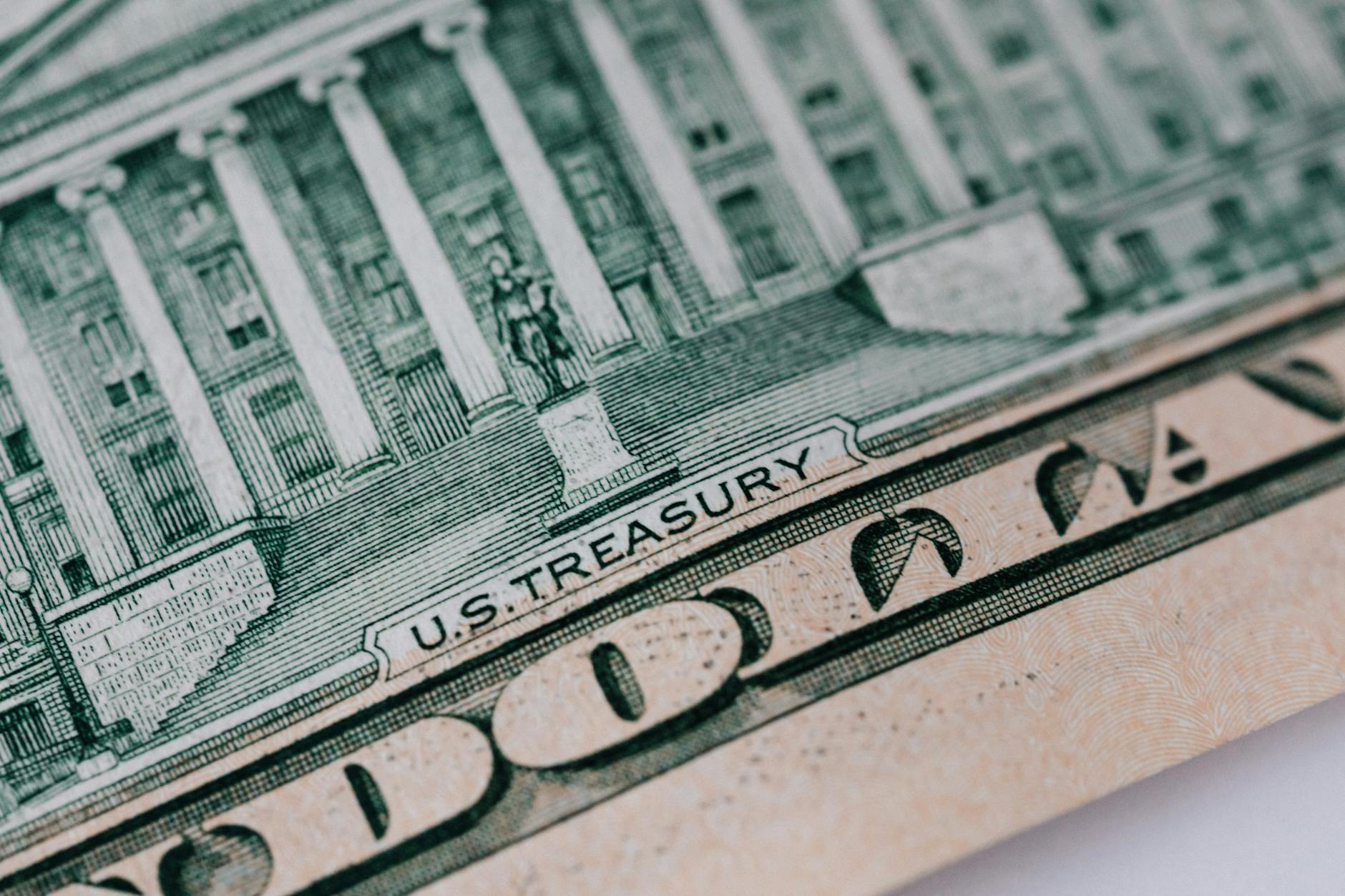
For most of the last two decades, Treasury bills lived in a corner of personal finance most people ignored. Yields were near zero, the buying process felt clunky, and savings accounts were close enough that no one bothered. That changed when interest rates climbed off the floor, and now T-bills sit firmly in the conversation any time someone asks where to park cash they will not need for a few months. If you have ever wondered why financially savvy friends mention “buying T-bills on TreasuryDirect” the way they used to mention high-yield savings, this is the explainer that catches you up — what T-bills actually are, how they work, why they often pay more than even the best online bank, and whether they make sense for you.
What a Treasury Bill Actually Is
A Treasury bill is a short-term loan you make to the United States federal government. The Treasury sells T-bills with maturities ranging from four weeks all the way up to 52 weeks, and they are sold at a discount to face value. If you buy a 26-week T-bill with a face value of $1,000 for, say, $978, you get $1,000 back when it matures six months later. The $22 difference is your interest, and the implied annual yield is calculated from that gap. There are no coupons, no monthly payments, and no surprises — you know on the day you buy exactly how much you will earn if you hold to maturity. Because the U.S. Treasury has never failed to pay its debts, T-bills are considered the closest thing to a risk-free investment that exists in dollars. The full mechanics are laid out by TreasuryDirect’s official explainer on Treasury Bills, and the underlying principle is the same as a CD without the bank in the middle.
Why T-Bill Yields Often Beat Bank Savings Accounts
This is the part that surprises people. A high-yield savings account has to clear a lot of overhead — bank operations, FDIC insurance premiums, marketing, profit margins — before a single dollar of interest reaches you. The Treasury, by contrast, pays you essentially the wholesale rate. For most of the last few years, short-term T-bill yields have run noticeably higher than the rate you can get on even the most aggressive online savings account, and the gap shows up most clearly when the Federal Reserve has held its policy rate elevated. You can watch the rates move in real time on the Federal Reserve’s H.15 release or in friendlier form at Bankrate’s Treasury rate tracker. The other quiet advantage is taxes: interest on T-bills is exempt from state and local income tax, which can add a meaningful boost to your effective return if you live in a high-tax state like California, New York, or Oregon. A 4.3% T-bill yield to a Californian in the top bracket can outearn a 4.7% savings account once state taxes are factored in.
How Buying a T-Bill Actually Works
The most direct path is TreasuryDirect, the federal government’s free website where you can buy T-bills with no fees and no middleman. You open an account with a Social Security number, a U.S. address, and a linked checking or savings account. Once inside, you click BuyDirect, choose Bills, pick a maturity, and enter a purchase amount in $100 increments — yes, the minimum is just $100. You almost always want to choose a “non-competitive bid,” which is the option for individual investors and means you accept whatever yield the auction settles on. The Treasury auctions 4-week, 8-week, 13-week, 17-week, and 26-week bills weekly, and 52-week bills every four weeks. NerdWallet has a clean walk-through of the step-by-step process for first-timers if you want screenshots. The other option is buying T-bills through a brokerage like Fidelity, Schwab, or Vanguard, which is more convenient if you already have a brokerage account and want T-bills sitting alongside your other holdings. Brokerages charge nothing for new-issue T-bills bought at auction, and they handle reinvestment with a checkbox.
What “Holding to Maturity” Means and Why It Matters
T-bills are short-term, so the math is straightforward, but you should understand what you are committing to. When you buy a 13-week bill, that money is locked up for 13 weeks. You can sell early on the secondary market through a brokerage, but you might get less than you paid if interest rates have risen since you bought. The simplest way to use T-bills is to match the maturity to when you actually need the money. Saving for a tax bill due in October? A 26-week bill bought in April lines up almost perfectly. Building an emergency fund and worried about access? You can build a “T-bill ladder” by buying a new 4-week or 13-week bill every month, so something is always maturing soon and your cash is rolling instead of locked. This is the same idea as a CD ladder, just with cleaner mechanics and usually a better yield.
Where T-Bills Beat a Savings Account, and Where They Don’t
T-bills are not a replacement for your everyday checking account or even your full emergency fund. The money is not instantly available — when your bill matures, the proceeds land in your linked bank account, often the next business day, but until then you cannot just tap them like a savings balance. If your kid breaks an arm on a Saturday, a T-bill will not help you write the urgent care copay. The right way to think about T-bills is as a higher-yield home for the cash you know you will not need for at least a few weeks. A common setup looks like this: keep one to two months of expenses in a regular checking account for daily life, keep another month or two in a high-yield savings account for instant emergency access, and put any cash beyond that — the part of your reserve you would only touch in a true crisis, plus any short-term savings goals — into a rolling T-bill ladder. That structure gives you genuine liquidity for emergencies while letting the bulk of your cash earn the higher Treasury rate.
Are T-Bills Safe? A Word on Risk
T-bills are backed by the full faith and credit of the U.S. government, which is the highest credit standard that exists in dollar-denominated investments. There is no FDIC limit to worry about — unlike a bank where insurance caps at $250,000 per depositor per ownership category, every dollar of a T-bill is backed directly by the Treasury. The risks that do exist are subtle: interest rate risk if you sell before maturity, opportunity cost if rates rise sharply right after you buy a 52-week bill, and inflation risk if inflation outpaces your yield. None of those make T-bills a bad place for short-term cash; they just mean T-bills are not a substitute for stocks, bonds, or longer-term retirement holdings.
The real reason T-bills deserve a spot in your financial vocabulary is that they quietly close the gap between “money I cannot afford to lose” and “money I want to actually grow.” For decades, savings accounts owned that middle ground by default. They no longer do, and once you have spent twenty minutes setting up a TreasuryDirect account or adding a fixed-income tab to your brokerage, the door stays open for life. The Treasury makes it free, the math is transparent, and the yield often pays for itself on the first bill.