
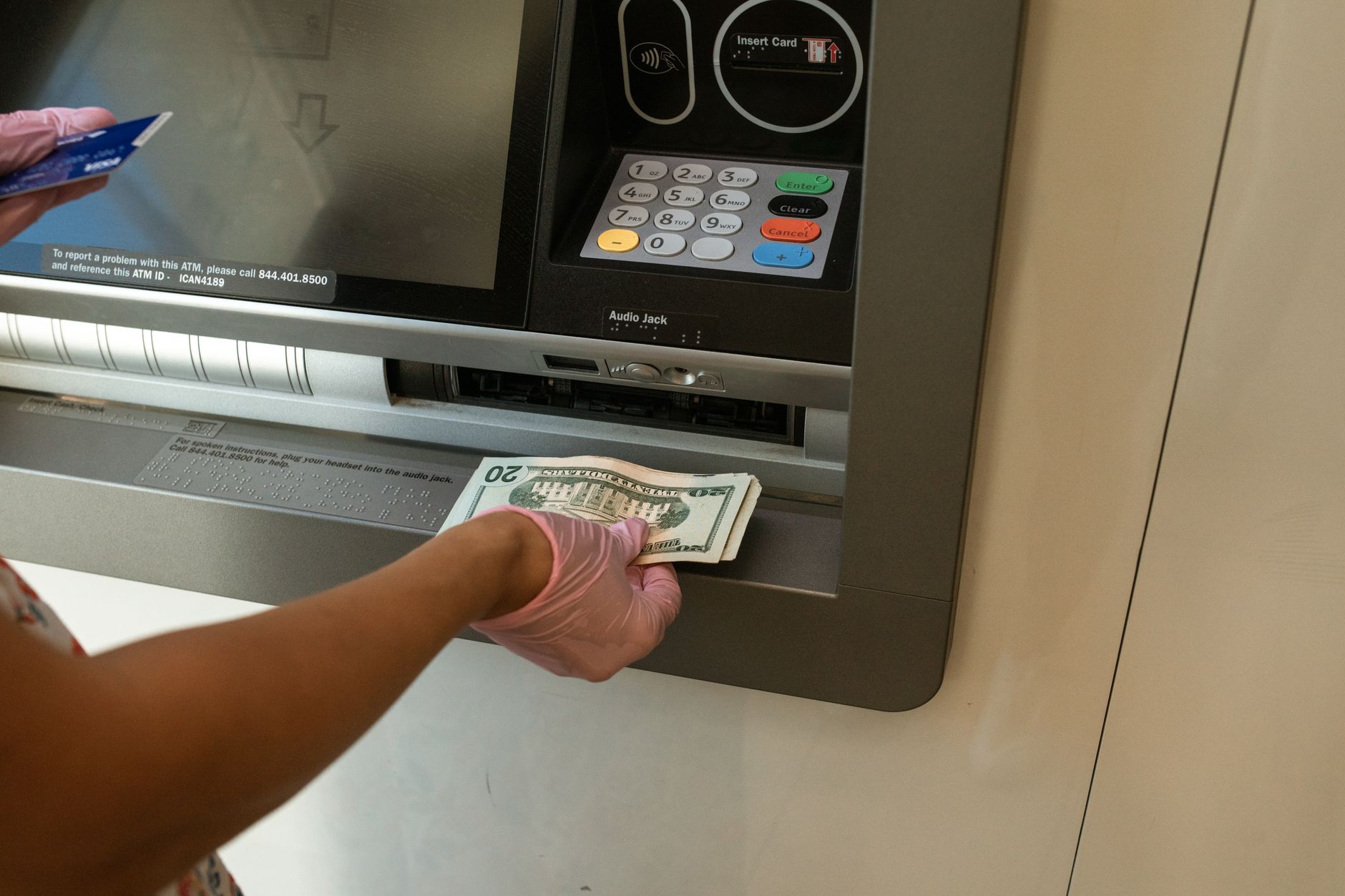
Most people know, vaguely, that taking cash out of a credit card is a bad idea. What they don’t always know is exactly why — or just how quickly the costs stack up. A credit card cash advance looks deceptively simple: you stick your card in an ATM, punch in a PIN, and walk away with cash. But under the hood, a cash advance works almost nothing like a normal purchase, and the differences are designed in ways that make it one of the priciest forms of borrowing available to ordinary consumers. Understanding the mechanics is the best way to make sure you never reach for one without knowing what it actually costs.
What a Cash Advance Really Is
At its core, a cash advance lets you borrow physical cash against your credit card’s available credit. You can usually get one a few ways: withdrawing money at an ATM with your card and PIN, using one of those “convenience checks” your issuer mails out, or walking into a bank branch and requesting cash against your card. Some transactions you might not even think of as cash advances get treated like them too — buying cryptocurrency, loading a prepaid card, wiring money, or even some gambling transactions can all trigger the cash advance machinery.
The crucial thing to understand is that the moment a transaction is coded as a cash advance, it stops behaving like a regular purchase. It sits in a separate balance on your statement, it carries its own interest rate, and it loses the single most valuable protection a credit card offers: the grace period.
The Grace Period Disappears
When you make a normal purchase with a credit card, you get a grace period — typically around three weeks between the end of your billing cycle and your payment due date. If you pay your statement balance in full by the due date, you owe zero interest on those purchases. That’s the whole reason financially savvy people can use credit cards heavily and never pay a cent in interest.
Cash advances throw that out the window. As Bank of America and other issuers spell out plainly, interest on a cash advance starts accruing the instant you take the money. There is no grace period, no free window, no “I’ll pay it off when the statement comes.” Every day the balance sits there, it’s costing you, starting from day one. Even if you pay it back within a few days, you’ll owe at least some interest plus the upfront fee.
The Two Fees That Make It Hurt
A cash advance hits you with costs on two fronts at once, and that combination is what makes it so brutal.
First, there’s the upfront cash advance fee. Issuers typically charge 3% to 5% of the amount withdrawn, or a flat $10, whichever is greater. According to data compiled by WalletHub, the average cash advance fee runs about 4% of the amount taken. So pulling out $500 costs you roughly $20 before interest even enters the picture. Take out $1,000 and you’re down $40 immediately.
Second, there’s the cash advance APR, which is almost always higher than your card’s regular purchase rate. Experian and industry trackers put the average cash advance APR around 24% to 25%, compared with an average purchase APR of roughly 22% — and on many cards the cash advance rate climbs past 30%. Combine an immediate fee, a high rate, and no grace period, and the effective cost of borrowing a few hundred dollars for a couple of weeks can be staggering when you annualize it.
A Quick Example of the Damage
Say you take a $600 cash advance on a card with a 4% fee and a 28% cash advance APR, and it takes you three months to pay it off. The fee alone is $24 up front. On top of that, interest accrues daily from the moment you withdraw — no grace period to soften it — so over three months you’d rack up roughly $40 to $45 in interest on a declining balance. You’ve paid around $65 to borrow $600 for three months, and that’s if you pay it down steadily. Drag it out, or take a larger advance, and the math gets ugly fast.
There’s one more wrinkle worth knowing. Because of the CARD Act of 2009, any payment you make above the minimum must be applied to your highest-interest balance first — which is helpful, since that’s usually your cash advance. But if you only make the minimum payment, the issuer typically applies it to your lower-rate purchase balance first, leaving the expensive cash advance balance to keep accruing interest. In other words, to actually attack a cash advance, you generally need to pay more than the minimum.
When It Might Still Make Sense
None of this means a cash advance is never justified. In a genuine emergency where you have no cash, no savings, and no other access to funds, a cash advance can be cheaper than bouncing a critical payment, missing rent, or turning to a payday loan that carries triple-digit APRs. The key is to treat it as a true last resort, take out only what you absolutely need, and pay it back as aggressively as possible — ideally within days, not months.
It’s also worth checking your card’s cash advance limit before you ever need one, since it’s usually a fraction of your total credit limit, often just a few hundred dollars or a small percentage of your line. Knowing that number ahead of time keeps you from being surprised at the worst possible moment.
The Better Alternatives
Before reaching for a cash advance, it’s worth running through the options that almost always cost less. The cheapest by far is your own money: this is exactly the situation an emergency fund exists for, and even a modest cushion in a high-yield savings account can spare you the entire cost of borrowing. NerdWallet and most financial educators recommend building toward three to six months of expenses precisely so that a surprise bill doesn’t force you into expensive credit.
If you don’t have savings yet, a few other routes typically beat a cash advance: a personal loan from a bank or credit union usually carries a far lower APR, a 0% introductory purchase offer can buy you interest-free time if you can pay something with a card directly, and some payment apps or your own bank may offer small short-term advances at lower cost. Even asking a creditor for a little more time on a bill is often cheaper than the fee-plus-interest combination of a cash advance.
The Bottom Line
A credit card cash advance is convenient precisely because it’s expensive — issuers make it easy to grab cash because they earn well when you do. Between an upfront fee averaging around 4%, an APR that often tops 25%, and the complete absence of a grace period, it’s one of the costliest everyday borrowing tools out there. Knowing how it works won’t make those costs disappear, but it will make sure you only ever use a cash advance with your eyes wide open — and that you’ve exhausted the cheaper options first.