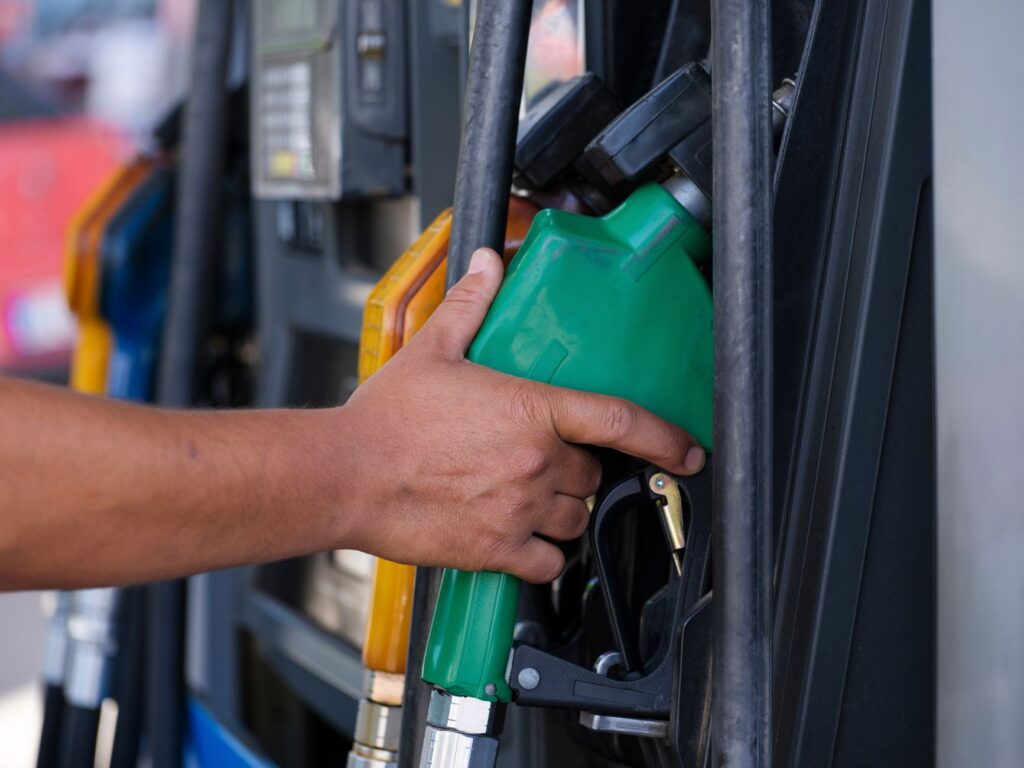
You pull up to the pump, swipe your debit card, put in $40 of gas, and drive off. Later you check your banking app and your available balance is $175 lower, not $40. Nothing went wrong. You just ran into an authorization hold, one of the least understood parts of how card payments work.
Holds are mostly harmless when you have plenty of money in your account. When you don’t, they can decline your next purchase or tip you into an overdraft. With holiday travel coming up, and with gas stations, hotels, and rental counters all relying on holds, it’s worth knowing what’s going on behind the screen.
What an authorization hold is
When you pay with a card, two separate things happen. First the merchant asks your bank, “Is this card good for this amount?” The bank says yes and sets that amount aside. That’s the authorization. Later, sometimes hours later, the merchant sends the final amount and the money actually moves. That’s settlement.
Most of the time the two numbers match. You buy a $12 lunch, the bank authorizes $12, and $12 settles. A hold becomes noticeable when the merchant doesn’t know the final amount when you hand over the card. A gas pump has no idea whether you’ll put in $20 or fill up a pickup truck, so it asks for a bigger number up front to be safe.
The Georgia Department of Law’s consumer protection division puts the split of responsibility clearly: the merchant decides how much to hold, but your bank decides how long the hold lasts. That explains a lot of the frustration people have, because the gas station that over-held you isn’t the one keeping your money tied up.
Why gas stations hold $175
Visa and Mastercard set limits on how much a gas pump can authorize. In April 2022, with gas averaging around $4.30 a gallon, both networks set that limit at $125. A couple of months later, with prices near $5, they raised it to $175, as Kelley Blue Book reported at the time.
The reasoning makes sense from the station’s side. If someone fills a large tank and the card was only approved for $75, the station eats the difference. From your side, it means a quick top-off can briefly lock up more than four times what you spent.
On a credit card this barely registers, since it only nibbles at your credit line. On a debit card it’s real money in your checking account that you can’t use until the hold drops.
How long holds last
This is where it gets murky. Georgia’s consumer office says a merchant hold generally lasts no more than a day, but some card companies allow banks up to three days to clear the transaction and release it.
How you pay changes the timing. Entering your PIN, rather than running the card as credit or signing, tends to release the hold much faster, often as soon as the pump finishes. If you’re using a debit card at the pump and it asks for a PIN, use it. If the pump has no PIN pad, Georgia’s advice is to pay inside or use a credit card instead.
Hotels are slower. The Points Guy notes that hotels typically hold $50 to $200 on top of your room rate and taxes to cover incidentals like the minibar or damage. That hold usually falls off within 24 hours of checkout but can take up to a week. Payment networks set the outer limits, and Visa allows holds of up to 30 days. Once the hotel tells your bank it doesn’t need the money, your bank still runs on its own timeline. One small tip from that piece: pay the final bill with the same card you used at check-in. Splitting the hold and the payment across two cards can slow the release.
Where holds actually hurt
For people with a comfortable cushion in checking, a hold is a curiosity. For someone running a tight balance before payday, it can cause real damage.
Picture a checking account with $220 in it. You stop for $40 of gas, and a $175 hold goes on. Your available balance now reads $45. You then buy $60 of groceries. Depending on your bank’s settings, that purchase gets declined at the register, or it goes through and triggers an overdraft fee, even though your actual spending for the day was only $100.
Georgia’s consumer office warns about exactly this: during the hold window, checks can bounce even though the money is technically there. Regulators have paid attention too. In 2022 the Consumer Financial Protection Bureau said that charging overdraft fees on debit transactions approved while the account had enough money was likely an unfair practice. The bureau withdrew that guidance in 2025, so how your bank handles these cases now depends largely on its own policy. It’s a good question to ask your bank directly.
Debit versus credit for travel
This is one of the clearest cases for keeping a credit card around even if you mostly live on debit. Georgia’s guidance is to give the hotel or rental car counter a credit card up front for any stay or rental longer than a day. You can still pay the final bill with debit if you want, since by then the merchant charges the exact amount.
If you don’t have a credit card, that’s fine. Just plan for the hold. Keep an extra few hundred dollars in checking during a trip, or move money over from savings before you leave, so a hotel incidental hold doesn’t eat into the cash you need for meals and gas.
How to keep holds from tripping you up
Most of the fixes are small habits. Use your PIN at the pump, or go inside and ask the cashier to authorize a set amount, like $30, for your pump. Kelley Blue Book also notes that paying cash inside skips the hold altogether. Use a credit card for hotels and rentals. Check your available balance, not just your current balance, since the available number is the one that reflects holds. And if a hold sticks around longer than a few days after a signature transaction, call your bank. Georgia’s office specifically suggests questioning holds that last more than a few minutes for PIN purchases or a few days for signature purchases.
Holds are an odd corner of banking. They exist to protect merchants, they’re controlled by your bank, and you’re the one who feels them. Once you know they’re coming, though, they stop being a surprise, and a small cash buffer or a credit card for travel takes care of nearly all the risk.