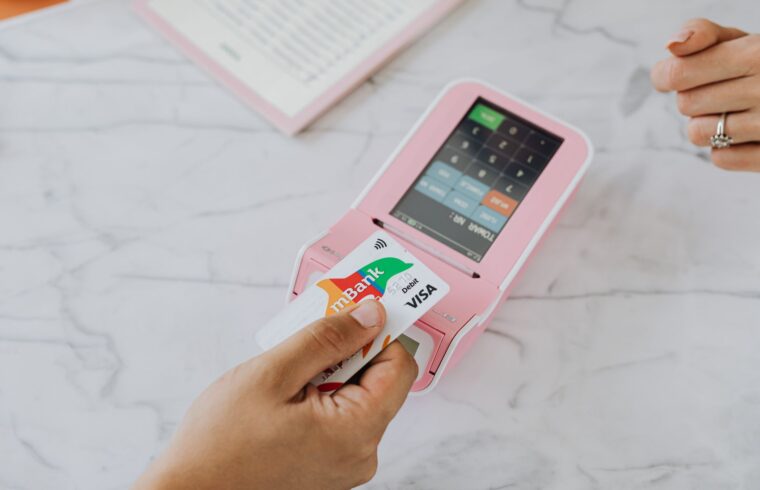

You hand over a sweater, a receipt, and your driver’s license, and the register prints a slip instead of a refund. The slip says the return was denied and lists a phone number for a company you’ve never heard of. You were inside the store’s posted return window. The policy said yes, and something else said no. That something else is how retailers track returns, and it runs on a file about you that you’ve probably never seen. The heaviest return weeks of the year start in about two months, which is enough time to learn how the file works before it decides anything.
Return tracking follows your ID and your card, not your name
The best-known company in this business is The Retail Equation, which sells return scoring to retailers. Its own description is fairly specific. Each return or exchange you make is tied to an identifier, such as the card you paid with or the government ID you showed, and those transactions build what TRE calls a “Linked History.” When you show up with a new return, TRE scores it in real time and sends the store one of three recommendations: approve, warn, or deny. The factors it says it weighs are how often you make that kind of transaction, its dollar value, whether you have a receipt, and your purchase history. It says it does not use age, gender, race, or marital status.
That’s why the ID request at the return desk matters more than it seems. Your license is the thread that ties a return at one store to a return at another. The Consumer Financial Protection Bureau’s 2025 list of consumer reporting companies has exactly one entry under its “Retail” heading, and it’s TRE, described as a company that “monitors and reports to merchants retail product return and suspected exchange fraud and abuse.”
Which stores use it shifts over time. Best Buy, the chain most often linked to TRE in news coverage, ended that relationship in 2019, according to a clarification CNBC added to its 2024 report on return tracking. Retailers rarely announce when they turn a system like this on, so the safe assumption is that a big chain asking for ID at the return desk is scoring you somehow.
Return fraud is the pitch, but abuse is the target
Retailers explain these systems in terms of fraud: stolen goods returned for cash, fake receipts, organized theft rings. The numbers point somewhere else.
Appriss Retail, the company behind TRE, published a benchmark report in February 2026 estimating that U.S. shoppers returned $706 billion in merchandise in 2025. It labeled $100 billion of that, about 14.2%, as preventable loss from fraud and abuse. Then it split the two: roughly 12% of returns counted as abuse and only 2% as fraud. By the industry’s own count, abuse is about six times the size of fraud.
Abuse is a gray zone. It’s wearing a dress to a wedding and returning it Monday, ordering three sizes and keeping one, or bringing items back without receipts again and again. Much of that is legal, and some of it fits the letter of a store’s policy. The National Retail Federation’s 2025 returns research found that 45% of shoppers consider it acceptable to “bend the rules” on returns, which shows how blurry that line is for ordinary people. (NRF also projected 2025 returns at $849.9 billion, about $144 billion more than Appriss. The two measure differently, and I wouldn’t treat either figure as final.)
So if your return gets flagged, the likeliest explanation isn’t that the software thinks you’re a thief. It’s that your pattern looks expensive.
A denied return is a math problem the store already solved
Picture a chain that handles $10 million in returns over the holiday season, and apply Appriss’s national ratios. About 14.2% of it, or $1.42 million, falls in the “preventable” bucket. Of that, roughly $1.2 million (12% of $10 million) is abuse and about $200,000 (2%) is fraud. A system tuned only to stop fraud would be chasing $200,000. One tuned to stop abuse goes after six times as much, which explains why the scoring leans on how often you return and whether you have receipts rather than on any evidence of theft.
Now look at what a warning costs the store. Appriss’s own consumer survey found that 90% of shoppers will buy again after receiving a warning. Warn 1,000 people and 900 keep shopping there. A store can afford to be wrong about a lot of honest customers when most of them come back anyway. That’s the trade built into the system, and it’s how a warning can land on someone who followed every rule.
The report you can request isn’t treated like a credit report
You can see your file. TRE says you can request your Retail Activity Report within 60 days of a warned or denied transaction, using the transaction ID printed on the slip the register handed you. Keep that slip. Without it you’re starting from scratch.
What you can do with the report is murkier than it would be with a credit report. In Hayden v. The Retail Equation, a federal case in California against TRE and retailers including CVS, Home Depot, and TJX, Judge David O. Carter in May 2022 dismissed the plaintiffs’ Fair Credit Reporting Act claims with prejudice, according to a summary from the Consumer Data Industry Association. The FCRA is the law that gives you a formal right to dispute errors on a credit report and forces the bureau to investigate. TRE’s own position is that it doesn’t supply information about creditworthiness. One judge’s ruling doesn’t bind every court, but it’s a reason not to count on credit-report-style dispute rights to clear a return flag. (A privacy claim in the same case was allowed to move forward.)
If this sounds familiar, it’s built a lot like ChexSystems, the database banks check before opening a checking account: a specialized file most people never see until it says no. The difference is that ChexSystems operates under federal credit reporting law, and a return score, at least in that one court’s view, doesn’t.
Your receipt is worth more than any right you have
Put those pieces together and the practical lesson is simple. The score leans heavily on whether you have a receipt, and the legal route for fixing a bad score is uncertain, so the receipt is your bargaining power. Ask for gift receipts at checkout, and for bigger holiday gifts, ask whoever bought them to hang onto the original receipt until January. Since TRE says frequency is one of its factors, bringing returns back over a few weeks rather than in one large haul gives the system less to react to.
If you do get flagged, request your report right away and look for transactions that aren’t yours. TRE describes what it sends the store as a recommendation, which means the retailer makes the final call, so ask to speak with someone at the store or corporate customer service who can make it. Once a return does go through on a card, the timing of the money is its own story, which we cover in how credit card refunds work.
Return scoring isn’t going away, because the math works for the stores. What changes once you understand how retailers track returns is where you put your attention: less worry about being accused of something, more care with the paper trail.