
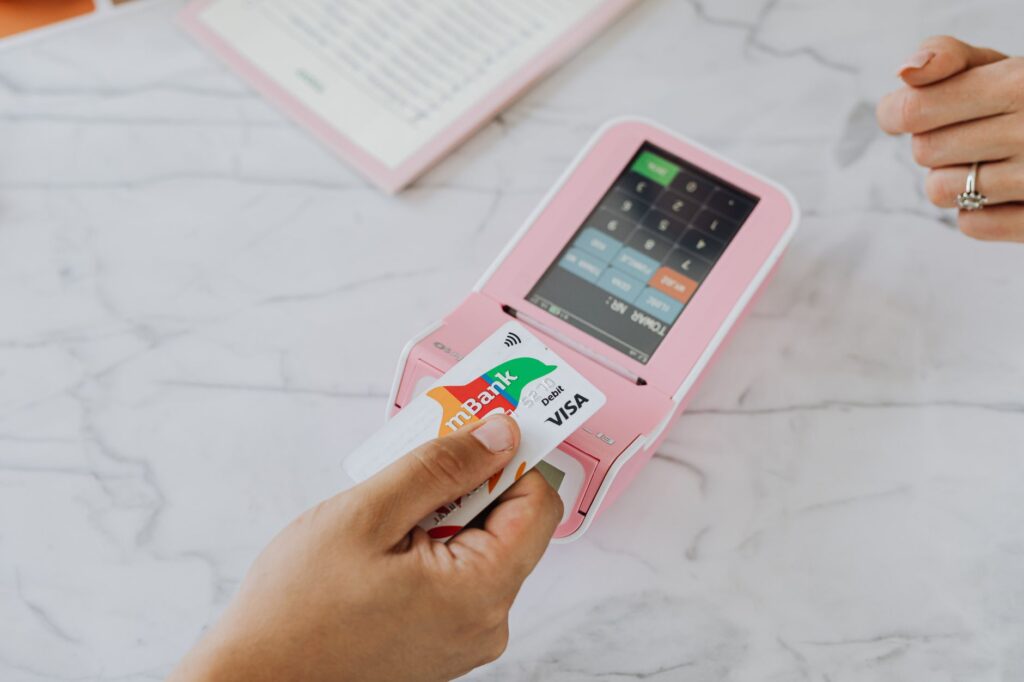
Every time you tap your debit card at a gas station or grocery store, a small fee moves from the merchant to the bank that issued your card. You never see it on your receipt. For most large banks, that fee has been capped by the Federal Reserve since October 1, 2011, at 21 cents plus 0.05% of the purchase, with one extra cent allowed for banks that meet fraud-prevention standards.
On October 26, 2026, a federal appeals court threw that cap out. The case, Corner Post, Inc. v. Board of Governors of the Federal Reserve System, was brought by a North Dakota truck stop, and the Eighth Circuit ruled unanimously in its favor. The headlines said “swipe fee cap struck down,” which sounds like banks can now charge whatever they want. That’s not what happened, and the details matter if you want to understand what could change about your checking account.
How a debit swipe fee works
When you buy something with a debit card, the merchant doesn’t get the full price. A cut goes to the card network and the payment processor, and the biggest piece, called the interchange fee, goes to your bank. The bank’s argument is that it’s covering the cost of approving the transaction, moving the money and eating some of the fraud losses.
Before 2011, banks set these fees with the networks, and merchants had little say. Then Congress passed the Durbin Amendment as part of the Dodd-Frank Act. It told the Fed to limit debit interchange fees for banks with $10 billion or more in assets so that the fee was “reasonable and proportional” to the cost of a transaction. The Fed wrote Regulation II, landed on the 21-cent formula, and that’s been the rule ever since.
Here’s what that looks like in practice. On a $100 purchase, a big bank could collect up to 27 cents. Smaller banks and most credit unions are exempt, and they earn noticeably more. According to the Federal Reserve’s data for 2023, debit and prepaid card interchange fees totaled $34.12 billion. The average fee for exempt issuers was 52 cents per transaction, while covered issuers collected around 22 to 24 cents depending on the network.
What the court actually decided
The court didn’t say debit fees should be unlimited. It said the opposite, more or less. The judges found that the Fed had stretched the law by counting fixed costs, like general overhead, when it calculated the cap. The Durbin Amendment says the fee should track the incremental cost of a particular transaction, and the court read that narrowly. It applied the Supreme Court’s 2024 Loper Bright decision, which means judges interpret statutes on their own instead of deferring to an agency’s reading.
The merchants argued the cap was too high, and they won. The court sent the rule back to the Fed to rewrite. It didn’t set a new number itself.
That rewrite has some history behind it. Back in October 2023, the Fed proposed lowering the cap to 14.4 cents plus 0.04% of the purchase, with a possible 1.3-cent fraud adjustment. That proposal was never adopted. The court also floated the idea that the Fed could use something like average variable cost as a stand-in for per-transaction cost, which would probably push the number lower still. For context, the Fed’s 2013 report found that the median covered bank’s cost to authorize, clear and settle a debit transaction in 2011 was 11 cents.
Nothing changes at the register this week
Even with the ruling, the current cap is still in place for now. The decision doesn’t take effect until the court issues its formal mandate. The parties have 45 days to ask for a rehearing, and the mandate usually follows about seven days after that deadline passes or a rehearing request is denied. The Fed or banking groups could also ask the full Eighth Circuit or the Supreme Court to take another look.
There’s a second case in play too. In Linney’s Pizza, a federal court in Kentucky upheld Regulation II, and that appeal is now before the Sixth Circuit, which heard arguments on October 22. If the two appeals courts end up disagreeing, the Supreme Court becomes much more likely to step in. So this is going to take a while.
ConsumerAffairs put it plainly in its coverage: consumers shouldn’t expect an immediate change at checkout, and nothing in the decision requires stores to lower their prices.
Why your checking account is part of this story
Interchange revenue is one of the ways banks pay for checking accounts that don’t charge monthly fees. The American Bankers Association says “interchange revenue helps support affordable checking accounts, rewards, and payment security,” and it has warned that a lower cap could push banks to raise account fees, bump up minimum balances or cut perks.
We’ve seen a version of this before. When the original cap took effect in 2011, the Fed later reported that it cut covered banks’ debit interchange revenue by roughly half. Several large banks ended their debit rewards programs around that time, U.S. Bank among them, and Bank of America announced a $5 monthly debit card fee in the fall of 2011 before dropping the plan that November after customers revolted.
I’d take the bank lobby’s warnings with a grain of salt, since they have an obvious interest in the outcome. Merchants have an equally obvious interest on the other side. They say they’ve been overpaying for years, and the court agreed the current formula went beyond what the law allows. Whether any savings get passed to shoppers is up to each store, and there’s no rule forcing it.
What this explains about the accounts you see today
The cap also explains something about banking that confuses a lot of people: why a small credit union might offer a checking account with debit rewards or a high interest rate, while a national bank won’t. Because institutions under $10 billion in assets are exempt, they collect more than twice as much per swipe on average. That extra money is what funds a lot of the “rewards checking” accounts you find at community banks and credit unions.
If a new, lower cap eventually arrives, that gap could get wider. Big banks would earn even less per debit swipe, while exempt institutions would keep their current rates. It’s one more reason to shop beyond the largest banks when you’re looking for a fee-free checking account or a savings account that pays a real rate. The FDIC’s BankFind tool can tell you how large a bank is, and credit unions with deposit insurance are covered by the NCUA instead.
What to watch over the next year
For now, nothing about your debit card or your account terms changes. The things worth watching are whether the Fed issues a new proposal, what the Sixth Circuit decides in the Kentucky case, and whether your own bank sends you a notice about new fees or revised minimum balances. Banks generally have to give you advance notice before changing account terms, so read those emails instead of deleting them.
If your bank does start charging more, that’s your cue to compare. The 2011 cap reshaped checking accounts for a decade, and a rewrite could do the same.