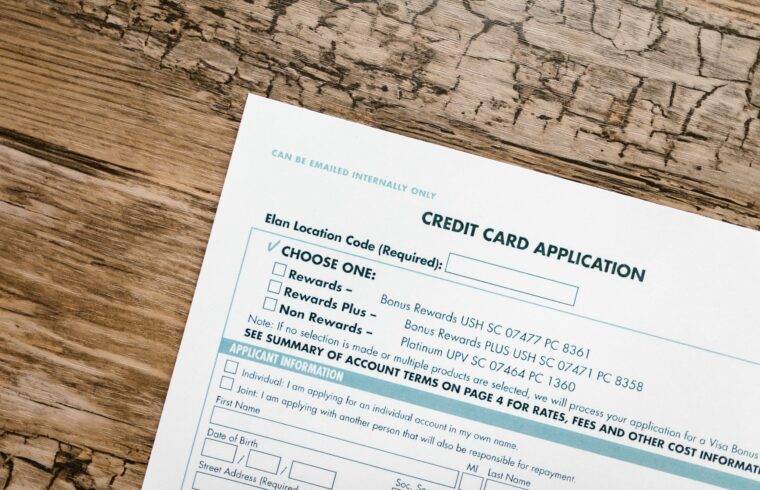

A birthday card from your grandmother, a year-end bonus, a refund from a contractor. Checks still show up, and they show up most around the holidays. You deposit one, open your banking app, and find that only part of it is available. The rest says “pending” or “on hold,” sometimes for days.
It can feel like your bank is sitting on your money for no reason. There is a reason, though, and a federal rule that limits how long the bank is allowed to sit on it. That rule is called Regulation CC, and its dollar limits changed in July 2025 for the first time in five years. Plenty of people (and at least one government web page) are still working off the old numbers.
Why Banks Hold Checks at All
A check is a promise, not money. When you deposit one, your bank credits your account right away, but it hasn’t been paid yet. It has to send the check to the bank it was drawn on and wait to see whether that bank pays it. If the check bounces, is forged, or was written on a closed account, your bank wants to recover the funds from you before you’ve spent them.
Before 1987, banks could hold deposits for as long as they liked, and some held checks for weeks. Congress responded with the Expedited Funds Availability Act, and the Federal Reserve wrote Regulation CC to carry it out. Today the Fed and the Consumer Financial Protection Bureau share responsibility for it. The rule doesn’t stop banks from holding checks. It sets a maximum schedule they have to follow.
The Next-Day Money
Some deposits are considered low risk and have to be available by the next business day. According to the CFPB, that list includes cash deposited in person, electronic payments like direct deposits and wire transfers, government checks, cashier’s checks and certified checks deposited in person or at your bank’s own ATM, and checks drawn on your own bank.
Then there’s the minimum amount. Even when the bank holds an ordinary personal check, it has to release the first portion of your check deposits by the next business day. That figure used to be $225. Since July 1, 2025, it has been $275. So if you deposit a $600 check from your uncle, you should be able to use $275 of it the next business day, even while the rest waits.
Timing matters here too. Banks set a daily cutoff, and anything deposited after it counts as the next business day’s deposit. The CFPB says the cutoff can be no earlier than 2:00 p.m. at a branch and no earlier than noon at an ATM. A check you drop off at 4:30 on Friday is usually treated as a Monday deposit, which pushes the whole schedule back.
The Second-Day Rule and Large Deposits
For most other checks, the remaining funds generally have to be available by the second business day. That’s the normal ceiling for an everyday personal check.
Larger deposits get more room. Under the large-deposit exception, a bank can apply a longer hold to the portion of a day’s check deposits above a threshold, and that threshold rose from $5,525 to $6,725 in July 2025. The CFPB describes funds above that line as generally available within seven business days. So if you deposit a $9,000 check for a used car you sold, expect the first several thousand on a normal schedule and the rest to take noticeably longer.
The same $6,725 figure shows up in two other exceptions. New accounts (open fewer than 30 days) can face longer holds on deposits over that amount, and so can accounts that have been overdrawn repeatedly. Under the rule, that covers accounts with a negative balance on six or more banking days in the past six months, or with a negative balance of $6,725 or more on at least two days.
Banks can also extend a hold if they have reasonable cause to doubt a check will be paid, or if an emergency like a natural disaster or a system outage disrupts processing. When a bank uses one of these exceptions, it generally has to tell you, usually with a hold notice explaining why and when the money will be available.
Where You Deposit Changes the Clock
ATM deposits follow their own logic. A check deposited at your own bank’s ATM may take up to two business days to clear the hold. Deposit at an ATM your bank doesn’t own, and the CFPB says the legal deadline stretches to the fifth business day after the deposit.
Mobile deposits are the gray area. Regulation CC was written before anyone was photographing checks with a phone, and the rule’s availability schedule doesn’t clearly govern remote deposits. Your bank’s mobile banking agreement sets the timeline instead, along with any daily or monthly limits on how much you can deposit through the app. If you rely on mobile deposit, it’s worth reading that section of your account agreement once, so you aren’t surprised when a large check sits for a week.
Why the Numbers Changed in 2025
The dollar figures in Regulation CC aren’t fixed. The law requires them to be adjusted for inflation every five years, based on the Consumer Price Index for Urban Wage Earners and Clerical Workers (CPI-W) and rounded to the nearest $25. In the final rule published by the Federal Reserve and the CFPB, the agencies noted that CPI-W rose 21.8% between July 2018 and July 2023, which drove the July 2025 increases. Along with the minimum amount and the $6,725 threshold, the cash withdrawal amount went from $450 to $550, and the penalties banks face for breaking the rules went up as well.
The next adjustment is scheduled for July 1, 2030. In the meantime, you may still see old figures floating around. As of this writing, the CFPB’s own consumer Q&A page still lists the pre-2025 amounts of $225 and $5,525, while the agencies’ final rule and bank disclosures reflect the new $275 and $6,725. If a number you read online doesn’t match what your bank tells you, the rule’s date is the first thing to check.
“Available” Doesn’t Mean the Check Is Good
Scammers make their money on a common misunderstanding. When your bank releases funds from a check, that doesn’t mean the check has cleared. It only means the legal hold period is over. A check can still come back as fraudulent weeks later, and when it does, the bank reverses the deposit and you owe the money back.
That’s how most fake check scams work. Someone overpays you for an item, sends a check, and asks you to wire back the difference. The money shows up as available, you send the refund, and then the original check bounces. The Federal Trade Commission warns that banks can take weeks to discover a fake check. If a stranger is asking you to send money back from a check they gave you, treat that as the warning sign itself.
How to Get Your Money Faster
Most of the waiting is avoidable with a little planning. Depositing before the cutoff, in person or at your own bank’s ATM, keeps you on the shortest legal schedule. Asking the person paying you for a direct deposit, a cashier’s check, or a bank transfer moves the money onto the next-day list. If you’re expecting a large check, splitting the timing around the $6,725 threshold won’t help much, but calling your bank ahead of time sometimes will. Many banks release funds early for long-standing customers with steady balances, even though the rule doesn’t require it.
And if you’re keeping a small cushion in checking or a linked savings account, a hold stops being a problem at all. You can pay your bills on time while the bank finishes its paperwork in the background.