
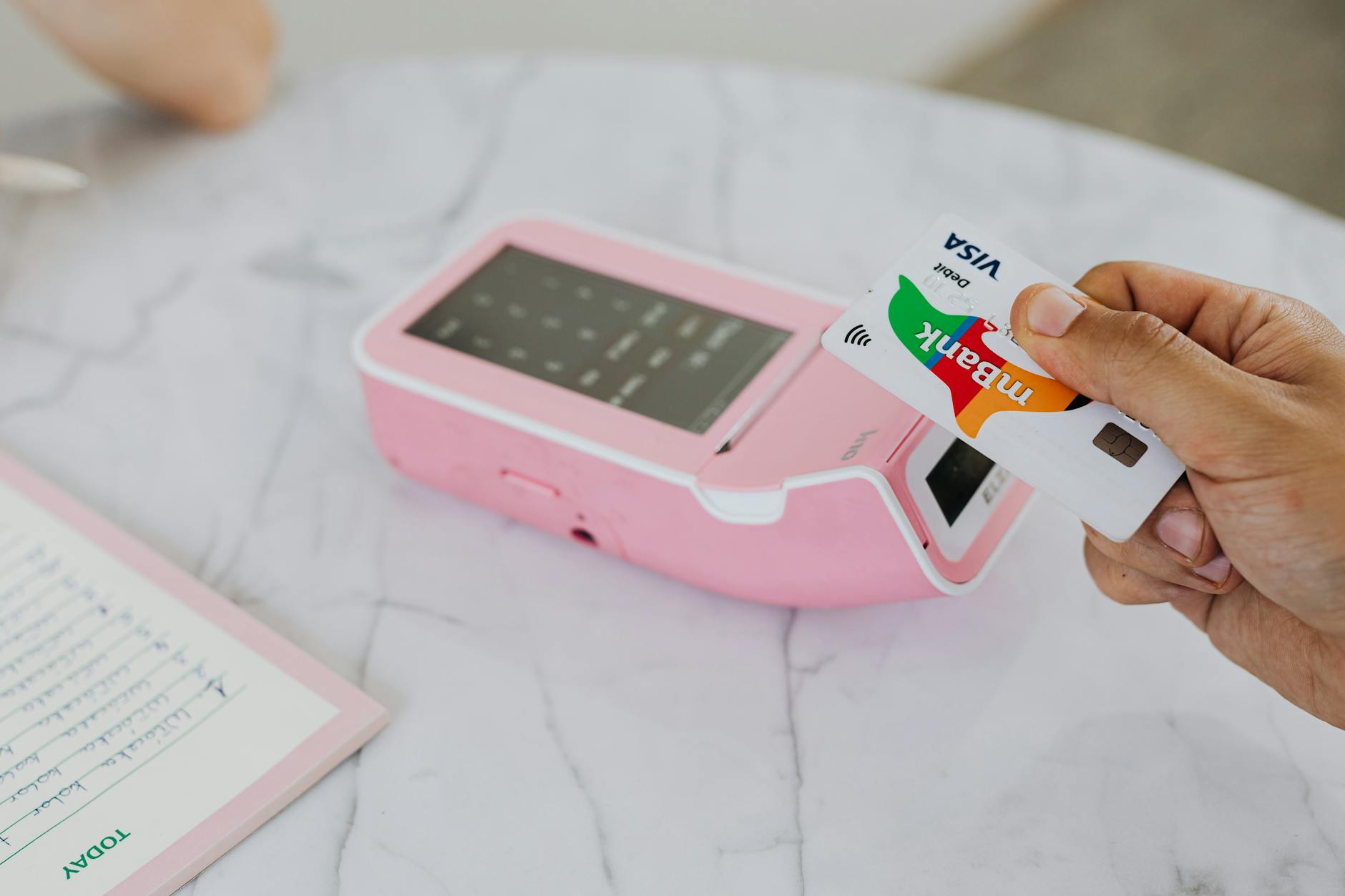
Remember when contactless payments were this futuristic thing that seemed kind of gimmicky? “Just tap your card” felt like a feature you’d see in sci-fi movies, not something you’d actually use at your local coffee shop.
Well, we’re living in that sci-fi movie now. In 2026, contactless payments have become genuinely mainstream. Most new debit cards come equipped with the technology. Major retailers have the infrastructure in place. And here’s the part that matters most: contactless payments are actually more secure than the traditional swiping or chip insertion you’ve been doing for years.
If you’re still hesitant about tapping instead of swiping, let’s talk about why the technology is not only safe — it’s actually safer.
How Contactless Payments Actually Work
The magic behind contactless payments is a technology called NFC: Near Field Communication.
Your debit card or phone contains an embedded NFC chip. When you hold it near a contactless reader (you’ve probably seen those wavy lines on payment terminals), the two devices communicate wirelessly over a very short distance — typically just a few centimeters. The reader doesn’t get your actual card number. Instead, it receives a unique, one-time code that’s generated specifically for that transaction.
This is the crucial part: that code can only be used for that specific purchase, at that specific time, at that specific location. A fraudster who somehow intercepts that code can’t use it anywhere else or at any other time. It’s worthless outside of the exact context in which it was created.
Compare that to the traditional magnetic stripe on the back of your card. When you swipe, the merchant’s reader gets access to your permanent card number. That number stays the same for every transaction. If a fraudster captures it, they can use it anywhere, anytime, until you notice and call your bank to issue a new card.
The chip technology (inserted into terminals) is better than the magnetic stripe, but contactless is better still. The one-time code system, called tokenization, is the fundamental reason why.
Tokenization: Your Real Security Layer
Let’s zoom in on tokenization because this is where the security actually lives.
When you set up contactless payments on your phone or enable it on your debit card, you’re not putting your real card number anywhere. Instead, your bank or payment processor creates a “token” — essentially a stand-in code — that’s stored on your device.
Every time you make a contactless payment, your device generates a new, unique token just for that transaction. The merchant never sees your actual card number. The payment processor that handles the transaction doesn’t see it either. Only your bank knows the connection between the token and your real account.
If a criminal somehow intercepts one of these tokens mid-transaction, they’ve captured something that’s only valid for that one purchase in that one location at that one moment. They can’t reuse it. They can’t sell it. It’s like stealing a ticket to a movie that’s already started.
This is why security experts consider tokenized payments more secure than traditional magnetic stripe or even chip payments: the mechanism itself prevents the kind of widespread fraud that was possible before.
Adoption Is Growing for Good Reason
Contactless payment adoption isn’t just growing because it’s convenient (though it absolutely is). It’s growing because it’s more secure and fraud-resistant.
Visa, Mastercard, and payment processors have been heavily pushing contactless technology specifically because it reduces fraud rates. When fraud goes down, everyone wins: merchants face fewer chargebacks, cardholders experience less identity theft, and banks have fewer disputes to manage.
The data backs this up. Contactless and mobile payments have significantly lower fraud rates than traditional card-present transactions. This has led to something interesting: in many cases, your liability for fraudulent contactless payments is actually lower than your liability for fraudulent traditional swipes.
Most major banks now actively encourage contactless adoption. Some have started issuing cards with contactless capability as the default. Others offer incentives — small cash back bonuses or rewards — for using tap-to-pay. They’re doing this because the technology is genuinely better for everyone involved.
Common Misconceptions (That Aren’t True)
Whenever new payment technology emerges, a bunch of myths emerge alongside it. Let’s clear those up.
“Someone can steal my card number by standing near me with a card reader.”
This isn’t how it works. First, you need a specifically configured NFC reader that’s positioned very close to your card — we’re talking a few centimeters. General NFC readers don’t automatically pull card numbers. Second, they wouldn’t get your actual card number; they’d get a token that’s worthless without the transaction context. Third, even if they somehow captured data, NFC transactions require authentication (your bank might ask for confirmation on your phone). A random person standing near you on the subway can’t just passively steal your payment information.
“Contactless payments are less secure because there’s no PIN.”
This is partially true but misleading. Most contactless payments don’t require a PIN because the technology itself is so secure that requiring one would be adding security theater rather than actual security. However, if your contactless limit is exceeded (usually $100+) or if multiple transactions happen suspiciously in a row, your bank will ask for additional verification. The security is built into the system, not just the PIN.
“Mobile contactless payments (Apple Pay, Google Pay) are less safe than physical cards.”
If anything, they’re safer. Mobile payments require authentication on your phone before they work. Someone can’t just steal your phone and make purchases — they need your biometric data (fingerprint, face ID) or your PIN. Physical cards don’t have that additional layer.
“Once contactless becomes standard, fraud will just move to that system.”
Fraud doesn’t really work that way with tokenization. Criminals aren’t moving from one outdated system to a newer, more secure one. They’re moving to where the weak spots still exist. Which is why you still hear about magnetic stripe fraud (older systems) but rarely about successful contactless fraud.
How to Enable Contactless on Your Debit Card
Most new debit cards already have contactless built in. You don’t need to do anything special to activate it — it works automatically.
If your card has the contactless symbol (those four curved lines) on the front or back, you’re good to go. Just hold your card near the reader and tap when prompted. Some readers ask you to tap, some will show “contactless ready” to indicate the terminal accepts it.
If your current card is old and doesn’t have contactless, request a new one from your bank. There’s typically no fee for a replacement card, and most banks will prioritize sending you one with contactless capability.
For mobile payments, if you have Apple Pay or Google Pay set up, you’re already using the most secure form of contactless payment available. These systems require biometric or PIN authentication before every transaction, which makes them extremely secure.
What Happens If Something Goes Wrong
Here’s the part that should actually make you feel confident: your fraud protection is excellent.
By law, you’re not liable for unauthorized contactless transactions. If someone somehow uses your card for a fraudulent purchase, you report it to your bank and it gets reversed. You’re protected.
In practice, because contactless payments are so secure and the tokens are one-time use, fraudulent contactless transactions are extremely rare. You’re more likely to experience fraud on your old magnetic stripe card than on a modern contactless payment system.
The Real Takeaway
Contactless payments represent genuine technological progress in security. They’re more secure than older payment methods, they’re becoming standard industry-wide, and they’re actively encouraged by the financial institutions that understand the security benefits.
The transition to contactless isn’t hype. It’s a real security improvement that happens to also be convenient. Tap to pay isn’t the future — it’s becoming the present, and the sooner you’re comfortable with it, the safer your financial life actually is.
Sources
- Visa – Contactless Payments and Security
- Mastercard – NFC Technology Explained
- Apple Pay – Security and Privacy
- Google Pay – How Tokenization Works
- Federal Reserve – Payment Systems and Fraud
- Consumer Reports – Credit Card Security