
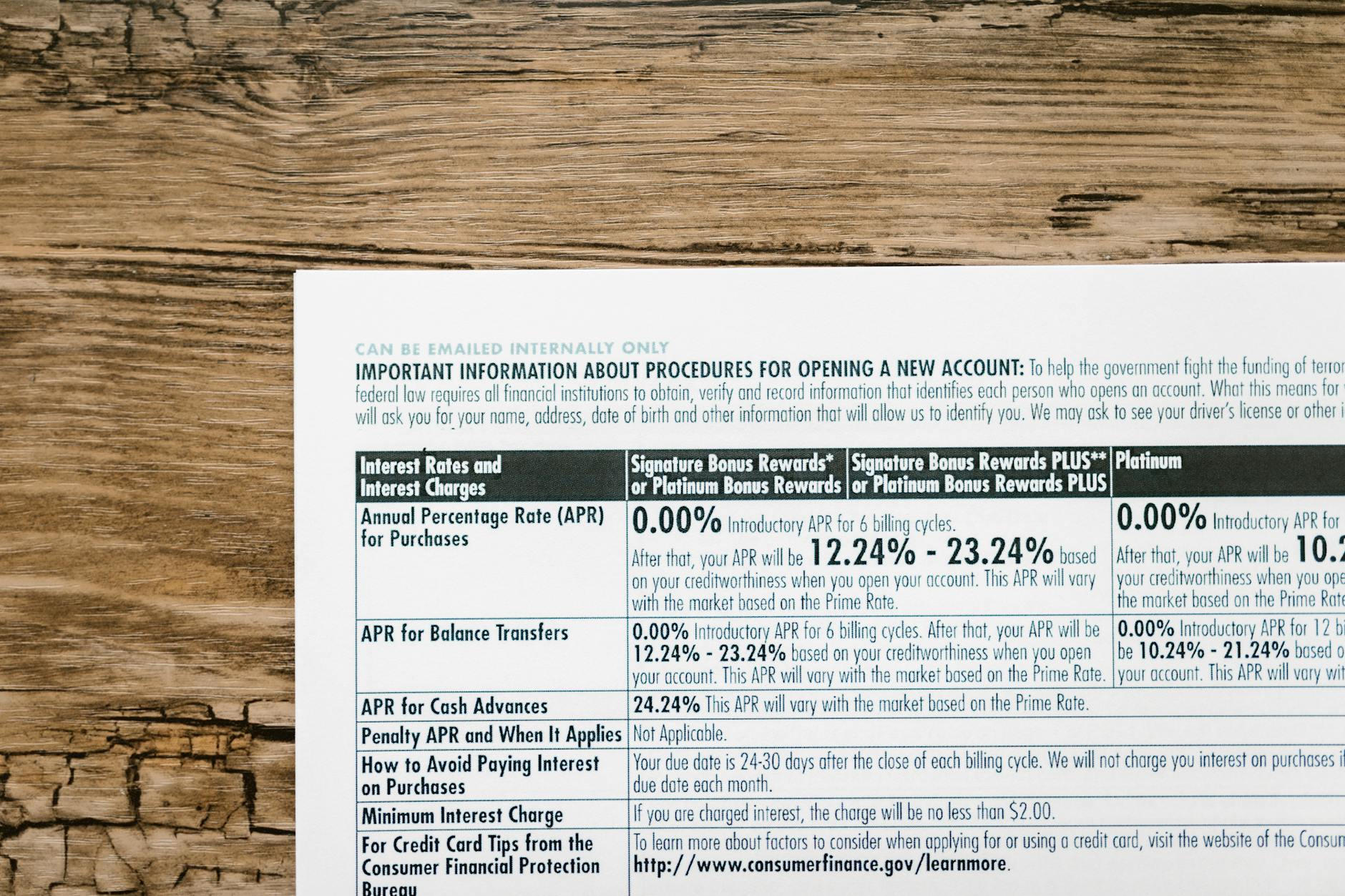
Let me ask you something: Do you know exactly how much you’re paying your bank every month?
Most people don’t. Banks are incredibly skilled at burying fees in fine print, spreading them across multiple charges, and timing them just right so that you don’t notice any single one. But when you add them all up over a year, those hidden fees can amount to hundreds of dollars annually — money you might not even realize you’re losing.
This is one of the most insidious ways banks profit at the expense of everyday people. The good news? It’s entirely preventable once you know what to look for.
The Monthly Maintenance Fee: The Baseline Cost
Let’s start with the most obvious one: the monthly maintenance fee.
This is the charge banks impose just for the privilege of having a checking account. Traditional banks typically charge between $13 and $16 per month, though some charge less if you meet certain requirements (maintaining a minimum balance, setting up direct deposit, etc.).
That might not sound like much. But $13 per month is $156 per year. Over ten years, that’s $1,560 in pure overhead for your bank to store your money. Online banks like Ally, Capital One 360, and SoFi typically charge zero monthly maintenance fees. If you’re paying this fee, you’re literally leaving money on the table.
Some traditional banks will waive this fee if you maintain a minimum balance. But that creates a different problem: you’re keeping money in a low-interest account to avoid a fee, which means you’re also losing interest you could be earning elsewhere. The math rarely works out in your favor.
ATM Fees: Small Charges, Big Problem
Here’s where many checking accounts bleed money silently.
Every time you use an out-of-network ATM, your bank charges you a fee. The average out-of-network ATM fee is $2.50 to $5 per transaction. Some banks charge even more. Meanwhile, the ATM operator might charge you an additional fee.
Think about that. A single cash withdrawal might cost you $5 in total fees. If you use an out-of-network ATM twice a week, that’s $10 per week, $40 per month, $480 per year.
This is one of the easiest fees to avoid: either use your bank’s ATM network, or switch to a bank with a large fee-free ATM network. Online banks handle this better than anyone. Chime gives you access to 60,000+ fee-free ATMs. Ally offers 40,000+. Capital One 360 has tens of thousands. Before you switch banks, verify the ATM access in your area.
Overdraft Fees: The Most Expensive Mistake
Overdraft fees are arguably the most painful.
The average overdraft fee is $35, though some banks charge as much as $40 or more. And here’s the part that’s genuinely predatory: you can overdraft multiple times in a single day, and many banks charge a separate fee for each overdraft, not just one per day.
So if you have $50 in your account and make three purchases of $30 each, you could end up with $105 in overdraft fees on top of the deficit. You’re now $155 in the hole for a problem that would have cost $0 at a bank that simply declined the transactions.
Most modern banks allow you to opt out of overdraft protection entirely, which is the smart move. Yes, your card might decline at the store, but that’s infinitely better than waking up to a $105 overdraft fee nightmare.
If overdrafts have been a recurring problem for you, this is a serious red flag that you need to switch to a bank with overdraft protection that actually works — or switch to an online bank where these fees are less common.
Wire Transfer Fees: Expensive to Send Money
Need to send money electronically? Your bank is going to charge you.
Wire transfer fees typically range from $15 to $35, depending on whether the transfer is domestic or international. Some banks charge different amounts for incoming vs. outgoing wires. If you’re not paying attention, you might not notice the fee being deducted because it happens separately from your regular account activity.
This is less of an issue for most people (how often do you wire money?), but if you do it occasionally, it adds up. Online money transfer services like Wise or PayPal often have lower fees for international transfers, which is worth considering if you move money across borders regularly.
Paper Statements and Account Closure Fees
These are smaller but still real.
Some banks charge $2 to $5 per month to receive paper statements in the mail. In the digital age, this is almost absurd — especially since online statements are free. But if you’ve been getting paper statements by default and haven’t opted out, you’ve been paying for something you likely don’t need.
Even stranger, some banks charge a fee just to close your account if you close it within 90 days of opening it. This is meant to deter people from account-churning, but it’s another hidden cost that catches people off guard.
Foreign Transaction Fees: Travel Gets Expensive
Use your debit card internationally? Your bank might charge you 1–3% on every transaction.
On a $100 purchase in another country, that’s $1–3 in pure fees. A week-long trip where you make 20 transactions could easily cost you $20–60 in fees you didn’t anticipate.
Some online banks handle foreign transactions better than others. SoFi, for instance, offers international ATM fee reimbursement on some accounts. If you travel frequently, this is worth researching before you choose a bank.
The Fee Audit: Find Your Money
Here’s your action plan to stop bleeding money:
Step one: Go through your last three months of bank statements. Write down every single fee you’ve been charged. Most online banking platforms let you search or filter by fees, which makes this easier.
Step two: Add up the total. Multiply it by four to estimate your annual fee burden.
Step three: Research alternatives. Look specifically at online banks like Ally, Capital One 360, and SoFi, which typically charge minimal fees and offer higher interest rates to boot.
Step four: If you want to stay with your traditional bank, call and ask which fees can be waived. Ask about requirements for waiving maintenance fees. Ask if they can increase your ATM network access.
Step five: If the fees are significant and your bank is unwilling to budge, switch. The process is easier than you think, and a good online bank will help you set up direct deposit and automatic payments on your current accounts.
The Reality
Banking fees are a tax on financial disorganization. Banks count on the fact that most people won’t notice individual charges, won’t add them up, and won’t bother switching. It’s a profitable bet because they’re mostly right.
But you don’t have to be one of those people. A careful audit of your fees might reveal that you’re losing hundreds of dollars annually to charges you didn’t even know existed. That’s money you could be saving, investing, or using for anything else.
Your bank account should work for you, not against you.
Sources
- Consumer Financial Protection Bureau – Bank Fees Explained
- Ally Bank – Fee Schedule
- Capital One 360 – Checking Account Fees
- SoFi – Checking Account Features
- Federal Reserve – Understanding Bank Fees
- Investopedia – Bank Fees and How to Avoid Them