
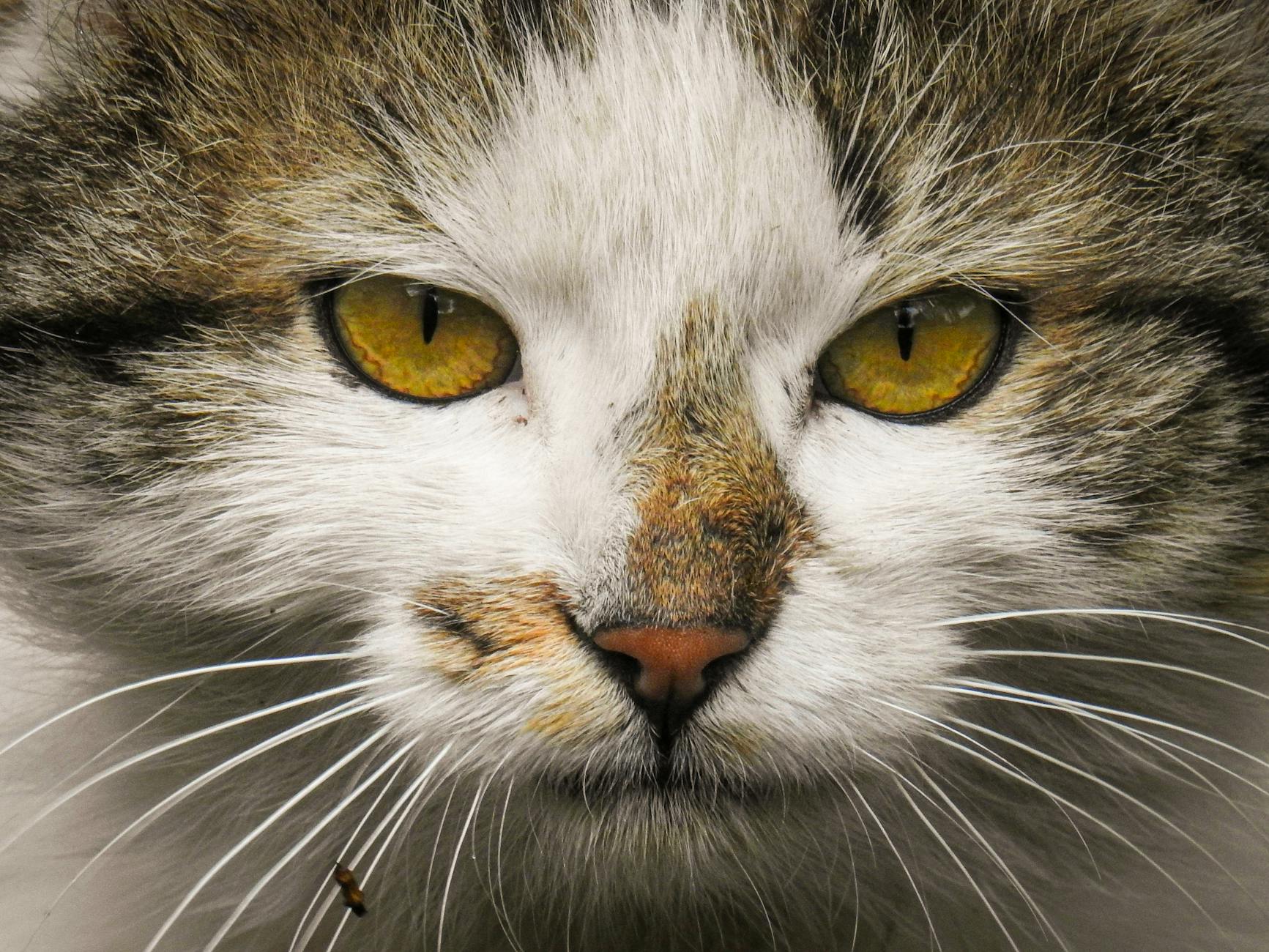
Cats have a reputation for being mysterious and aloof. But spend enough time with a cat, and you’ll realize they’re communicating constantly — just on their own terms. The slow blink from across the room. The tail flick when you reach for them. The specific meow that means “feed me” versus the one that means “open this door.” Cats have a rich vocabulary of body language, vocalizations, and behaviors, and learning to read them makes the entire relationship more rewarding.
Unlike dogs, who wear their emotions on their sleeves (and tails), cats tend to be more subtle. But once you know what to look for, their signals are remarkably clear.
The Eyes: Your Cat’s Most Expressive Feature
Cats communicate more through their eyes than almost any other body part. And one of the most meaningful signals is something most people would miss entirely: the slow blink.
When your cat looks at you and deliberately closes their eyes for a moment before opening them again, they’re telling you they trust you. In the feline world, closing your eyes in someone’s presence is a vulnerable act — it means they feel safe enough to let their guard down. Veterinary behaviorists sometimes call this the “cat kiss.” You can even slow-blink back at your cat, and many cats will respond in kind.
Wide, round pupils can mean several things depending on context. In a dimly lit room, wide pupils are normal — cats’ eyes dilate to let in more light. But in bright lighting, dilated pupils can indicate excitement, fear, or stimulation. If your cat’s pupils suddenly go wide during play or when they’re staring at something outside, they’re likely in hunting or high-arousal mode.
Narrow, constricted pupils combined with a hard stare can signal aggression or defensiveness. If you see this look directed at another pet or at you, give your cat space.
The Tail Is a Mood Indicator
A cat’s tail is remarkably expressive once you learn to read it.
A tail held high and straight is a confident, friendly cat. This is the greeting posture — when your cat walks toward you with their tail pointing straight up, they’re happy to see you. A slight curve at the tip adds an extra note of playfulness.
A tail that’s puffed up to look twice its normal size is a fear response. Your cat is trying to make themselves look bigger to scare off a perceived threat. You might see this during a thunderstorm, when they encounter an unfamiliar animal, or if something suddenly startles them.
A slowly swishing tail back and forth is a sign of focus or mild irritation. Cats do this when they’re watching birds through a window (focused hunting mode) or when something is annoying them. If you’re petting your cat and the tail starts swishing, it’s usually time to stop.
A tail tucked tight against the body or between the legs means fear or submission. A cat in this posture is feeling threatened and wants to disappear.
Ears Reveal Emotional State
Cat ears are incredibly mobile and rotate to capture sounds from all directions. But their position also tells you a lot about mood.
Ears pointing forward and slightly to the sides indicate a relaxed, content cat. This is their default comfortable position.
Ears rotated sideways — sometimes called “airplane ears” because they look like wings — signal increasing anxiety or irritation. Your cat is uncomfortable with something in their environment.
Ears flattened completely against the head are a clear warning sign. This means the cat is either very frightened or preparing to be aggressive. The ASPCA emphasizes that flat ears should be taken seriously — a cat in this state may lash out if approached.
Vocalizations and What They Mean
Cats have a surprisingly varied vocal repertoire, and interestingly, adult cats meow primarily to communicate with humans, not with other cats. In the wild, meowing is something kittens do to get their mother’s attention. Domestic cats have essentially adapted this behavior for their human companions.
Different meows mean different things, and most cat owners eventually learn to distinguish between them. A short, quick meow is usually a greeting. Repeated meows suggest excitement or urgency. A drawn-out, plaintive meow often means your cat wants something — food, attention, or access to a room.
Purring is generally associated with contentment, but it’s not that simple. Cats also purr when they’re stressed, in pain, or even seriously ill. Purring may serve as a self-soothing mechanism, similar to how humans might hum when nervous. According to PetMD, context is everything — a purring cat curled up on your lap is happy, but a purring cat hiding under the bed may be signaling distress.
Trilling — that musical, rising chirp your cat makes — is one of the most positive vocalizations. Mother cats trill to their kittens to get their attention, and adult cats use it as a friendly greeting with humans or other cats they trust.
Hissing and growling are defensive sounds. They’re a clear message: “Back off.” Respect this boundary. A cat who hisses is scared and warning you before resorting to physical defense.
Common Behaviors Decoded
Kneading (pushing their paws in and out on soft surfaces) is a comfort behavior that originates from kittenhood, when kittens knead their mother to stimulate milk flow. An adult cat who kneads on your lap or a blanket is feeling safe and content.
Head bunting — when your cat pushes their head against you — is a scent-marking behavior. Cats have scent glands on their cheeks, chin, and forehead, and rubbing against you deposits their scent. It’s a way of claiming you as part of their territory, which is essentially a feline compliment.
Showing their belly is a sign of trust, but it’s not necessarily an invitation to rub it. Many cats will show their belly in a relaxed moment but react defensively if you actually touch it. This is different from dogs, where a belly display typically means “please rub here.”
Bringing you “gifts” (usually dead or dying prey, or a toy) is your cat sharing their hunting success with you. As unappealing as a dead mouse at your feet might be, it’s actually a sign of affection and trust.
When to Be Concerned
Sudden changes in your cat’s behavior or communication patterns can signal a health issue. A normally vocal cat who goes quiet, a playful cat who becomes lethargic, a social cat who starts hiding, or a cat who suddenly starts vocalizing excessively at night — these are all worth discussing with your vet.
Cats are masters at hiding pain and illness. By the time symptoms become obvious, the problem may have been developing for weeks or months. Paying attention to subtle shifts in their body language and behavior is one of the best ways to catch issues early, according to the American Kennel Club’s veterinary experts and feline behavior specialists.
Speaking Their Language
Understanding your cat’s communication isn’t about projecting human emotions onto them. It’s about meeting them where they are and responding to what they’re actually telling you. When you respect their signals — giving space when they ask for it, engaging when they invite it — the relationship deepens in ways that benefit both of you.
Your cat has been talking to you this whole time. Now you know how to listen.