
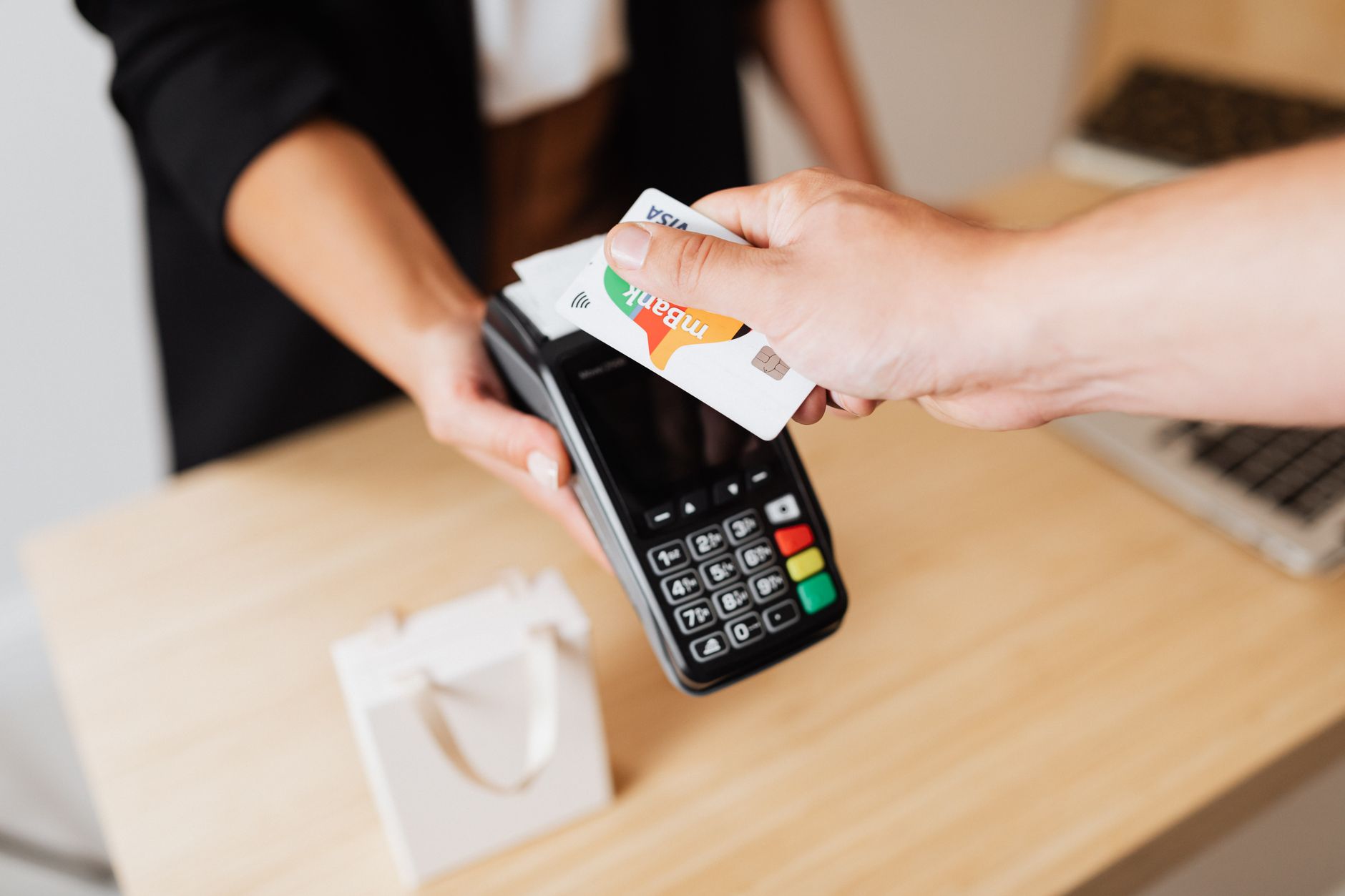
You’re at the appliance store, the salesperson runs your debit card for a $2,400 refrigerator, and the terminal flashes “declined.” You know the money is in your checking account — you checked the app in the parking lot. What just happened is one of the most common and least understood features of everyday banking: the daily debit card limit. Nearly every debit card in America carries one, most people have no idea what theirs is, and the moment you find out is usually the most inconvenient moment possible.
Understanding how these limits work — and how to work around them — turns an embarrassing decline into a five-minute phone call you make in advance. Here’s the full picture.
Your Card Actually Has Two Separate Limits
The first thing to understand is that your debit card carries at least two distinct caps, and they don’t overlap. There’s a daily ATM withdrawal limit, which controls how much physical cash you can pull out of machines in a 24-hour period, and a separate daily purchase limit, which controls how much you can spend at stores and online. Hitting one doesn’t touch the other. You could max out your ATM withdrawals in the morning and still buy groceries that afternoon.
The two numbers are usually very different sizes. ATM limits tend to be the smaller of the pair, commonly between $300 and $1,500 for standard checking accounts, while purchase limits typically run from around $2,000 up to $10,000 or more depending on the bank and the account tier. Some banks also apply a third cap to cash-back amounts at store registers, which often falls under the ATM bucket rather than the purchase bucket.
At the big national banks, the ranges look like this in 2026: Chase generally gives standard checking customers $500 to $1,000 per day at the ATM, with Private Client customers able to withdraw up to $3,000. Wells Fargo ATM limits run from $300 to $1,500 depending on the account, and Bank of America typically falls between $700 and $2,000. Capital One’s 360 Checking uses a flat $1,000 daily ATM limit for most customers. Purchase limits climb accordingly — a basic account might cap purchases around $3,000 a day while premium accounts stretch to $10,000. The exact figure for your card lives in your account agreement and, increasingly, right inside your banking app. According to Bankrate, checking your app or calling the number on the back of your card is the only reliable way to know your personal numbers, because banks set them account by account.
Why Banks Cap Your Own Money
It feels strange that a bank would stop you from spending money you actually have. But the limits exist mostly to protect you, and secondarily to protect the bank.
The core reason is fraud containment. A debit card is a direct pipeline to your checking account. If a thief steals your card number — through a skimmer, a data breach, or a phishing text — the daily limit is the wall between them and your entire balance. With a $2,000 daily cap, a criminal who gains full control of your card can drain at most $2,000 before the clock resets and, ideally, before you or the bank’s monitoring systems notice. Without a cap, one bad night could empty an account holding your rent, your emergency fund, and everything else.
Federal law is the second layer here, and it explains the bank’s own motivation. Under Regulation E, the rule implementing the Electronic Fund Transfer Act, your liability for fraudulent debit card charges is limited — as little as $50 if you report a lost card within two business days — which means the bank eats most confirmed fraud losses. The Consumer Financial Protection Bureau explains how those liability tiers work and why reporting speed matters so much. Because the bank ultimately absorbs the loss, it has every incentive to cap how much damage a stolen card can do in a day. Daily limits are, in a real sense, the bank managing its own insurance bill — and yours.
There’s also a practical reason for ATM caps specifically: machines hold a finite amount of cash, and banks size withdrawals so one customer can’t clean out a machine other customers depend on.
How the 24-Hour Clock Actually Works
A detail that trips people up: “daily” doesn’t always mean midnight to midnight. Some banks reset limits at a fixed cutoff time, others use a rolling 24-hour window from each transaction. If you withdrew $500 at 8 p.m. and your bank uses a rolling window, you may not be able to withdraw again at 9 a.m. the next morning. Pending transactions count against your limit too, so a hotel’s authorization hold — which can exceed your actual bill — may eat into your available spending for days. If you’re planning a big purchase, it’s worth asking your bank exactly how and when its clock resets.
How to Raise Your Limit When You Need To
The good news is that limits are far more flexible than most people assume. If you know a big expense is coming — a used car bought from a private seller, a contractor who wants a large deposit, a cash-heavy trip abroad — call your bank before the transaction, not after the decline. Explain what you’re buying and when. Banks routinely grant temporary increases, often approving them in a matter of minutes and automatically restoring your normal limit after a set date range. Many banking apps now let you request a temporary bump yourself without talking to anyone.
Permanent increases are possible too, though banks are choosier. A long account history, steady direct deposits, and a track record without overdrafts all help your case. Upgrading to a premium checking tier usually raises both limits automatically, since banks extend higher caps to customers with bigger balances.
That said, for genuinely large payments a debit card is often the wrong tool altogether. A cashier’s check, a wire transfer, or an ACH bank transfer handles a $15,000 payment more safely than any debit card, and sellers of big-ticket items generally prefer them. And for everyday online spending, some security experts suggest the opposite move — deliberately keeping debit limits modest and putting online purchases on a credit card, where fraud never touches your actual checking balance while you dispute it.
The Takeaway
Your debit card’s daily limits are a security feature wearing the costume of an inconvenience. They cap what a fraudster can steal in a day, they exist because federal rules put most fraud losses on your bank, and they’re negotiable when your real life needs them to be. The smart move is to learn your numbers now — open your banking app tonight and find both your ATM and purchase limits — so the first time you think about them isn’t at a checkout counter with a line forming behind you. A little awareness, plus one phone call before any big purchase, means your own money is never the thing standing in your way.