
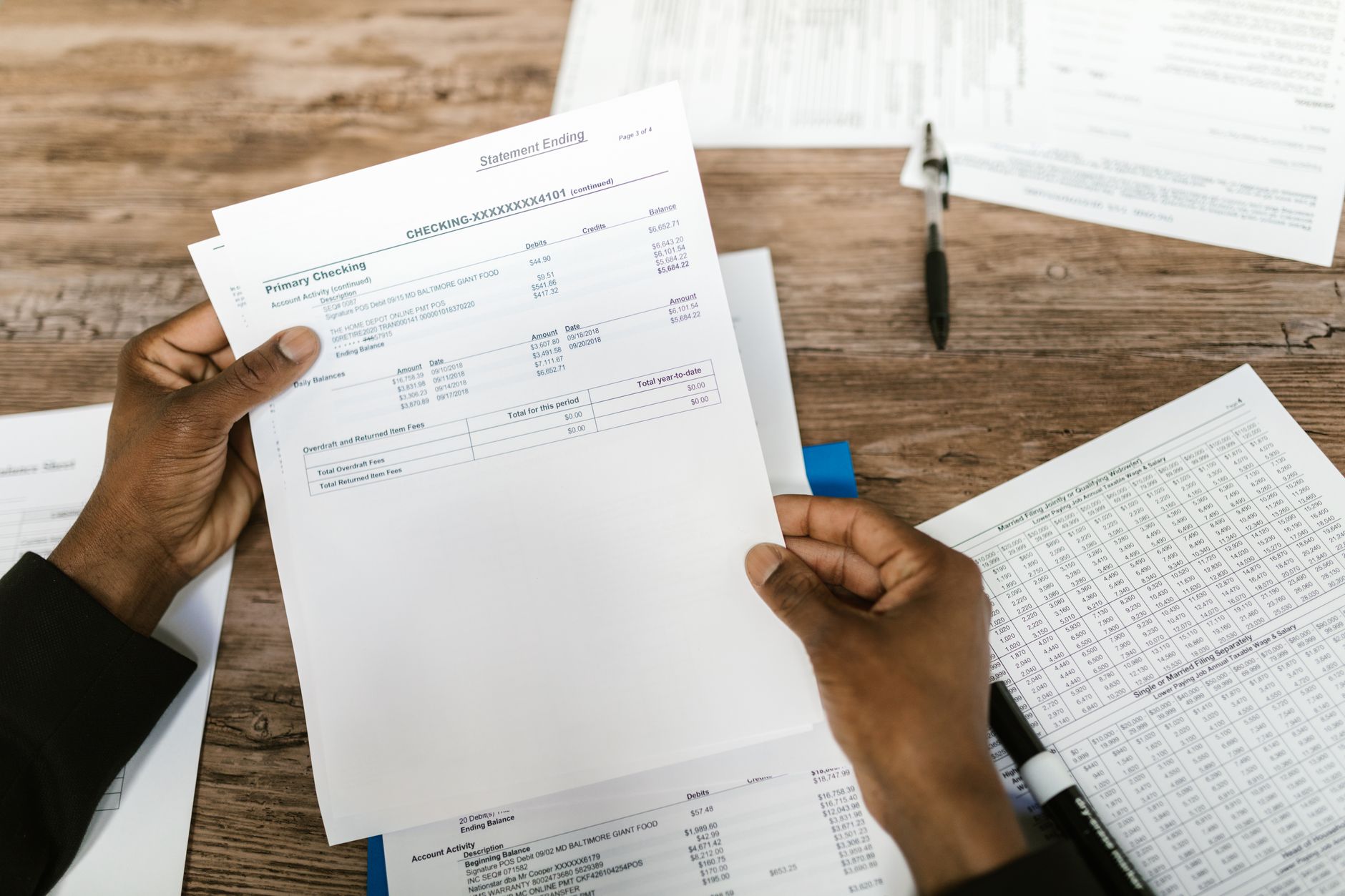
A bank statement looks like a boring receipt, and most people treat it that way. The PDF lands in the app once a month, maybe you glance at the ending balance, and you move on.
That’s a shame, because the statement is more than a summary. It’s a legal document. Federal rules decide what has to be on it, and the date it’s sent starts a clock on some of your most important rights as a customer. Once you know what each section is for, reading it takes about ten minutes.
Why your bank has to send you one
Two federal regulations shape your checking and savings statements. The first is Regulation E, which covers electronic fund transfers like debit card purchases, ATM withdrawals and direct deposits. Under Regulation E’s periodic statement rule, a bank has to send a statement for every monthly cycle in which an electronic transfer happened, and at least once a quarter even if nothing moved.
The second is Regulation DD, the rule that implements the Truth in Savings Act. It controls how banks disclose interest and fees. Between the two, you’re guaranteed a fairly complete picture of what happened to your money. Your job is to actually look at it.
The header: account details and the statement period
The top of the statement tells you which account you’re looking at and what stretch of time it covers. Regulation E requires the account number, and Regulation DD requires either the number of days in the statement period or its beginning and ending dates.
It sounds trivial. It matters more than you’d think. Statement periods often don’t line up with calendar months, so a purchase you made on the 30th might show up on next month’s statement. When something seems to be “missing,” check the dates before you panic.
You’ll also find the bank’s address and phone number for questions or errors. Regulation E requires that contact information too, and it’s where you should turn if you spot a problem.
The summary box: opening balance, closing balance and totals
Most statements put a summary near the top: your balance at the start of the period, total deposits and credits, total withdrawals and debits, fees, and your balance at the end. Regulation E requires the opening and closing balances.
You can use this box as a quick sanity check. Take the opening balance, add the deposits, subtract the withdrawals and fees, and you should land on the closing balance. If you don’t, something in the transaction list deserves a closer look. Banks rarely get this arithmetic wrong, but doing it forces you to notice the size of each bucket. A lot of people are surprised by their own “total withdrawals” figure.
The transaction list: where the real information lives
This is the long middle section, and it’s the part worth reading line by line. For each electronic transfer, Regulation E requires the amount, the date it posted to your account, and the type of transfer. For many transactions it also calls for the location of the terminal used and the name of the person or company you paid or received money from.
That’s why a debit card purchase often shows a merchant name, a city and a date. Sometimes the name is garbled or belongs to a parent company you’ve never heard of. A coffee shop might show up under its payment processor’s name. Before you assume fraud, search the merchant string online; odd descriptors usually have a boring explanation.
As you scroll, watch for three things. The first is charges you don’t recognize at all, even small ones, because fraudsters often test a stolen card with a purchase of a dollar or two. The second is recurring payments you forgot about, such as a streaming trial that turned into a subscription. The third is duplicates: the same merchant, the same amount, on the same day.
Checks usually appear in their own subsection, listed by check number. Scan for gaps or check numbers you don’t remember writing.
Interest earned and APY earned
If the account pays interest, Regulation DD requires two numbers on your statement: the dollar amount of interest earned during the period and the “annual percentage yield earned.” You can read the exact disclosure requirements on the CFPB’s site.
The APY earned figure is useful because it shows what your money actually made, which isn’t always the rate you saw in an ad. If your savings account promises a high APY only on balances above a certain level, or cut its rate recently, this is where you’ll see it. Comparing this line from month to month is one of the easiest ways to tell whether your savings account is still competitive or whether it’s time to shop around.
Fees and the overdraft total
Regulation DD also requires that any fees charged during the period be itemized by type and dollar amount. So you should see “monthly maintenance fee,” “out-of-network ATM fee” or “paper statement fee” spelled out, not buried in one lump.
For overdrafts and returned items, the rule goes further. Banks must show the total overdraft fees and the total returned item fees for the statement period and for the calendar year to date. That year-to-date number is sobering for a lot of people. A few $35 charges scattered across several months don’t feel like much individually. Seeing $210 on one line tends to change behavior quickly.
If you see a fee you didn’t expect, call and ask. Banks waive fees more often than people assume, especially for customers with a clean history.
The 60-day clock you need to know about
This is the most practical reason to read your statement promptly. Under Regulation E’s error resolution rules, your bank is required to investigate a reported error if you notify it within 60 days after it sent the statement where the error first appeared. The error resolution procedures spell out what the bank has to do once you report it.
For unauthorized transfers, the timing also affects how much you could lose. If your debit card is lost or stolen and you tell the bank within two business days of learning about it, your liability is capped at $50. Wait longer and the cap can rise to $500. If an unauthorized transfer shows up on your statement and you don’t report it within 60 days of the statement being sent, you can be on the hook for transfers that happen after that window closes, with no cap at all.
In other words, an unread statement can cost you real money. Setting a monthly reminder to open it is cheap insurance.
Make it a habit
Pick a day each month, maybe the day after your statement usually posts, and give it ten minutes. Check the dates, do the quick balance math, scroll the transaction list, look at the interest and fee lines, and report anything strange right away.
If you’d rather catch problems between statements, turn on transaction alerts in your banking app too. Alerts show you what’s happening today. The statement is the official record you’ll rely on if you ever need to dispute something.