
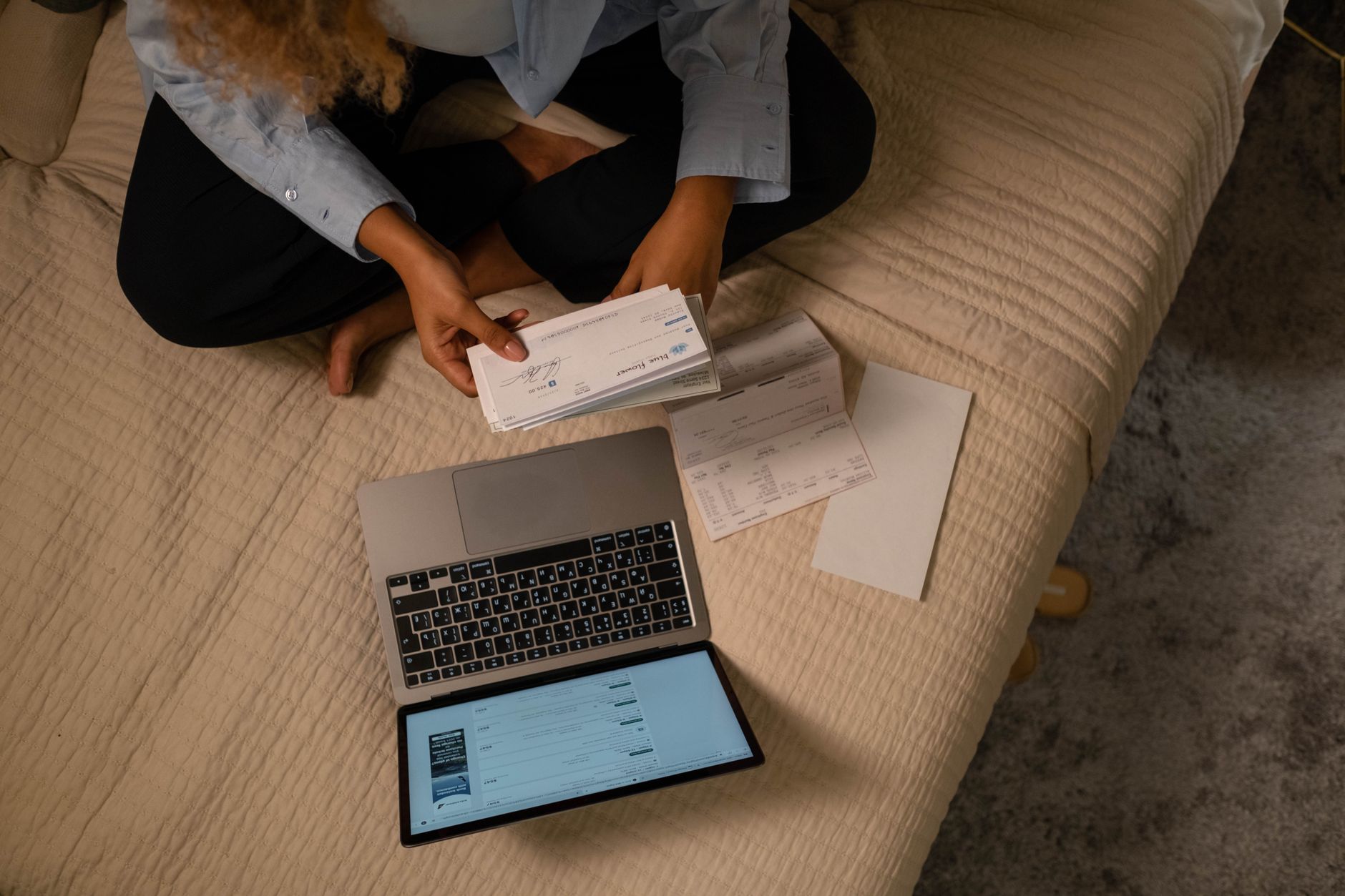
Most people know what happens when they write a check without enough money to cover it. Fewer know about the reverse situation, which feels a lot less fair. Someone pays you with a check, you deposit it, and a week later your bank tells you the check bounced. The money comes back out of your account. And sometimes there’s a fee on top, charged to you, even though you did nothing wrong.
That charge is called a returned deposited item fee, or RDI fee. It’s one of the stranger corners of banking, and the rules around it have shifted twice in the last few years.
How a check bounces after you deposit it
When you deposit a check, your bank doesn’t have the money yet. It has a piece of paper (or an image of one) that says another bank will pay. Your bank sends the check through the clearing system to the payer’s bank, which then decides whether to honor it.
In the meantime, federal rules push your bank to give you access to the money quickly. Under Regulation CC, banks generally have to make the first $275 of many check deposits available by the next business day, a figure that rose from $225 on July 1, 2025. Deposits over $6,725 can be held longer under the “large deposit” exception.
That speed is good for you most of the time. It also creates a gap. Your bank may let you spend money from a check before it actually knows whether the check is good. As the FTC puts it in its guide to fake check scams, banks have to make deposited funds available quickly, but fake checks can take weeks to be discovered and untangled.
If the payer’s account is short, the account is closed, the check has a stop payment on it, or the check turns out to be fake, the payer’s bank sends it back unpaid. Your bank then reverses the credit it gave you.
Who’s on the hook for the money
You are, at least at first. The OCC’s consumer help site answers this question directly: if your bank credited your account for a check that was later returned for insufficient funds, the bank can reverse the funds and may charge a fee. As the person who was paid, you have to go after whoever wrote the check if you want your money.
That surprises people, because it feels like the bank “cleared” the deposit when the funds showed up. Availability and final payment aren’t the same thing. The money being spendable just means the bank extended you some trust while the check traveled.
This is why a reversal can push an account negative. Say you deposit a $600 check from a buyer on a marketplace app, the funds post, and you pay rent. If the check comes back, the $600 is pulled out, and now you may also be facing an overdraft on top of the RDI fee.
What the fee costs and why regulators objected
RDI fees typically run between $10 and $19 per returned check, according to the Consumer Financial Protection Bureau. California’s attorney general put the figure at up to $19 or more in a February 2024 letter to banks and credit unions operating in the state.
In late 2022, the CFPB published Bulletin 2022-06, which said that charging this fee automatically, every time a deposited check bounced, was likely an unfair practice. The reasoning was simple. The person depositing a check normally has no idea whether the writer has money in their account and no control over it. You can’t avoid a harm you can’t see coming.
The bureau didn’t say every RDI fee was off-limits. It suggested a fee could be fine if a bank only charged customers who repeatedly deposit bad checks from the same person, or only charged when a check was unsigned. Those are situations where the depositor arguably could have known better.
The CFPB said it would not seek money back for fees charged before November 1, 2023. By September 2023, in a supervisory report, it said most of the institutions it had examined had dropped RDI fees entirely, and others were in the process of doing so.
California’s attorney general followed in February 2024, warning banks that blanket RDI fees likely violated the state’s Unfair Competition Law.
Then the federal guidance went away
On May 12, 2025, the CFPB withdrew 67 guidance documents in one move. Bulletin 2022-06 was on the list of withdrawn guidance, along with the bureau’s circular on surprise overdraft fees.
So where does that leave you? In a gray area. Withdrawing a bulletin doesn’t rewrite any statute, and it doesn’t require banks to bring the fee back. The National Consumer Law Center argued at the time that the analysis in withdrawn guidance can still persuade courts and support state-level claims, since the reasoning didn’t change just because the document was pulled. California’s warning came from state law and didn’t depend on the federal bulletin.
What it does mean is that federal regulators are less likely to push back if a bank decides to charge the fee again. Whether your bank does is a question for your bank’s fee schedule, not a federal rule.
How to check your own bank’s policy
Look up your account’s fee schedule, usually a PDF linked from the checking account page, and search for “returned deposited item,” “deposited item returned,” or “returned check.” If there’s a dollar figure next to it, that’s what you’d pay. If the line is gone or says “no fee,” good.
Also read your deposit agreement’s section on returned items. It will tell you whether the bank can reverse a deposit (it almost always can) and whether it will place a longer hold if you try to deposit the same check again. The OCC notes that banks may use an exception hold of five business days or longer on a redeposited check, though that may not apply if the original problem, like a missing endorsement, has been fixed.
Ways to protect yourself
The most effective protection is caution about who pays you by check. A check from your employer or a government agency is low risk. A check from a stranger who “accidentally” overpaid and wants the difference back is a classic scam, and the FTC is clear that you’ll be responsible for repaying the bank when that check turns out to be fake.
When you sell something to someone you don’t know, ask for a payment method that settles before you hand over the item, or wait until the check has truly cleared. You can call the bank the check is drawn on to ask whether it’s valid, using a phone number you look up yourself rather than one printed on the check.
If you do get hit with an RDI fee, ask for it to be waived. Point out that you had no way of knowing the check was bad. Many banks will waive a fee on request for a customer in good standing, and a one-time returned deposit is about as sympathetic a reason as you’ll find.
Finally, keep a small cushion in checking. A reversed deposit hurts a lot less when it doesn’t also trigger an overdraft. Even a few hundred dollars sitting untouched, or a linked savings account set up for overdraft transfers, can keep one bad check from turning into two fees.