
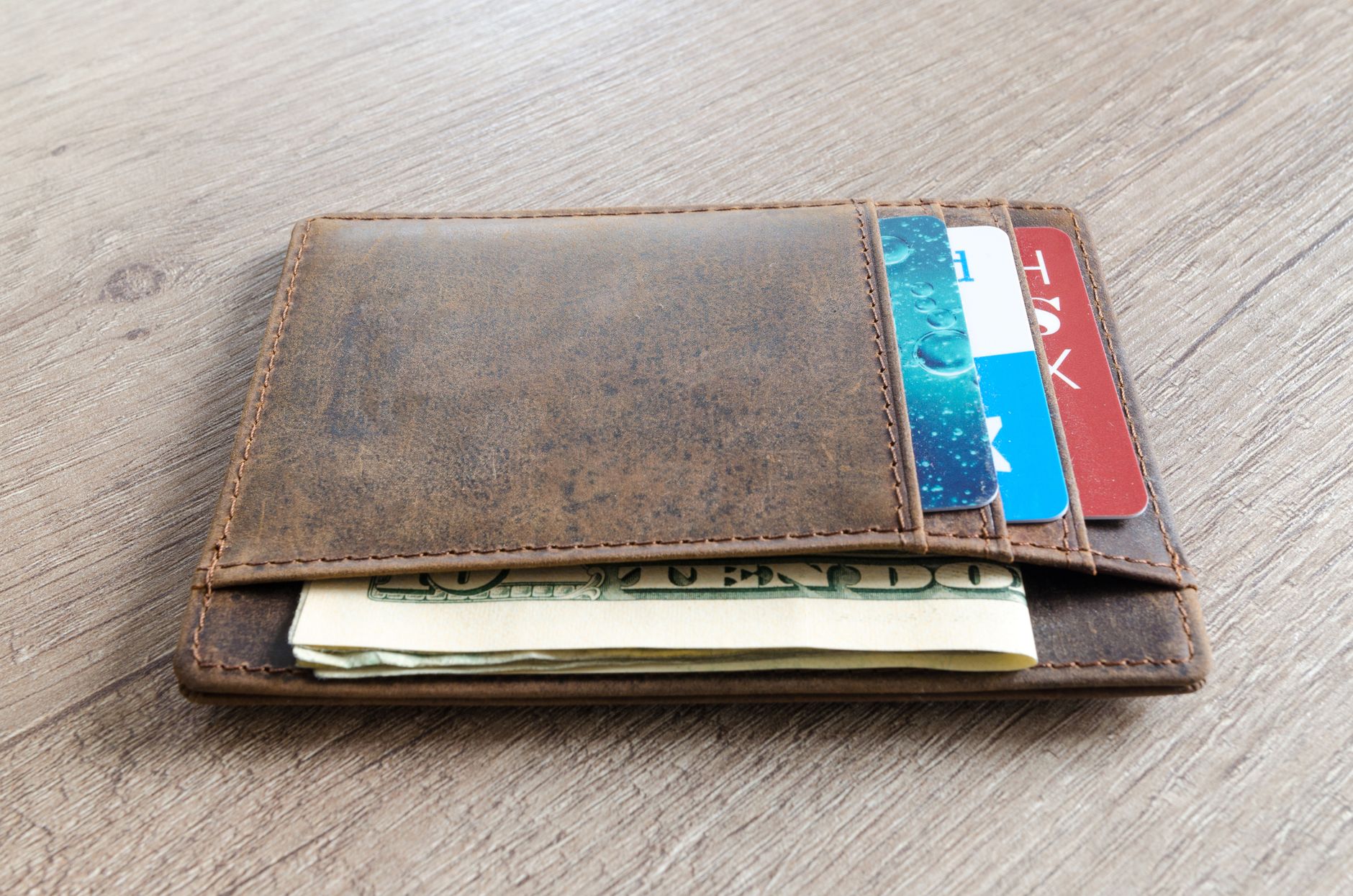
In 2001, two MIT professors ran a sealed-bid auction for tickets to a sold-out Boston Celtics game. Half the bidders were told they’d have to pay in cash if they won. The other half were told they’d pay by credit card. The card group bid nearly twice as much. That one experiment is the reason you’ve probably heard that people spend more with a credit card, sometimes “up to 100% more,” and it still gets quoted as if it were a law of nature.
It isn’t. Cards do loosen your grip on money, but the effect has shrunk a lot since 2001, and what matters most for your wallet today is less about plastic and more about memory: cards make it easy to forget what you’ve already spent.
The “twice as much” number came from a single auction
Drazen Prelec and Duncan Simester called their paper “Always Leave Home Without It,” and the result was striking. But look at what was being measured: what students would bid, in one city, for scarce sports tickets with no fixed price. That’s close to the perfect setup for a payment method to sway a number, because nobody knows what the tickets are “supposed” to cost.
Other figures float around too. Personal finance articles still repeat that people spend 12% to 18% more with cards, credited to Dun & Bradstreet, but a traceable original study behind that number is hard to find. When a statistic outlives its source, treat it as folklore.
Your brain does register the pain of paying
The underlying theory holds up better than the famous numbers do. In a 2007 study published in Neuron, Brian Knutson, Drazen Prelec, George Loewenstein and colleagues put shoppers in an fMRI scanner while they decided whether to buy products. Liking a product lit up the nucleus accumbens, a reward area. Seeing a price that felt too high activated the insula, a region tied to unpleasant feelings. Activity in those regions predicted whether people bought, beyond what they said in surveys.
So there is a felt cost to parting with money, and anything that dulls it can tip a decision. Cash is the most vivid version of that cost: you hand over a physical thing and watch your wallet get thinner.
A quieter finding came from Dilip Soman, also in 2001. He showed that past spending only restrains future spending if you remember it and feel it. Two things helped: rehearsal (writing the amount down, as you used to with a paper check register) and immediacy (money leaving your account right away rather than weeks later). Credit cards weaken both. You don’t write anything down, and the bill arrives as one lump total a month later. The card doesn’t so much make each purchase feel free as it makes last Tuesday’s purchase easier to forget.
Forty years of research says you spend only a little more with a credit card
The best evidence we have now is a 2024 meta-analysis in the Journal of Retailing by Lachlan Schomburgk, Alex Belli and Arvid Hoffmann. They pooled 392 effect sizes from 71 papers comparing cashless payments with cash. The verdict: a “small, but significant” cashless effect. The average standardized effect was 0.135, which in plain terms means the spending of card payers and cash payers overlaps heavily, with cards pulling the average up only slightly.
Three details in that paper are more useful than the headline. The effect has weakened over time. It’s stronger for conspicuous purchases, the things you buy partly to be seen buying them. And for charitable giving it essentially disappeared. On its own, the gap between paying now and paying later didn’t predict a bigger effect. What mattered was the combination of a delayed bill and a familiar, visible card, which describes a credit card almost exactly.
A 2021 replication by Yunxin Liu and Siegfried Dewitte at KU Leuven went further. Across four studies with 692 participants, they couldn’t reproduce the credit card effect at all, on either willingness to pay or basket size. Their own review of earlier studies found the effect fading over the years.
The effect shrank as cash disappeared
There’s a likely reason for the fade, and it showed up in data published last week. A Pew Research Center analysis published September 30, 2026, drawing on the Federal Reserve’s payment diary, shows cash fell from 33% of U.S. payments in 2015 to 14% in 2025. Credit cards rose from 18% to 34% over the same stretch. In 2001, swiping a card was a noticeable event. Today it’s the default, and a feeling that comes from contrast weakens when there’s nothing left to contrast it with. The meta-analysis authors suggest habituation for the same reason.
The same data also contains a trap. Pew reports that the average cash purchase in 2025 was $58, the average debit purchase $74, and the average credit card purchase $80. It’s tempting to read that $22 gap as the card premium, multiply by the roughly 16 credit card payments the average consumer made each month according to the Fed’s 2026 Diary of Consumer Payment Choice, and conclude cards cost you $352 a month. That would be wrong. People choose cards for bigger purchases (a plane ticket, a new tire) and cash for small ones. The gap mostly reflects what gets bought with each method, not what the method does to you.
A small credit card premium on a big base is still real money
So how much does a card cost you in extra spending? Nobody can give you a precise percentage, but the Fed’s numbers let you bracket it. Sixteen credit card payments a month at the $80 average is $1,280 a month on cards. If paying that way nudged your spending up by a modest 3% (an illustration, not a measured figure), that’s $38.40 a month, or $460.80 a year. At 1%, it’s $12.80 a month, or $153.60 a year. If the 2001 Celtics result applied across the board, you’d be spending $640 a month you otherwise wouldn’t, which nobody’s bank account supports.
The realistic version is a slow leak, not a flood. Because the meta-analysis found the effect concentrates in conspicuous purchases, it also tends to land at a predictable time: the holiday stretch, when gifts and hosting are partly about how things look. And the cost isn’t only the extra purchase. If the balance rolls over, interest compounds the damage, which is where how the grace period works becomes the more expensive question.
What restores the pain of paying without going back to cash
The meta-analysis authors recommend cash for people who struggle with self-control, and for some that’s the right call. It isn’t the only way, though, and it costs you the fraud protection and records that cards provide. Soman’s work points to a lighter fix: give back the two things cards remove, rehearsal and immediacy.
Rehearsal means seeing each amount as it happens. A push notification for every card transaction, set at a $0 threshold in your banking app, gets you most of the way. Immediacy means making spending show up against your balance quickly, which is why some people pay their card off weekly instead of monthly. Neither one is about willpower. Both recreate the feedback that a wallet full of cash used to give you automatically.
One more piece of the machinery is worth knowing. The rewards that make cards feel like a good deal are funded by the interchange fees merchants pay on every swipe, which get built into shelf prices. That’s one reason card networks have little interest in making spending feel more painful.
So, do you spend more with a credit card? Probably a little, mostly on visible purchases, and less than you used to. The bigger risk isn’t the swipe. It’s forgetting what you swiped last week.