
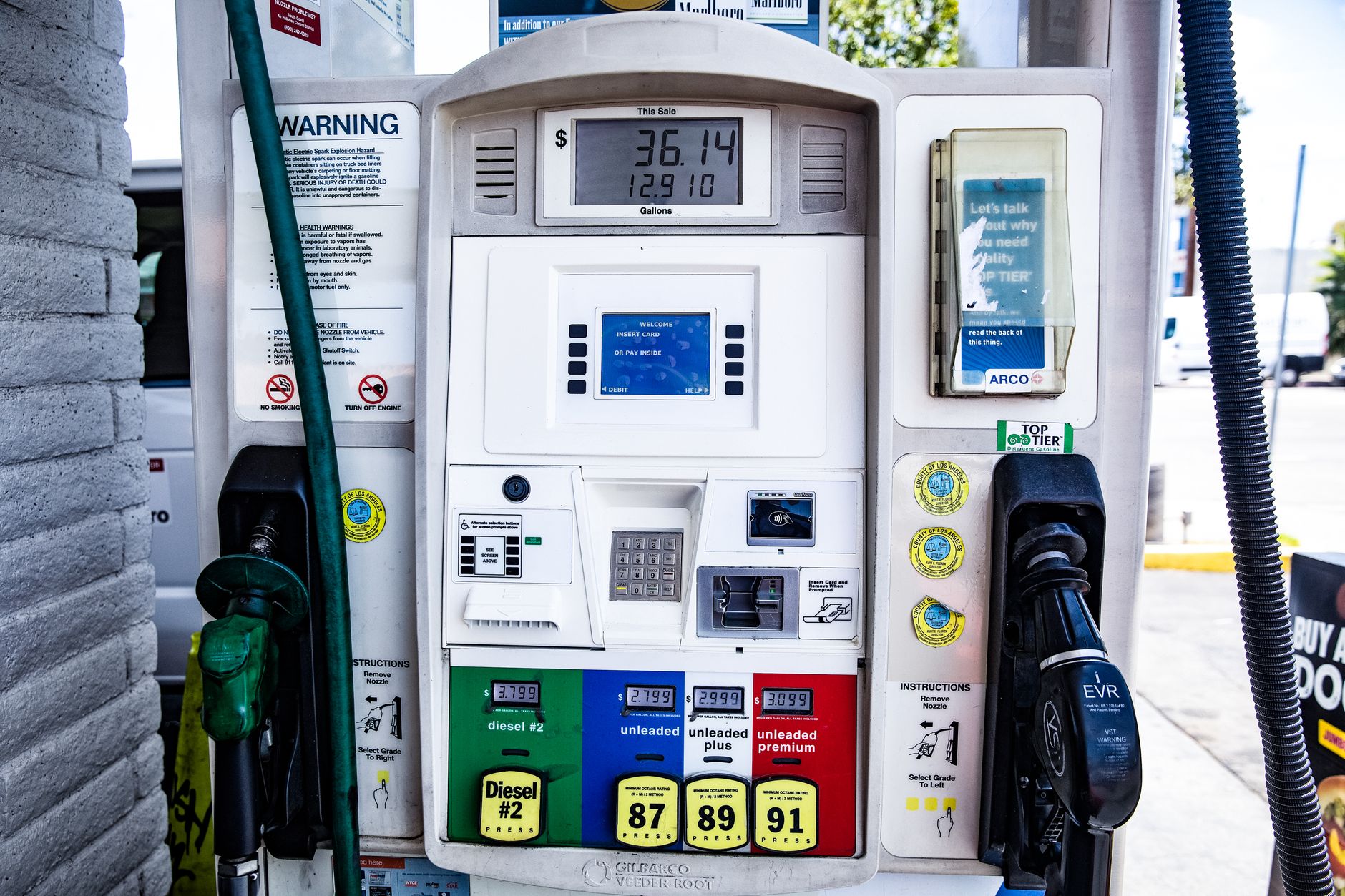
You pump $40 of gas, glance at your banking app, and $175 is missing. Nothing was stolen and nothing is broken. What you’re looking at is an authorization hold, and it explains one of the most common sources of quiet confusion in modern banking: the moment your available balance and your actual balance stop agreeing. Understanding how authorization holds work turns that gap from a mystery into something predictable, and in the worst case it’s the difference between a $0 fee and a surprise overdraft the government says you shouldn’t have been charged for.
Your bank shows two balances because two different things are true at once
Open your account and you’ll often see two numbers: a current or ledger balance, and an available balance. They are not a typo. The ledger balance is the sum of everything that has actually posted to your account, the real money that has moved. The available balance is that figure minus the money your bank has set aside for transactions it expects to post but hasn’t yet. When those two numbers diverge, a hold is usually the reason, and the available balance is the one that governs whether your next purchase goes through.
There is a reason the system splits your balance in two. A card payment isn’t one event but two, separated by hours or days, and the hold is what bridges them.
An authorization hold is a placeholder, not a payment
When you tap or swipe, your bank doesn’t pay the merchant on the spot. It does something smaller: it confirms the money exists and reserves it. That reservation is the authorization hold, and it’s what your app labels a pending transaction. The actual transfer, called settlement, comes later, when the merchant batches up the day’s sales and submits them, usually one to three business days afterward and sometimes as long as eight.
For most purchases the two steps match, so you never notice. You buy a $30 sweater, $30 is held, $30 settles, done. The gap only becomes visible when the merchant doesn’t yet know the final amount at the moment you authorize. That is the whole story behind the gas pump. When you insert your card before pumping, the station has no idea whether you’ll buy $10 or $100 of fuel, so it asks your bank to hold an estimated amount as insurance against a card that turns out to be empty.
The hold rarely matches what you actually spent
That estimate is where the money seems to vanish. Under Visa’s rules, a chip-enabled pump can place a preauthorization hold of up to $175; older non-chip pumps are capped at $125. Mastercard’s rules permit fuel estimates as high as $500, though most stations set lower figures. So a $40 fill-up can freeze $175, and the difference isn’t spent. It’s just fenced off until settlement corrects it.
Hotels and restaurants do the same thing for the same reason. A hotel doesn’t know what you’ll charge to the room, so it places an incidental hold, commonly $25 to $200 per night, on top of the room rate. Restaurants often authorize roughly 20% above your bill to cover a tip you haven’t written in yet. None of this is money you’ve lost. But your available balance treats it as spent, and here’s the detail the network rules make explicit and most people never learn: Mastercard requires the issuer to release any excess fuel hold within 60 minutes of settlement, and Visa’s real-time program requires release within about two hours. Those windows govern the networks. Your own bank controls how fast it acts on them, which is why a hold you were promised would vanish in an hour can linger for days.
Where this quietly turns into an overdraft fee
Follow the arithmetic and you can see how a hold becomes a fee. Say you start the weekend with $500 available. You buy $40 of gas, but the pump holds $175, so your available balance now reads $325 even though you’ve spent $40. You check into a hotel that places a $50-per-night incidental hold for three nights, another $150, dropping you to $175 available. Dinner runs $50, but the restaurant authorizes $60 to cover a tip, and you’re at $115 available, while your ledger balance, counting only what’s posted, still shows far more.
Now you buy $130 of groceries. On your ledger balance you’re fine. On your available balance you’re $15 short, and the transaction overdraws the account. A bank using the available-balance method, which is one piece of how banks earn fee income, can charge you an overdraft fee on a purchase that never actually exceeded the real money in your account. The CFPB flagged exactly this pattern in its 2022 Circular 2022-06, warning that charging overdraft fees on debit transactions that were authorized while the balance was positive can be an unfair practice, even when they later settle against a negative available balance. Knowing the mechanism tells you which fees to question.
What actually releases a hold, and who to call
A hold ends one of two ways: it settles into a real charge, or it expires and drops off. For an ordinary purchase, settlement usually clears the whole thing within one to three business days. For an over-estimated hold, like the gas surplus or the untouched hotel incidentals, the excess is supposed to fall away once the final amount posts. But debit holds are notoriously slow, and a hotel incidental hold can take up to two weeks to release on a debit card.
The practical takeaway is knowing who holds which lever. The merchant sets the hold amount; the card network sets the ceiling and the release deadline; your bank decides how quickly to honor it. If a hold is stranding your money past the point of reason, the merchant can often send a manual release, but it’s your bank that has to lift it, so that’s the call to make. This is also the strongest argument for spending against your available balance, never your ledger balance, and for treating that lower number as the truth. And if a wrongful overdraft slips through, your rights to dispute an electronic transaction give you a formal channel to push back.
Authorization holds aren’t a glitch or a bank trying to short you. They’re the visible edge of a two-step payment system that reserves money before it moves it. Once you can read your available balance as the real number and recognize a hold for the temporary placeholder it is, the gas-pump mystery stops being alarming, and you know exactly which surprise fees are worth disputing.