
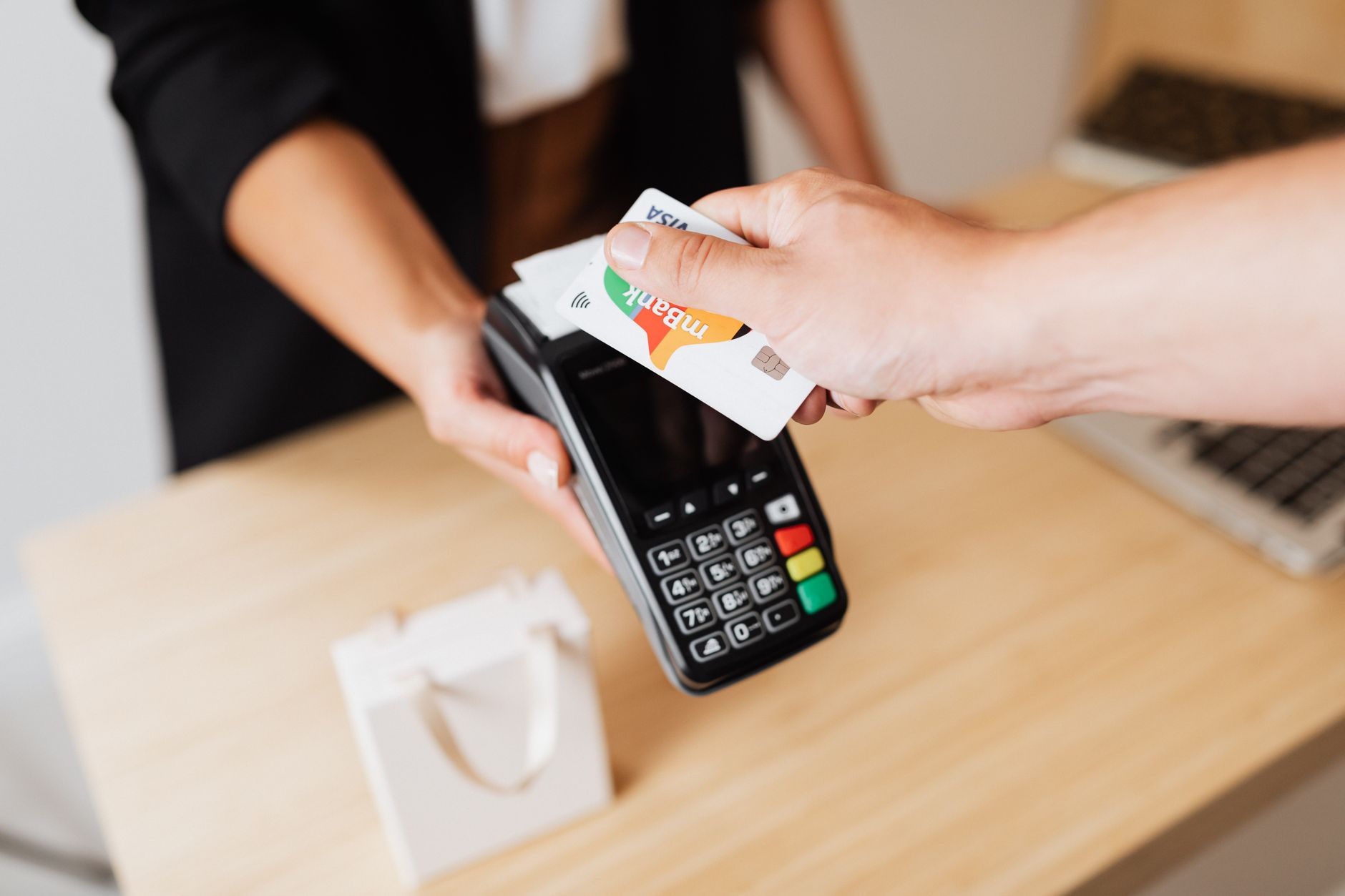
You’re at the register with a debit card, and the terminal asks a question that has confused people for thirty years: credit or debit? You press one, more or less at random, and the transaction goes through either way. Most people assume the choice is cosmetic, or that “credit” somehow charges a credit card they don’t have.
Neither is true. The two buttons send your money down genuinely different pipes, with different networks, different timing, different fees paid by the merchant, and — occasionally — different consequences for you. It’s one of the small mechanical details of banking that almost nobody explains, partly because the answer is more interesting than the industry lets on.
Two Different Roads to the Same Bank Account
When you press “debit” and enter your PIN, the transaction travels over what’s called an EFT network — regional debit networks with names like Star, Pulse, NYCE, and Accel. These are single-message systems, which is a technical way of saying the authorization and the settlement happen in one shot. The merchant asks your bank if the money is there, your bank says yes and moves it, and the transaction is essentially done in that instant.
When you press “credit” and sign (or, increasingly, just tap and walk away), the transaction routes through Visa or Mastercard on the same rails that carry actual credit card purchases. This is a dual-message system. The first message places an authorization hold on your account — the money is fenced off but hasn’t technically moved. The second message, which arrives when the merchant batches out their day’s transactions, actually settles the payment.
The money comes out of the same checking account either way. You are not borrowing anything when you press “credit.” The button is a routing instruction, not a product choice.
That two-step structure is why signature debit transactions can behave strangely. It’s the reason a gas pump might place a $100 hold when you bought $32 of fuel, and the reason a hotel’s incidental hold can sit on your balance for days after checkout. The hold and the actual charge are separate events, and the gap between them is where the confusion lives. Georgia’s consumer protection division and similar state offices field a steady stream of complaints about exactly this, and their guidance is consistent: holds are legal, they’re disclosed somewhere in your account agreement, and the way to avoid them is usually to pay inside rather than at the pump.
Why Merchants Care More Than You Do
Behind the scenes, the two routes cost the merchant different amounts, and this is where a piece of federal law becomes relevant.
The Durbin Amendment, part of the 2010 Dodd-Frank Act, did two things to debit cards. It capped the interchange fee that large banks — those with $10 billion or more in assets — can collect on a debit transaction, and it required that every debit card be able to run over at least two unaffiliated networks. The cap works out to 21 cents plus 5 basis points of the transaction value, plus a penny for fraud prevention if the issuer qualifies. The Federal Reserve’s rulemaking lays out the arithmetic in more detail than most people will ever want.
The two-network requirement is the part that shapes your checkout experience. Because merchants have a choice of networks, they have an incentive to route your transaction over whichever one costs them least — and PIN debit is generally cheaper than signature debit. That’s why some retailers nudge you toward entering a PIN, why some terminals default to the PIN screen, and why the “credit” option occasionally seems buried. It’s not about your convenience. It’s a fraction of a percent on every sale, multiplied across millions of transactions.
There’s a common misconception worth clearing up here: the law does not require one PIN network and one signature network on every card. The Fed’s own commentary is explicit that the two-network requirement doesn’t have to be satisfied separately for each authentication method. A card can meet the requirement with two PIN networks.
One more thing worth knowing, because it may change: in August 2025, a federal district court in North Dakota vacated Regulation II — the Fed rule implementing the Durbin Amendment — on the grounds that the Fed had exceeded its statutory authority in setting the fee standard. The court immediately stayed its own ruling pending appeal, so the 21-cent cap and the routing requirements remain in force for now. But this is live litigation, and the outcome could reshape debit economics for both banks and merchants over the next few years.
Does It Matter for Your Protection?
This is the question people actually care about, and the honest answer has two layers.
The legal floor is the same for both. Regulation E, which implements the Electronic Fund Transfer Act, governs unauthorized transactions on your debit card regardless of whether you signed or entered a PIN. Your liability depends almost entirely on how fast you report the problem, not on which button you pressed. Report a lost or stolen card within two business days of learning about it and your maximum exposure is $50. Wait longer and it can climb to $500. Fail to report unauthorized charges within 60 days of the statement that shows them and, in the worst case, your losses can be unlimited. The Consumer Financial Protection Bureau has plain-language material on this, and it’s worth reading once before you need it.
Above that floor sit the card networks’ voluntary zero-liability policies, which are more generous than the law requires. Historically these applied only to signature transactions, which is the origin of the widespread advice to always press “credit.” That advice is now somewhat dated — both Visa and Mastercard have extended zero liability to most PIN debit transactions — but the coverage still comes with exclusions and isn’t uniform across every card or every transaction type. The practical implication is that your protection is strong either way, and it’s your reporting speed, not your button choice, that determines the outcome.
Where the two routes genuinely differ for you is smaller and more mundane. PIN transactions let you request cash back at the register, which signature transactions don’t, and that’s a real way to avoid an out-of-network ATM fee. PIN transactions also tend to settle and release faster, so your available balance reflects reality sooner — which matters if you run a thin cushion in your checking account. Signature transactions, on the other hand, are the ones that trigger the long authorization holds, and they’re the route that a small number of debit cards use to earn rewards points.
The Practical Takeaway
If you’re deciding case by case, a reasonable rule of thumb is this: use PIN when you want cash back or when you’re running close to the line and need the balance to update promptly, and use signature when you’re at a gas pump, hotel, or rental counter where a hold might otherwise be avoided — or when your card earns something for it.
But the larger point is that neither choice is a mistake. The bigger levers on your money are elsewhere: keeping enough cushion in your checking account that a $100 gas hold doesn’t cascade into an overdraft, checking your transaction history often enough to catch fraud inside the Regulation E windows, and keeping the money you’re not spending in a savings account that actually pays something rather than letting it sit in checking earning nothing.
That last one is the quiet cost most people never notice. The difference between the PIN and signature buttons is measured in pennies of interchange that you don’t pay. The difference between a checking balance and a decent savings account is measured in real dollars that you do.
Understanding the plumbing is useful. Knowing which parts of it matter is more useful.