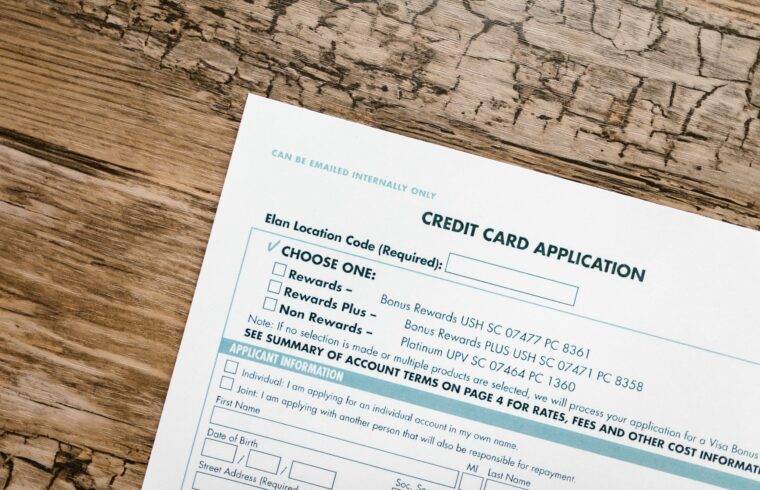
Goodyear’s spring 2026 tire promotion offered up to $80 back on a set of four tires. The money arrived as a prepaid Mastercard, and according to the promotion’s own rebate form, the card is valid for up to six months and any unused funds are forfeited after that. That one line explains most of how mail-in rebates work. The seller prices the offer expecting only some buyers to claim it, then pays the ones who do with a card that quietly takes a little of it back.
None of this is hidden, and none of it is illegal. It’s arithmetic, and once you can do it yourself, the “after rebate” prices that crowd Black Friday ads read very differently.
Mail-in rebates are priced on the bet that you won’t mail them
The industry term for a rebate nobody claims is “slippage,” and it’s the reason rebates exist. A 2006 study reported by The New York Times estimated that as many as 40% of mail-in rebates go unredeemed, either because buyers never send them in or because their submissions get rejected, saving retailers and manufacturers more than $2 billion a year. Companies don’t publish their own redemption rates, so that estimate is old, but the logic hasn’t changed.
Run the numbers on the Goodyear deal. Suppose the tire maker wants to knock $80 off a set of tires. If it cuts the price at the register, every buyer gets $80, so the promotion costs $80 a set. If it offers an $80 rebate instead and 40% of buyers never collect, the expected cost per set is $80 times 60%, or $48. That’s $32 a set the company keeps. Across 10,000 sets, it comes to $320,000, and the advertised “after rebate” price looks identical to a true $80 markdown.
The ad shows you $80. The seller’s budget shows $48, with the other $32 covered by customers who meant to mail the form and didn’t.
A longer deadline makes you less likely to collect
You’d expect a generous deadline to help shoppers. The research says the opposite. In a 2003 experiment run by Timothy Silk at the University of Florida, students were offered movie tickets with a rebate attached and a redemption window of 1, 7, or 21 days. Of those who had one day to mail the rebate, 77% did it. With seven days, 70%. With 21 days, only 58% followed through.
The students who never redeemed weren’t mostly put off by effort. Asked why, 60% blamed procrastination or simply forgetting, and only 20% said it was too much work. A long window gives you permission to put the envelope down, and once it’s under a pile of mail, the deadline passes without anyone deciding anything.
That reverses the usual reading of rebate fine print. A 30-day window feels relaxed, but it works in the seller’s favor more than a three-day window would. The time you’re given is part of the mechanism.
Rebate cards fall outside the gift card rules you’re counting on
The second layer is how the money comes back. Paper checks used to be standard. Now most rebates pay out on a prepaid card, and that card lives in a different legal category from the gift card you’d buy at the checkout.
Federal gift card rules, written under the Credit CARD Act of 2009, say that funds on a store gift card or general-use prepaid card can’t expire for at least five years, and that inactivity fees can’t start until a card has gone unused for a year. But as the Federal Reserve’s Consumer Compliance Outlook explains, cards issued for loyalty, award, or promotional purposes are excluded, as long as the issuer prints the expiration date and the word “promotional” or “reward” on the front, lists a toll-free number, and discloses its fees. Rebate cards are paid for by the company, not the shopper, so they fit that exclusion. Consumers Union, the publisher of Consumer Reports, warned back in 2010 that some rebate cards expired in as little as three months and could carry activation, balance-check, and inactivity fees.
This is where a second, smaller slippage shows up. Odd balances are hard to spend to zero. Say your $80 card arrives in March and you use it on a $74.12 grocery run. The remaining $5.88 is awkward: too small for most purchases, and you’d have to split the payment at the register to use it. If you forget, it’s forfeited when the card expires. Your $80 rebate turned out to be worth $74.12, about 7% less than advertised, and nothing about the transaction was hidden. We’ve written before about why a gift card balance is not a bank deposit, and rebate cards are a weaker version of the same thing.
The paperwork is a filter, and regulators have had to step in
Every requirement on a rebate form, like the original receipt, the cut-out barcode, the matching name and address, and the postmark deadline, is a chance for a submission to be rejected. Goodyear’s 2026 form, for example, required the original invoice showing the tire name, purchase date, and store address, with the name and address on the claim matching the invoice exactly. Each requirement is reasonable taken alone. Together they turn small mistakes into denied claims, and denied claims count as slippage.
Sometimes the delay is the problem. In 2009 the Federal Trade Commission sued Wintergreen Systems, a rebate processor that handled offers on monitors and DVD players sold through retailers including Office Depot and Buy.com. The FTC said some consumers waited up to two years for rebates of $20 to $150, and some were never paid. The settlement banned the company from the rebate business and included a judgment of $330,240, the amount owed to consumers, suspended based on the defendants’ finances. Cases like that are rare, but they show which way the system’s slack tends to run.
How to read an “after rebate” price this Black Friday
Once you see the mechanism, an “after rebate” price is easier to judge. Compare the price you pay at the register, not the advertised one, with the competing offers, because that’s the only number guaranteed to be yours. Then ask yourself if you’re the kind of buyer the seller is betting on. If you’ll realistically mail the form the day you get home, the rebate is worth close to its face value. If you have a drawer of uncashed rebate forms from past years, you’re the 40%, and a smaller instant discount elsewhere may beat it.
When the card shows up, check the expiration date printed on the front and plan to spend it down within a month, ideally on one purchase you were going to make anyway, like a gas fill-up or a utility bill if the card works for that. Retailers lean on the same psychology when they build doorbuster deals, which we cover in our piece on how Black Friday loss leaders work.
Plenty of people collect every dollar from mail-in rebates. The offers are still priced on the assumption that a predictable share of buyers won’t, and the prepaid card they pay out on is legally allowed to expire faster than almost anything else in your wallet. The honest question to ask at the register is which group you’ll be in by January.