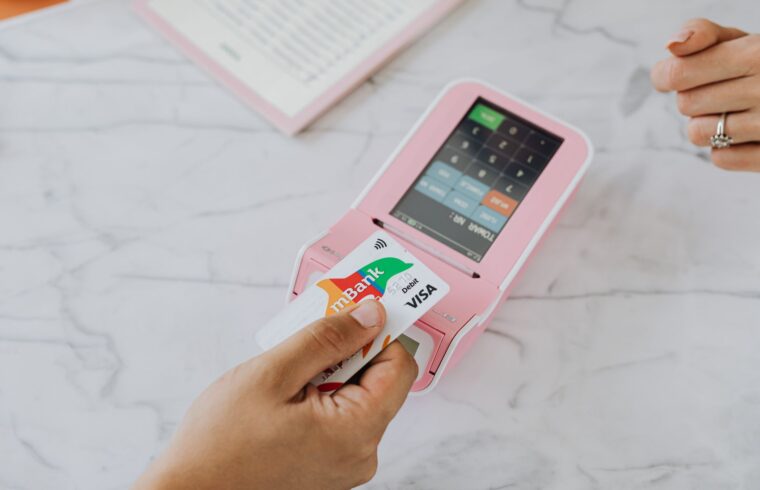

A bank that offers you $325 to open a checking account isn’t being generous. It’s buying something, and the price tag is public. According to banking research firm Curinos, the average cost for a bank to acquire a new checking customer has doubled since 2018, to $559. A bank account bonus is simply the slice of that budget the bank hands directly to you instead of spending it on ads, branch staff, and mailers. Once you see the bonus as a purchase price, the fine print stops reading like a list of hoops and starts reading like a description of what the bank thinks it’s buying.
That framing matters right now. Several big national offers run through the end of the year, and the tax forms for bonuses earned in 2026 will arrive in January under rules that changed this year.
A bank account bonus is a customer acquisition cost, paid to you
Banks need deposits to lend, and checking accounts are their cheapest source. Your checking balance typically earns little or nothing, yet the bank can lend it out or invest it. A checking customer also generates fee income and, every time they swipe a debit card, a cut of the interchange fee the merchant pays.
So the bank has a rough idea what a customer is worth over several years, and it works backward to what it can afford to spend getting one. Curinos’s July 2026 analysis puts that acquisition cost at $559 on average. Wells Fargo’s current $325 Everyday Checking offer equals about 58% of that figure. In effect, the bank moves part of its marketing budget out of a billboard and into your account.
The direct deposit requirement exists because banks are buying your paycheck
Look at what Wells Fargo actually asks for. Per its offer terms, you need $1,000 or more in qualifying electronic deposits within 90 days. Transfers from another bank you control don’t count, and neither do mobile check deposits or Zelle. The deposits have to look like income.
That isn’t arbitrary. A bank can’t profit much from an account you open, fund with $25, and forget. What it wants is to become your primary bank, the place your paycheck lands and your bills get paid from. Customers who route their pay through an account tend to stay, because moving a direct deposit, rewiring autopays, and updating every linked app is a chore most people put off for years. The deposit rule is a filter for exactly the behavior that predicts staying.
The bank also needs it, because most new customers don’t stay. Curinos found that only 41% of relationships acquired through digital channels remain after twelve months, compared with about three in four for branch-opened accounts. Digital openings made up 40% of new relationships in 2025. So a bank paying a big online bonus is paying for a lot of people who will leave.
The tier cliffs show you exactly where the bank draws the line
SoFi’s current checking offer makes the logic unusually visible. Receive between $1,000 and $4,999.99 in direct deposits during a 25-day window and you get $50. Hit $5,000 and you get $400. One cent separates a $50 bonus from a $400 one.
That cliff is a statement about customer value. Five thousand dollars in 25 days roughly describes someone sending a full paycheck, maybe two, to the account. Below that line, SoFi assumes you’re probably testing the waters with a slice of your pay. Above it, you look like a primary customer, and that’s who the other $350 is for. The bank pays a lot to the people it expects to keep and very little to everyone else.
The early-closure language works the same way. Wells Fargo requires that the account not be “closed or restricted at the time of payout,” and it may close zero-balance accounts without notice. Other banks claw the bonus back if you close within 90 or 180 days. These rules don’t so much prevent leaving as push the earliest exit past the point where the bank recoups some of its cost.
The bank’s math only works if enough people stay
Here’s the arithmetic from the bank’s side. Suppose Wells Fargo pays $325 to every new customer who qualifies, and its retention looks like the Curinos digital average, where 41% are still around after a year. That’s an assumption, since bonus hunters may churn even faster than ordinary digital customers. Then the bank pays $325 divided by 0.41, or about $793 in bonus money, for every customer it actually keeps for a year. That’s before any of the $559 in other acquisition spending.
Now your side. The bonus is taxable income, and Wells Fargo says it will report it as such. If you’re in the 22% federal bracket, $325 times 0.22 is $71.50 in federal tax, leaving you $253.50 before any state tax. You’d also want to keep the $15 monthly fee off your back, which Wells Fargo waives with $500 in monthly electronic deposits or a $1,500 minimum daily balance. If you choose the balance route and that $1,500 would otherwise sit in a savings account paying 4%, you give up about $5 a month in interest, roughly $20 over four months. Net, you’re still ahead by more than $230. The bank, meanwhile, is betting you’re in the 41%.
How bonuses are taxed depends on which form the bank chooses
Every bonus is taxable, but banks report them two different ways, and 2026 widened the gap between them.
Many banks treat a deposit bonus as interest. The IRS instructions for Form 1099-INT tell banks and other savings institutions to report amounts of $10 or more credited to an account “whether or not designated as interest.” So a $325 bonus can show up in Box 1 right alongside your ordinary interest. That’s also why interest-style rules, including backup withholding if your tax ID isn’t on file, can apply.
Other banks report bonuses as miscellaneous income. SoFi’s terms say its bonus goes on Form 1099-MISC. This year the One Big Beautiful Bill Act raised the 1099-MISC reporting threshold from $600 to $2,000 for payments made after December 31, 2025, as tax compliance firm Sovos summarized. A lone $400 bonus paid in 2026 may never generate a form at all. It’s still income, and you still owe tax on it. The only thing that disappeared is the reminder.
That’s the quiet risk this tax season. People who collected a bonus or two through a 1099-MISC bank in 2026 may reach April with no paperwork about it and assume nothing is owed. Keep your own record of every bonus, the date it posted, and which bank paid it.
So read a bank account bonus offer as a price quote. The bank is offering $325 or $400 for a few months of your paycheck and the hope that rewiring your autopays will feel like too much work to undo. Sometimes that’s a good deal for you, and taking the money and moving on is entirely within the rules. Just go in knowing that whether you stay is the thing they’re paying for, and it’s still your call.