
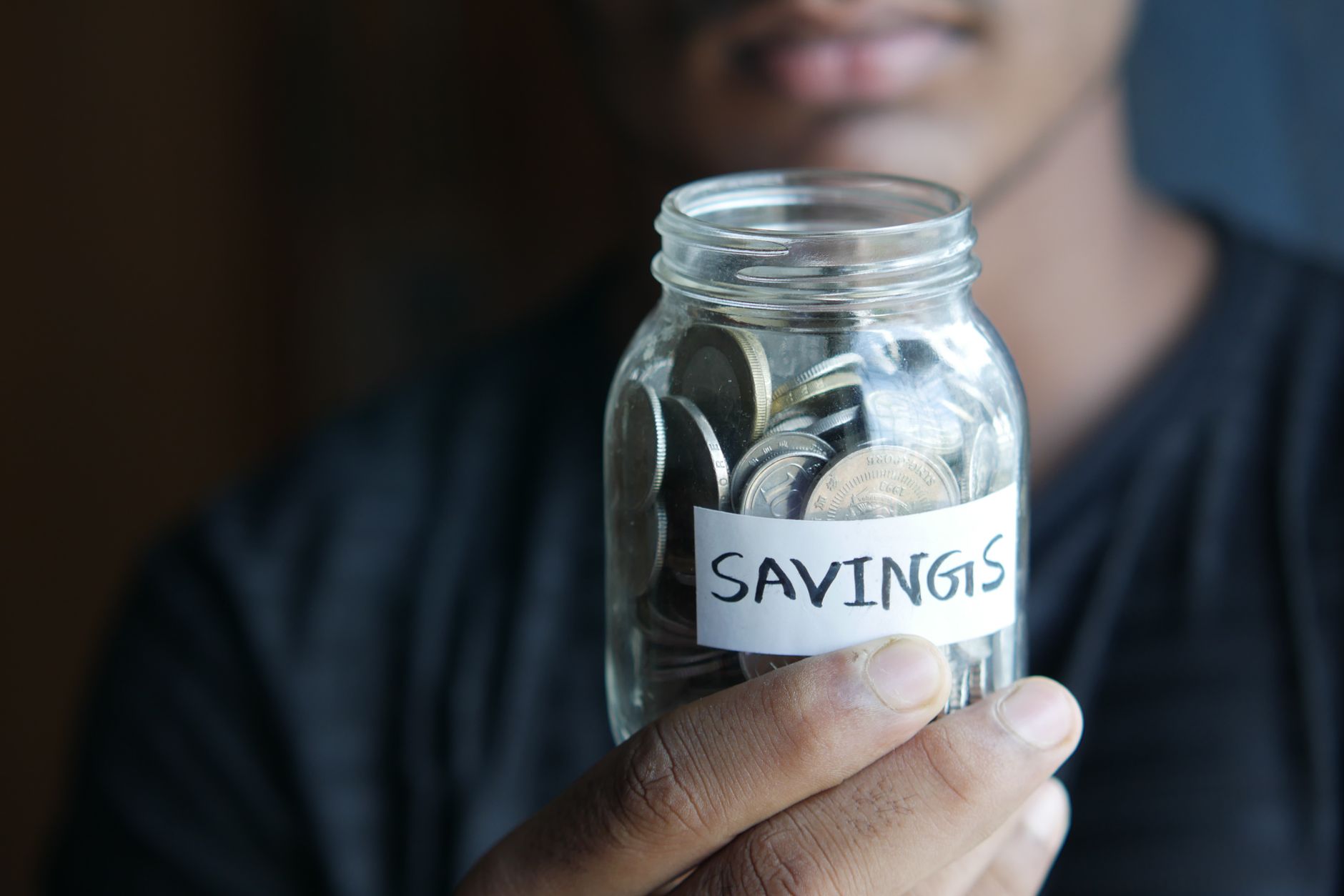
People use the words “saving” and “investing” almost interchangeably, as if they were two flavors of the same thing. They are not. They are two different tools that do two different jobs, and confusing them is one of the most common reasons people either take on risk they cannot afford or leave money sitting idle for years when it could have been growing. Understanding where the line falls, and when to step over it, is one of the more useful pieces of financial literacy you can pick up.
At its simplest, saving is about protecting money you might need soon, and investing is about growing money you will not need for a long time. Both matter. The trick is knowing which dollars belong in which bucket, because the right answer changes depending on your timeline, your stability, and what you are actually trying to accomplish.
What Saving Actually Does
When you save, the goal is safety and access, not growth. You want the money to be there in full whenever you reach for it, whether that is next Tuesday for a surprise car repair or in eight months for a security deposit. That is why savings belongs in places where the balance does not move with the stock market: a regular savings account, a high-yield savings account, a money market account, or a short-term certificate of deposit.
The trade-off is that safe money grows slowly. The national average savings account pays only about 0.4 percent APY, though the better high-yield options are currently in the range of 4 to 5 percent (Bankrate on savings rates). Even at 5 percent, savings is not really designed to build wealth. It is designed to preserve it. And because accounts at banks and credit unions are federally insured up to $250,000 per depositor through the FDIC or NCUA, your principal does not disappear even if the institution fails (FDIC on deposit insurance). That guarantee is exactly what you want for money you cannot afford to lose.
What Investing Actually Does
Investing is the opposite bargain. You give up the guarantee and the easy access in exchange for the chance at much higher returns over time. When you buy stocks, index funds, or bonds, the value can fall, sometimes sharply, and there is no insurance backstop protecting you from market losses. In return, history suggests you are compensated for that risk if you stay in long enough.
The numbers tell the story. The S&P 500 has returned somewhere around 9.5 to 10.6 percent per year on average over the very long run, and roughly 13.7 percent annually over the past five years (SmartAsset on S&P 500 returns). Compare that to a savings account and the gap is enormous over a couple of decades. But those averages hide a lot of stomach-churning years along the way. The reason investing works is that you are not supposed to touch the money during the bad years; you ride them out and let the good years more than make up for them. That is why investing is the right tool only for money you genuinely will not need for at least five years, and ideally much longer, like retirement.
The Order of Operations
So which do you do first? For almost everyone, the answer is save first, then invest, in a specific sequence. The reason is that investing only works if you can avoid selling at the worst possible moment, and the thing most likely to force a panicked sale is an emergency you have no cash to cover.
The widely accepted starting point is a small emergency cushion of $1,000 to $2,000, enough to handle the single most common shocks like a car repair or an unexpected bill without reaching for a credit card. Once that starter fund exists, the standard guidance is to build toward three to six months of essential living expenses held in savings before you pour serious money into the market (Vanguard on emergency funds). Single-income households, freelancers, and anyone with dependents tend to want the larger end of that range, while a stable dual-income household with no kids can often get by closer to three months.
There is one important exception to “save first.” If your employer offers a 401(k) match, contributing enough to capture that match is usually worth doing even while you are still building your emergency fund, because a match is an immediate, guaranteed return that no savings account can touch. Beyond that single carve-out, the logic holds: a financial professional at CNBC summed up the principle well, noting that the right split depends heavily on your debt, your job stability, and your timeline (CNBC on saving vs. investing).
Why You Need Both at the Same Time
It is tempting to think of this as a phase you graduate from, where you save until the emergency fund is full and then switch permanently to investing. In reality, the two run in parallel for the rest of your financial life. You keep your safety money liquid and boring, and you let your long-term money take measured risk in the market. They are not competitors; they are teammates with different positions.
Consider the cost of getting the mix wrong in either direction. Keep everything in savings, and inflation slowly erodes your purchasing power while you miss out on decades of compounding, which is a real risk given that the personal saving rate dropped to around 2.6 percent in early 2026, meaning most households have little buffer to begin with (Bureau of Economic Analysis personal saving data). Put everything in the market, and a job loss during a downturn can force you to sell investments at a loss just to pay rent, locking in the exact damage investing is supposed to help you avoid. CNBC has pointed out repeatedly that investing your emergency fund is one of the more common and costly mistakes people make for precisely this reason (CNBC on emergency funds).
Putting It Into Practice
If you are starting from scratch, the path is clearer than it might feel. Build a small starter cushion first so a minor emergency cannot derail you. Capture any employer retirement match you are offered, because that is free money with a guaranteed return. Then grow your emergency savings to a few months of essential expenses in a high-yield account where it stays safe and accessible. Once that foundation is solid, direct your longer-term money into diversified investments and largely leave it alone, letting time and compounding do the heavy lifting.
The whole framework comes down to matching the tool to the job. Money you might need soon gets safety and a modest return. Money you will not need for many years gets growth and the risk that comes with it. Get that matching right, and you have solved most of the puzzle that trips people up. Saving and investing were never really an either-or question. They are two halves of the same plan, and knowing which dollars belong where is what turns a paycheck into lasting financial security.