
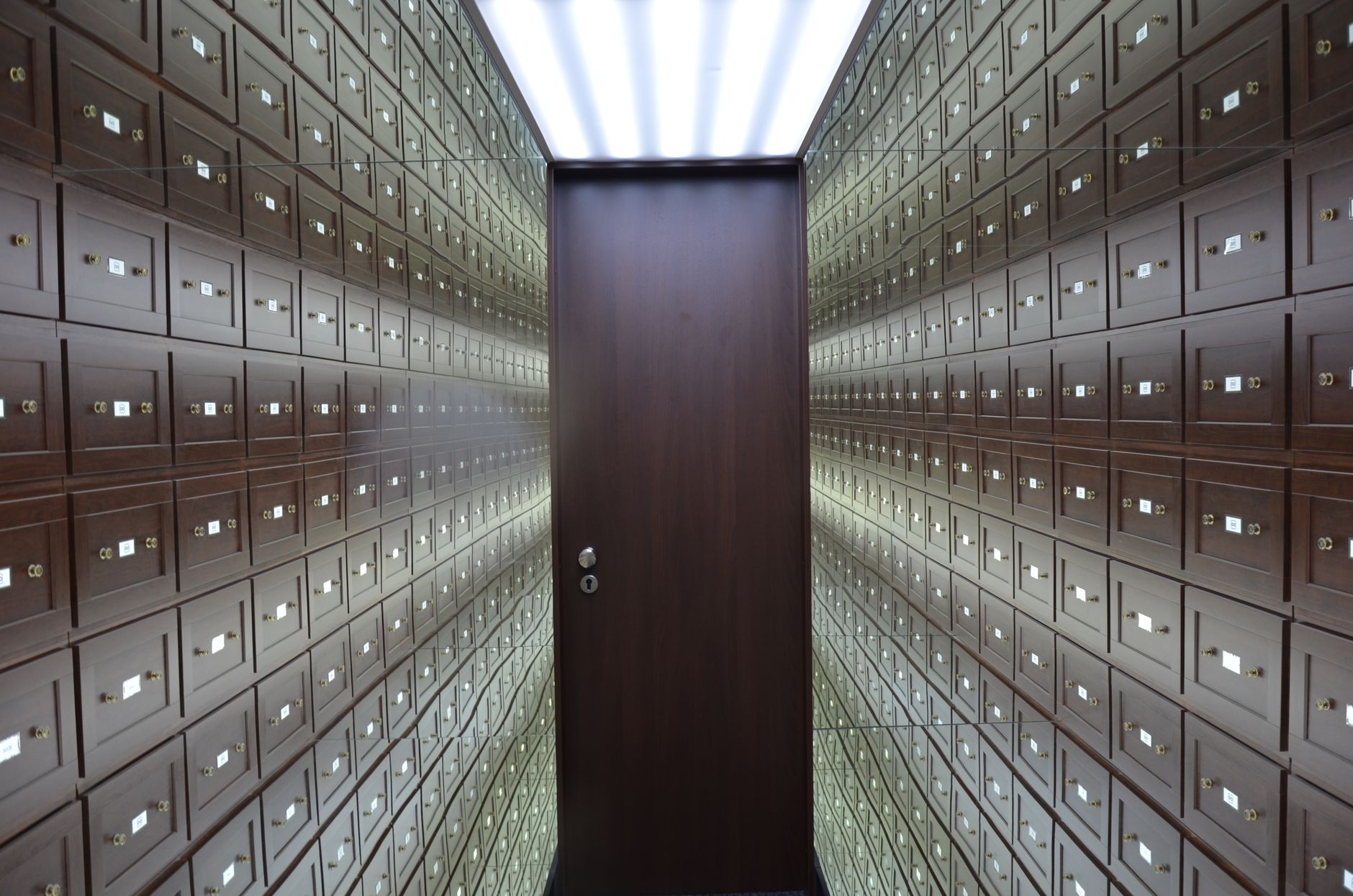
A safe deposit box feels like the most secure place in the financial system. Steel door, vault, two keys, a bank employee escorting you into a little room. Most people assume that whatever is in that box carries the same federal protection as the money in their checking account.
It does not. And the number of banks willing to offer boxes at all is dropping fast.
What you are actually renting
A safe deposit box is storage space, not a deposit. When you sign the paperwork, you are entering a lease for a metal drawer inside the bank’s vault. The bank agrees to control access and keep the vault secure. It does not take custody of what you put inside, does not know what you put inside, and does not promise to replace it.
That distinction drives everything else. Deposit insurance covers deposits: checking, savings, money market deposit accounts, CDs. The FDIC is explicit that box contents, including cash, checks, and other valuables, are not covered by deposit insurance if they are damaged or stolen. Banks generally do not insure the contents either. Read your lease and you will usually find language limiting the bank’s liability to negligence, with a low dollar cap attached.
There is also no federal statute governing safe deposit boxes the way Regulation E governs debit card fraud or Regulation CC governs check holds. The rules come from state law and from the contract you signed, which the bank wrote.
When something goes wrong
Losses are rare, but they happen: vault floods, branch fires, drilling errors during a bank merger, the occasional theft. In those cases you are dealing with your own insurance, not the bank’s.
Standard homeowners and renters policies include some off-premises coverage for personal property, typically capped around 10% of your total personal property limit. That sounds workable until you hit the category sublimits. Jewelry, watches, and precious stones are often capped near $1,500 for theft regardless of how much coverage you carry overall. Cash is barely covered. Gold bullion, silver bars, and loose coins are frequently excluded outright.
The fix is a scheduled personal property endorsement, sometimes called a rider or a floater. You list specific items, provide appraisals or receipts, and the insurer covers them at agreed values against a wider range of causes. It costs money, usually a percentage of the item’s value each year, and it requires you to do the paperwork before anything goes wrong rather than after. Standalone safe deposit box insurance also exists from specialty carriers, mostly for people storing serious value.
If you have never had this conversation with your insurance agent, that is the single most useful thing to take from this article.
The disappearing box
Boxes are also getting harder to rent. They generate small revenue, take up branch square footage, require staff time, and carry legal exposure the bank would rather not own.
In August 2025, JPMorgan Chase confirmed it is phasing out safe deposit boxes nationwide. Chase had already stopped opening new boxes back in 2021, and the announcement covered the remaining ones, with existing customers to be notified before their branch’s boxes go away. Capital One, Citizens, PNC, and Santander have also stepped back from new rentals. Others, including Bank of America and Wells Fargo, still offer boxes but with shrinking availability as branches consolidate.
Regional banks and credit unions have picked up some of that demand, and they tend to be where you find an available box now. Pricing varies by size and market: a small box often runs $25 to $60 a year, a mid-size box somewhere in the low hundreds, and a large box several hundred. Urban branches charge more, and some banks waive or discount the fee for customers with larger relationship balances.
What belongs in a box, and what does not
The useful test is simple. Would you ever need this at nine on a Sunday night? If yes, it does not belong in a vault that opens Monday at nine in the morning.
That rules out passports for anyone who travels on short notice, medical directives, insurance policy documents you might need after a house fire, and anything related to an emergency. The FDIC makes this point directly: do not store items you may need outside your bank’s regular business hours.
Cash is the other frequent mistake. It earns nothing, is not insured, and in some leases is prohibited entirely. Money that needs to be safe belongs in an insured deposit account, where it earns interest and carries FDIC or NCUA coverage.
Good candidates are things that are hard to replace, rarely needed, and not required in an emergency: property deeds, vehicle titles, original stock certificates, military discharge papers, appraisals, a copy of your home inventory, and heirloom items you do not wear. Original wills are a genuine judgment call. In some states a box can be sealed on the renter’s death until a court order or a specific statutory procedure allows entry, which is the exact moment your family needs the document. Keeping the original with your attorney or in your state’s will registry, and a copy in the box, avoids the problem.
Access, death, and the box nobody remembers
Only the renter and anyone formally listed on the lease can enter the box. A power of attorney does not automatically work unless the bank accepts it and the document covers box access, so if you want a spouse or adult child to have entry, add them as a co-renter or authorized deputy while you are able.
When a sole renter dies, the process depends on state law. Some states allow a limited entry supervised by the bank to look for a will or funeral instructions. Others require letters testamentary from probate court. Either way it takes time.
Boxes also get abandoned. If rent goes unpaid and the bank cannot reach you for a set period, the box is drilled, the contents inventoried, and eventually turned over to the state under unclaimed property law. States sell some of what they hold and keep the proceeds in trust for the owner. Family heirlooms have been auctioned this way because nobody knew the box existed. Telling one trusted person that the box exists, and where the key is, prevents most of that.
The honest summary
A safe deposit box is a good place for irreplaceable objects and documents you rarely touch, provided you insure them separately and someone besides you knows the box is there. It is a poor place for cash, for anything time-sensitive, and for anything you have not written down.
The security is real. The protection is the part people get wrong.