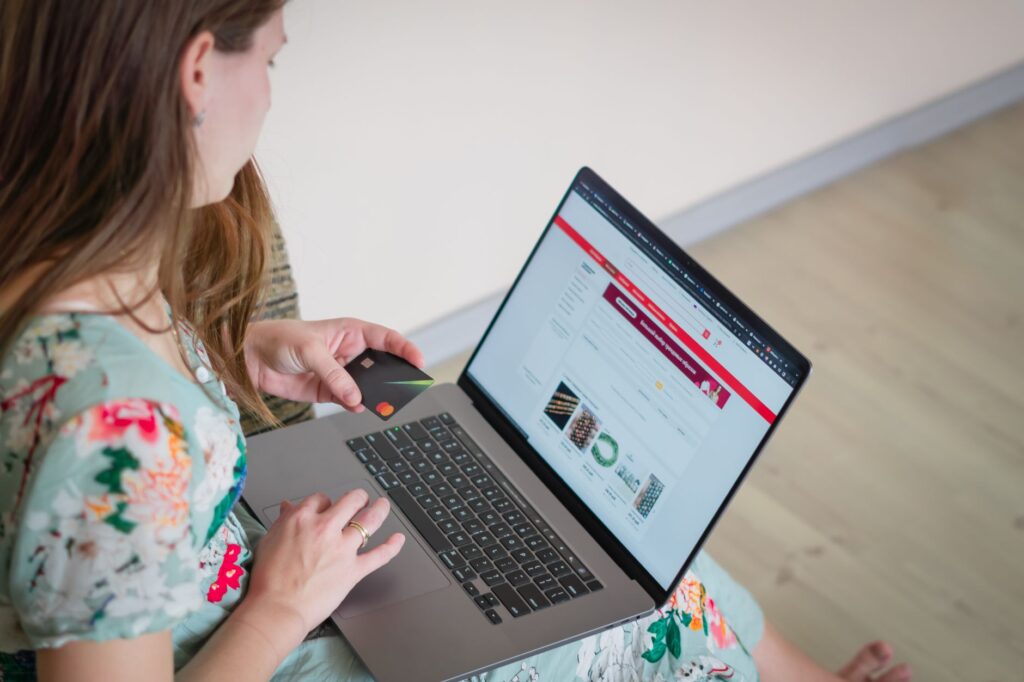
On Cyber Monday 2025, Americans spent $14.25 billion online in a single day, according to Adobe’s transaction data, and $44.2 billion over the five days starting on Thanksgiving. A meaningful slice of that went through cash back portals and browser extensions promising a few percent back. If you’ve ever wondered how cash back portals make money while handing money to you, the short version is that the store isn’t giving you a discount at all. You’re getting a cut of an advertising fee, and only one party gets to collect that fee per purchase.
Once you see that, the strange parts of these programs start making sense: the pop-ups that beg you to “activate,” the browser extensions fighting over your checkout page, and the rebate from a late-November purchase that doesn’t land in your account until spring.
How cash back portals make money: they split a marketing commission
Retailers pay sites that send them customers. That’s affiliate marketing, and it’s the same system that pays a blogger who links to a toaster. A cash back portal is an affiliate that decided to share its fee with you. Rakuten says this plainly in its own help pages: stores “pay Rakuten a commission for sending you their way,” and “Rakuten keeps a portion of this commission and shares the rest with you as Cash Back.” It also says members have earned more than $4.6 billion since 1999.
To the retailer, that commission is a marketing expense, in the same budget line as a search ad. The store would rather pay 4% after a sale happens than pay for clicks that may never buy anything. That’s also why cash back rates jump around. If a retailer raises what it pays affiliates to win holiday traffic, the portal can pass some of that along as a “boosted” rate, and when the retailer cuts back, the boost disappears.
The rates themselves are usually hidden, but Amazon publishes its affiliate schedule, which makes it a useful reference point. Amazon’s Associates program pays 3% on toys, 4.5% on kitchen goods, 1% on grocery and video game consoles, and 0% on gift cards.
Here’s how that plays out on a $400 toy order. At 3%, Amazon pays $12 in commission to whichever affiliate gets credit for the sale. That $12 is the whole pie. If a portal offered you, say, 2% on that order, you’d get $8 and the portal would keep $4. Your rebate can never be bigger than the commission unless the portal is willing to lose money on the sale, which is why cash back on toys tops out in the low single digits while cash back on beauty or fashion can run higher. The rebate is a window into the retailer’s marketing budget for that category.
Last-click attribution makes every portal fight to be the final click
Who gets the $12? In most affiliate programs, the answer is the last click. Every affiliate link drops a tracking cookie or ID on your browser, and when you check out, the retailer credits the most recent one. The influencer who reviewed the toy, the coupon site you checked, and the portal you started from can all touch the same purchase, and whoever got the final click before the order is placed collects the full commission.
That rule explains the “activate” button. A portal can’t pay you unless its click is the last one, so it asks you to click through right before you shop and warns you not to wander off to coupon sites afterward. Every other click you make between the portal and the checkout risks handing the commission to someone else, and your cash back goes with it.
The Honey lawsuit shows what happens when someone else takes the last click
The fight over that final click is now in federal court. A group of content creators sued PayPal, alleging that its Honey browser extension swapped their affiliate IDs for PayPal’s own at checkout, claiming commissions on sales the creators had driven. In late 2025, U.S. District Judge Beth Labson Freeman dismissed an earlier version of the complaint, noting that lost commissions could be a product of last-click attribution itself rather than anything Honey did wrong. The creators came back with their merchant contracts attached, and in June 2026 the judge declined to dismiss their second amended complaint, Bloomberg Law reported, allowing claims under the Computer Fraud and Abuse Act to move forward.
For shoppers, the takeaway doesn’t depend on how that case ends. If you run a coupon extension and a cash back portal at the same time, they may be competing for the same commission. Only one can win it, and you won’t always know which one did.
Returns are why your cash back sits pending for months
Then there’s the wait. A retailer doesn’t owe an affiliate anything for a sale that comes back. So commissions stay provisional until the return window closes, and a portal can’t pay you money it hasn’t been paid.
Rakuten’s help center lays out the timeline. Cash back on online purchases “typically takes 3 to 14 weeks to be confirmed,” a hold that “exists in case of returns, exchanges, exclusions or other changes to your order.” Payments go out only four times a year, on February 15, May 15, August 15, and November 15, and only on cash back confirmed before that date.
Walk a Black Friday order through it. You buy on November 27, 2026. Holiday purchases often come with extended return windows that run into January, so suppose the store takes the full 14 weeks to confirm. That lands around March 5, 2027, after the February 15 payment has gone out. Your rebate rides to the May 15 check, 169 days after you clicked “place order.” The money is real, but you’re effectively lending it to the portal (interest free) for almost six months while the retailer waits to see if you keep the stuff.
This is also why a return can quietly cancel cash back you thought you’d earned. If you send back half the order, the retailer reverses half the commission, and the portal reverses your share. The card side works on its own clock (the credit card refund shows up on your statement within days), but the rebate tied to the purchase simply disappears from your pending balance.
The commission rate tells you more than the cash back rate
Once you think of cash back as a split commission, a few habits follow. Start at the portal, then go straight to checkout without detours through coupon sites, so the portal’s click stays last. Treat a sudden boost as a signal that the retailer is paying extra for traffic that week. Don’t count holiday cash back in your December budget, because it’s a spring deposit at best. And notice which categories pay nothing: gift cards pay 0% on Amazon’s schedule, so a portal offering cash back on them is rare for a reason.
It’s the same kind of hidden economy as the interchange fees that fund credit card rewards. Someone pays a merchant-side fee, a slice comes back to you, and the rules about who gets that slice are set by contracts you never see. Knowing how cash back portals make money doesn’t mean skipping them. They still pay, and I use them. I just think of the rebate as a commission I’m sharing, which arrives after the return window closes and only if my click was the last one.