
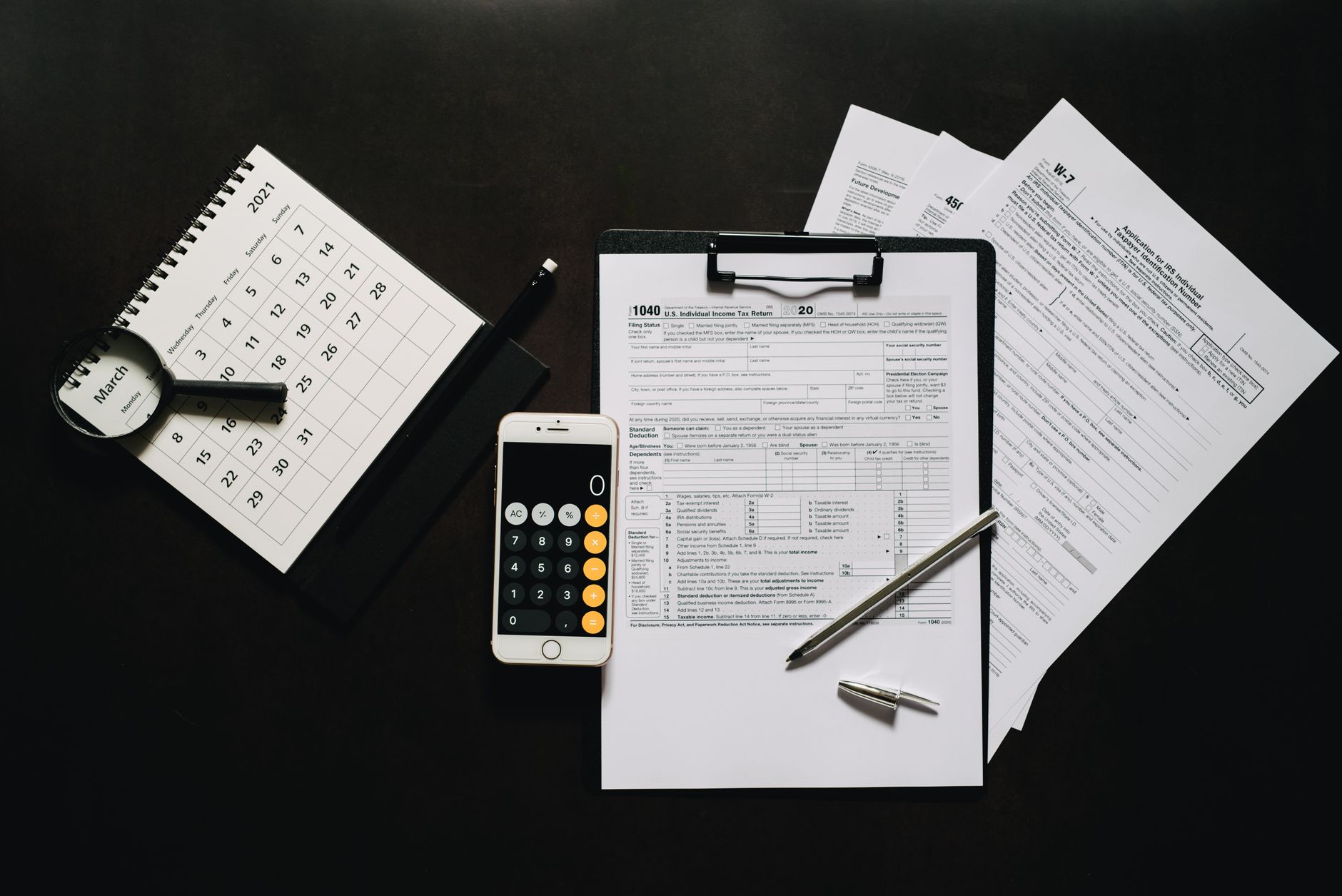
If you have only ever been a W-2 employee, taxes probably feel like weather. Money disappears from each paycheck, and in April you find out whether you get a little back. You never had to think about the timing because your employer handled it.
Then you pick up freelance work, or sell things online, or your savings account finally starts throwing off real interest, and a new obligation appears that nobody explains well. The IRS wants its money throughout the year, not just at the end of it. The mechanism for that is estimated tax, and the next federal deadline is September 15, 2026.
The system was never annual
American income tax is pay-as-you-go. That phrase shows up constantly in IRS materials and it’s the whole concept. Tax is due as you earn the income, not twelve months later.
For employees, withholding does this invisibly. Your employer sends money to the Treasury every pay period on your behalf. For everyone else, and for income that no employer touches, you send it yourself using Form 1040-ES.
Which income has no withholding? Self-employment and freelance earnings, most obviously. Also rental income, interest and dividends, capital gains from selling stock or crypto, prize winnings, and in many cases retirement distributions where you declined withholding. Interest catches people off guard now that savings accounts pay something meaningful again. A $30,000 balance earning 4% throws off $1,200 in taxable interest, and no bank withholds tax on that unless you specifically ask.
The $1,000 rule
The IRS threshold is straightforward. You generally need to make estimated payments if you expect to owe at least $1,000 in tax for the year after subtracting withholding and refundable credits.
Below that, you can settle up when you file with no penalty. Above it, the IRS expects installments during the year, and skipping them costs you even if you eventually pay in full.
Notice the phrasing though. It’s $1,000 owed after withholding. Someone with a W-2 job and a modest side business often has enough withheld from the day job to cover both. That’s why the fastest fix for many people is not writing quarterly checks at all, but filing a new W-4 with their employer and asking for extra withholding.
Four deadlines that aren’t quarters
The payment schedule is famously uneven. For the 2026 tax year the periods and due dates run like this: income earned January through March is due April 15, April and May is due June 15, June through August is due September 15, and September through December is due January 15, 2027.
That third period covers three months while the second covers two, and the fourth stretches four months. Nobody has ever offered a satisfying explanation for the layout. Just note it, because the June 15 deadline arriving only two months after April 15 is a common trip-up for people in their first year of self-employment.
If a due date falls on a weekend or federal holiday it shifts to the next business day. All four 2026 dates land on weekdays.
Safe harbor, the rule that actually protects you
This is the part worth understanding well, because it turns an unpredictable obligation into a fixed one.
The IRS will not charge an underpayment penalty if your withholding plus timely estimated payments equals the smaller of two figures: 90% of what you end up owing for the current year, or 100% of what you owed on last year’s return. If your prior-year adjusted gross income was over $150,000, that second figure rises to 110%.
The current-year test requires you to forecast a number you cannot know yet. The prior-year test requires you to look at one line on a return you already filed. Guess which one people should use.
Take your total 2025 tax liability, multiply by 1.0 or 1.1 depending on your AGI, divide by four, and pay that on each date. You are then protected no matter how the year goes. If your income doubles, you’ll owe a large balance in April, but you will not owe a penalty on top of it. That distinction matters, because the penalty is not a flat fee.
What the penalty actually costs
It’s interest, calculated on each underpayment for the days it went unpaid, compounded daily. The rate resets quarterly at the federal short-term rate plus three percentage points.
For the third quarter of 2026, covering July through September, the underpayment rate for individuals is 7%. The IRS publishes these rates every quarter, and they have stayed in the 7% to 8% range for a while now.
Seven percent annualized on a $4,000 shortfall carried for six months works out to around $140. Not catastrophic, but it’s money handed over for nothing, and it compounds across multiple missed periods.
One quirk works in your favor. Withholding is treated as though it were paid evenly across the whole year regardless of when it actually happened. So if you realize in November that you have underpaid, asking your employer to withhold an extra $3,000 from your last few paychecks can retroactively cure shortfalls from the spring. An estimated payment made in November cannot do that. It only counts from the date you send it.
Self-employment tax is the part people forget
New freelancers usually budget for income tax and then get blindsided in April.
If you work for yourself, you owe self-employment tax in addition to income tax. It covers Social Security and Medicare, and because you are both the employer and the employee, you pay both halves: 15.3% total. It applies to 92.35% of your net profit, and the threshold is low. Net earnings of $400 or more triggers it.
So a freelancer in the 22% federal bracket is really looking at something closer to 36% of profit once self-employment tax is layered on, before any state tax. Half of the self-employment tax is deductible against income tax, which softens it, but the cash still has to leave your account.
The rough guideline of setting aside 25% to 30% of every freelance payment exists because of this. For higher earners it should be more.
When income is lumpy
The standard four-equal-payments approach assumes steady earnings. Plenty of people don’t have that. A consultant who bills nothing in spring and earns most of the year’s revenue in the fourth quarter would be penalized under the flat method for not paying tax in April on money that didn’t exist yet.
The annualized income installment method fixes this. You compute each period’s payment based on what you actually earned in that period, using Schedule AI of Form 2210. It requires more record keeping and it’s slower to complete, but it can eliminate penalties entirely for genuinely seasonal income. Most tax software includes it.
Where to keep the money in between
The practical challenge is behavioral, not mathematical. You receive a payment, it sits in checking, and by September a chunk of it has quietly become groceries.
A separate savings account solves this better than willpower does. Every time a client pays, move your tax percentage over immediately and treat that balance as belonging to the Treasury. The interest it earns between now and the deadline is yours to keep, which is a small consolation prize for good behavior. Some banks let you open multiple named savings accounts under one login, which makes it easy to keep tax money visually distinct from your emergency fund.
Then pay through IRS Direct Pay or an EFTPS account, both of which are free and let you schedule payments in advance. Card payments work too but carry processing fees around 2%, which is a poor trade unless you’re chasing a signup bonus worth more than the fee.
Set calendar reminders for all four dates in one sitting. The mechanics of this system are simple once you know them. The failure mode is almost always forgetting.
[…] is lowest. If you are picking up contract work while you look, the problem compounds, because quarterly estimated taxes land on you […]